

FAA Regulation
Drone BVLOS Rules 2026: FAA Part 108 and EU U-Space
Part 108 is in final review and could make routine BVLOS legal in the US. Europe regulated first and is now simplifying. Where both stand.
Last updated:
19 news articles on FAA Regulation ↓
Guide overview
The rule that decides whether American drone operators can fly beyond visual line of sight without begging for a waiver each time has been sitting at the White House budget office since July 10. That’s the last stop before publication. When it clears, Part 108 becomes the biggest change to US drone regulation since Part 107 landed in 2016.
Europe went the other way. It wrote its framework first, adopted it in 2021, made it applicable in January 2023, and has spent the three years since discovering how few member states were ready to use it. Now Brussels is drafting a stripped-down version of its own rules to get things moving.
Two regulators, two philosophies, one shared problem: nobody has worked out how to let large numbers of drones fly out of sight of their operators without something going wrong. Here’s where each of them actually is.
Why BVLOS Is the Whole Game
Almost all the commercial value in drones sits beyond visual line of sight. Delivery, pipeline and powerline inspection, mapping at scale, infrastructure survey — none of it works if a human has to stand in a field watching the aircraft.
Keeping a visual observer within sight of every drone caps your operation at roughly one aircraft per person. That’s a business with no operating leverage. The moment one operator can supervise several aircraft from a desk, the unit economics change completely.
So when people argue about Part 108 or U-Space, they’re arguing about whether the drone industry gets to have a business model.
Where Part 108 Actually Stands
The FAA published its BVLOS proposal on August 7, 2025. Comments closed on October 6. The agency then reopened the window on January 28, 2026, specifically on right-of-way rules and electronic conspicuity — the two areas that drew the most disagreement — and closed it again on February 11.
On July 10, 2026, the final rule went to the Office of Information and Regulatory Affairs. OIRA review of a significant rule can run up to 90 days, which puts publication in late 2026 or early 2027. As of early September, no final rule has been issued.
What it does, if it lands as proposed: replaces the Part 107 waiver system with a standing framework for routine BVLOS, covering aircraft up to 1,320 pounds. Operators would qualify under a set of rules rather than applying for individual permission and waiting.
The waiver system is what everyone is trying to escape. It’s slow, it’s decided case by case, and it doesn’t scale. An operator running one route can live with it. An operator running four hundred cannot.
Until a final rule takes effect, the existing path still applies. If you want to fly BVLOS in the US today, you need a Part 107 waiver.
One caution from the agency itself. Robert Reckert, acting division manager of the FAA’s Emerging Technologies Division, said in September that “just because the rule is done doesn’t mean that the work is done.” His point was that safety and flight data, maintenance, weather and personnel all keep mattering after publication. A rule opens the door. It doesn’t fly the aircraft.
Europe Built the Framework First
U-Space is the EU’s mandatory digital system for managing drone traffic at low altitude. Three implementing regulations adopted in April 2021 replaced ad-hoc national approvals with certified service providers, automated flight authorisation and real-time traffic data.
Inside designated U-Space airspace — geo-zones each member state defines after its own risk assessment — every drone operation goes through a certified U-Space Service Provider. The USSP handles authorisation, coordination and airspace data. It’s API-driven. No human controller is managing individual drone flights.
The three regulations split the work. 2021/664 defines U-Space itself: the services, the actors, the certification requirements. 2021/665 connects U-Space to existing air traffic management so USSPs and conventional ATC can exchange data. 2021/666 covers how crewed aircraft behave inside U-Space airspace, including electronic conspicuity so drones can see them coming.
What U-Space Actually Requires
Article 5 of 2021/664 sets four mandatory services in any designated U-Space airspace.
- Network identification — continuous transmission of drone ID, position, velocity and status. Europe’s version of network Remote ID.
- Geo-awareness — real-time delivery of airspace constraints and no-fly zones to operators before and during flight.
- Flight authorisation — digital submission and automated approval of flight plans by a USSP before each operation.
- Traffic information — data on other conspicuous traffic, crewed and uncrewed, in the same airspace.
Weather information and conformance monitoring are optional, left to member states or providers. Everything past those six capabilities counts as advanced or future service.
The U1 through U4 tiers people cite come from the SESAR research roadmap, not the regulations. They describe an evolutionary path rather than four legal categories. U1 is the baseline digital layer: registration, Remote ID, geo-awareness. U2 adds flight authorisation, traffic information and basic conflict awareness, and it’s where regulated commercial operations start working at volume. U3 covers dynamic capacity management, tactical conflict resolution and automated detect-and-avoid — the deconfliction that urban delivery needs. U4 is full automation and remains conceptual, with a horizon past 2035.
SESAR targeted U3 maturity around 2025. Deployment has run well behind that.
Three Years In, Deployment Is Thin
There is no pan-European U-Space network. Member states designate airspace independently, and most are still running pilots and sandboxes.
Italy designated the first formal U-Space airspace under the framework: LIR700 San Salvo, a small Class G zone with weekday operations. The Netherlands has several zones with an emphasis on airport and port integration. Belgium runs practical drone coordination at the Port of Antwerp, though full certification under 2021/664 is still in progress. France, Finland and Sweden have active BVLOS corridor trials.
Germany published a national U-Space concept in 2022 and has been working toward a dedicated U-Space Act, which would make it the first member state with legislation written specifically for U-Space.
Certification of providers has been just as slow. ANRA Technologies became the first EASA-certified USSP in May 2025, after a two-year evaluation covering safety, cybersecurity, service reliability, operational readiness and business continuity. That process gave EASA a repeatable model for the providers behind it, but the number of certified USSPs across 27 member states remains very small. D-flight, a subsidiary of Italian ANSP ENAV, operates in LIR700. Altitude Angel, Thales, Frequentis and national ANSPs including ENAIRE and DFS are variously certified in pilot zones or working under test authorisations.
The regulation harmonised the rules. It couldn’t harmonise the pace of 27 national bureaucracies.
U-space Light: Brussels Admits the Problem
EASA and the European Commission are now proposing a simplified tier called U-space Light, and the existence of the proposal is itself the clearest statement of how the original framework has gone.
The idea is to let member states adopt an initial subset of the four mandatory services where drone traffic isn’t dense enough to need strategic deconfliction in space and time, with operational conditions and airspace constraints holding safety at an equivalent level. It would create three forms of U-Space: a basic “pre-U-space” level for rural and suburban operations that needs no additional regulation, an intermediate level reached by amending the current regulation, and the existing full framework for high-density traffic.
For operators, the significant part is that U-space Light would relieve them of the air-risk portion of SORA, the Specific Operations Risk Assessment. SORA applications are expensive and slow, and the air-risk section is where much of that cost sits. EASA also adopted SORA 2.5 in 2025 to make risk assessment more proportionate to the individual operation.
The proposal is not settled. A consultation on July 15, 2026 drew objections from at least one trade association, several member states and drone operator groups. Industry complained about being given a week to review substantial changes. Others objected that U-Space Level 1 is limited to uncontrolled airspace, excluding controlled airspace operations entirely; that a “remain well clear” criterion is imposed without a definition or regard for what the technology can now do; and that Level 1 becomes mandatory whenever multiple BVLOS operators share an operational volume, with no room for alternative risk mitigations. A decision was scheduled for the week after July 19.
What the trade associations want is faster implementation of the earliest phases, so limited BVLOS can start in both controlled and uncontrolled airspace rather than waiting for the whole structure.
Two Regulators, Two Philosophies
The FAA experimented first and is regulating second. It ran trials through NASA and industry, built LAANC as a working authorisation service, let a decentralised market of UAS Service Suppliers develop under its oversight, and is only now writing the binding rule.
The EU regulated first and is deploying second. It defined mandatory services, built a certification regime for providers, and tied everything to ATM integration through binding regulation before anyone had to run it at scale.
Neither approach has produced the volume its designers imagined. The US has a mature waiver process and no general BVLOS rule. Europe has a complete general framework and very little designated airspace to use it in. Each has the thing the other is missing.
The two agencies are increasingly explicit that they need each other. Reckert’s answer, when asked how congested low-altitude airspace gets managed, was collaboration — regulators can’t solve airspace congestion by writing rules alone. Both sides now describe the safety outcome they’re chasing as the same one, which is a more useful basis for convergence than the harmonisation talk of a few years ago.
The Security Turn
Something else is now competing for Europe’s regulatory attention.
On February 11, 2026 the European Commission published an Action Plan on Drone and Counter Drone Security, built around four priorities: preparedness through faster industrial production, detection using AI software and 5G networks, coordinated response through EU counter-drone systems and emergency teams, and defence readiness through industrial cooperation.
The plan converts the political “drone wall” idea into the European Drone Defence Initiative, folded into the broader Defence Readiness Roadmap with a dedicated capability area for drone and counter-drone. Officials have talked about an early capability in 2026, realistically radar and sensor deployments with some light mitigation infrastructure. An EU-level legal framework for counter-UAS is targeted for 2030.
For anyone tracking civil drone rules, this raises an awkward question. The same institutions and much of the same expertise sit behind both files. Security work has political urgency that civil BVLOS approvals do not, and there’s a real concern in the industry that U-Space expansion gets crowded out by the counter-drone agenda at exactly the moment it needs attention.
What This Means If You Operate Drones
In the US, nothing changes until Part 108 publishes. Keep working the Part 107 waiver process, and don’t build a 2026 plan that assumes a rule that hasn’t been issued. If the rule lands in late 2026 or early 2027, expect a compliance ramp after that — operators will need to meet the new framework’s requirements, not simply inherit permission.
In Europe, the binding question isn’t the regulation. It’s whether U-Space airspace has been designated in the specific places you fly. That calendar belongs entirely to national authorities, and it’s the variable that decides when the framework becomes commercially useful to you. Watch U-space Light closely: if the simplified tiers survive the objections, the approval path for limited BVLOS gets considerably shorter and cheaper.
In both, cost is the quiet obstacle. USSP fees, Remote ID hardware, compatible software and certification work land on small operators regardless of which framework applies, and the timelines for recovering that spend remain uncertain.
What to Watch
OIRA clearing Part 108. Review can take up to 90 days from July 10, so a decision is due around now. Publication is the single most consequential event in US drone regulation this decade.
Whether U-space Light survives its objections. The July consultation went badly enough that the outcome is genuinely open. If Level 1 stays confined to uncontrolled airspace, a lot of the commercial value goes with it.
Germany’s U-Space Act. First national legislation written specifically for U-Space, and it could move German airspace designations quickly. Whether other member states follow with their own laws or stay on the 2021/664 framework tells you how fragmented the next few years look.
The EASA USSP pipeline. Each new certified provider widens geographic coverage and puts pressure on pricing. Growth from one or two to five or ten operational providers changes the commercial calculation for operators.
Whether the counter-drone agenda crowds out the civil one. The Action Plan has momentum, funding and political cover. U-Space has a deployment problem and a contested simplification proposal. Watch which one gets the institutional attention through 2027.
Latest Coverage
Why a Drone on a Houston Highway Triggered No FAA Report
A Zipline drone parachuted onto Highway 6 on 4 September. No injury, no $500 of damage and no airworthiness certificate means no mandatory report.
DoorDash got an airline licence and kept its drone partners
DoorDash won FAA Part 135 certification in July and starts flying its own drones this autumn. Wing and Flytrex are partners, and now suppliers.
Wing and Flytrex share Dallas airspace, but not emergencies
The two flew 8,000 overlapping flights over two Texas suburbs with no conflicts. Neither system tells the other when an aircraft is in trouble.
Matternet Warns on Going Concern With Revenue Under $400,000
Matternet's SEC filings show $392,739 of revenue in the year to 30 September 2025, a $145.7M accumulated deficit and an auditor going-concern opinion.

46 Police Agencies Are Certified. The Rule Expects 1,850.
The SAFER SKIES counter-UAS rule lets US police disable drones, but only about 46 agencies are trained against the 1,850 the government expects.
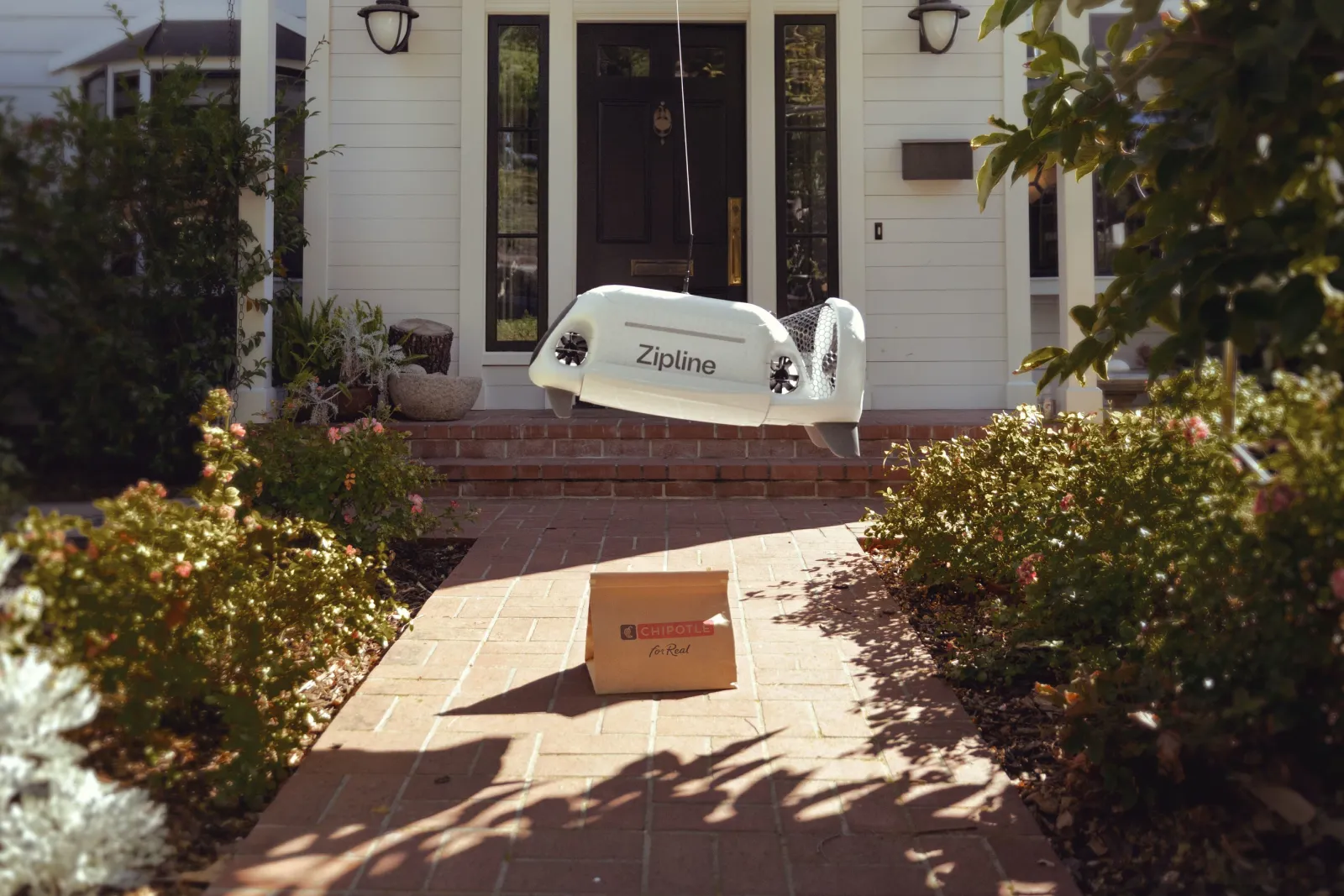
Chipotle Expands Zipline Drone Delivery to Fort Worth and Houston
Chipotle is expanding its Zipline drone delivery network to Fort Worth and Houston after encouraging early results in Rowlett, Texas.
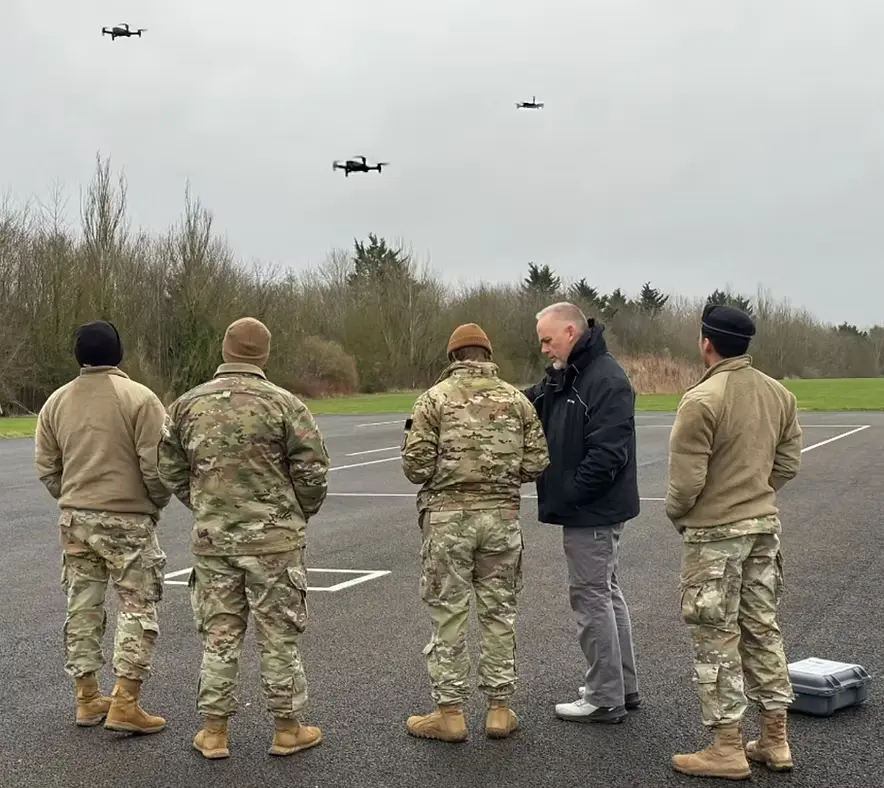
SkyfireAI Raises $11M for Autonomous Multi-Drone Operations
SkyfireAI raised $11M to build AI software that lets one operator manage multiple drones for 911 and rescue missions.
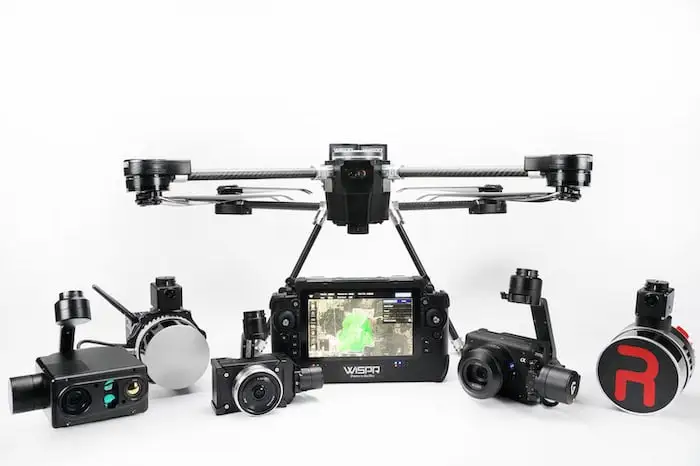
WISPR SkyScout 2+ Added to Blue UAS Cleared List
WISPR Systems' SkyScout 2+ earns Blue UAS Cleared List approval, clearing it for federal procurement without NDAA limits.
Flytrex Sky2 Can Deliver Two Large Pizzas by Drone
Flytrex's Sky2 octocopter launches with Little Caesars in Texas, carrying nearly 9 pounds of food per delivery.
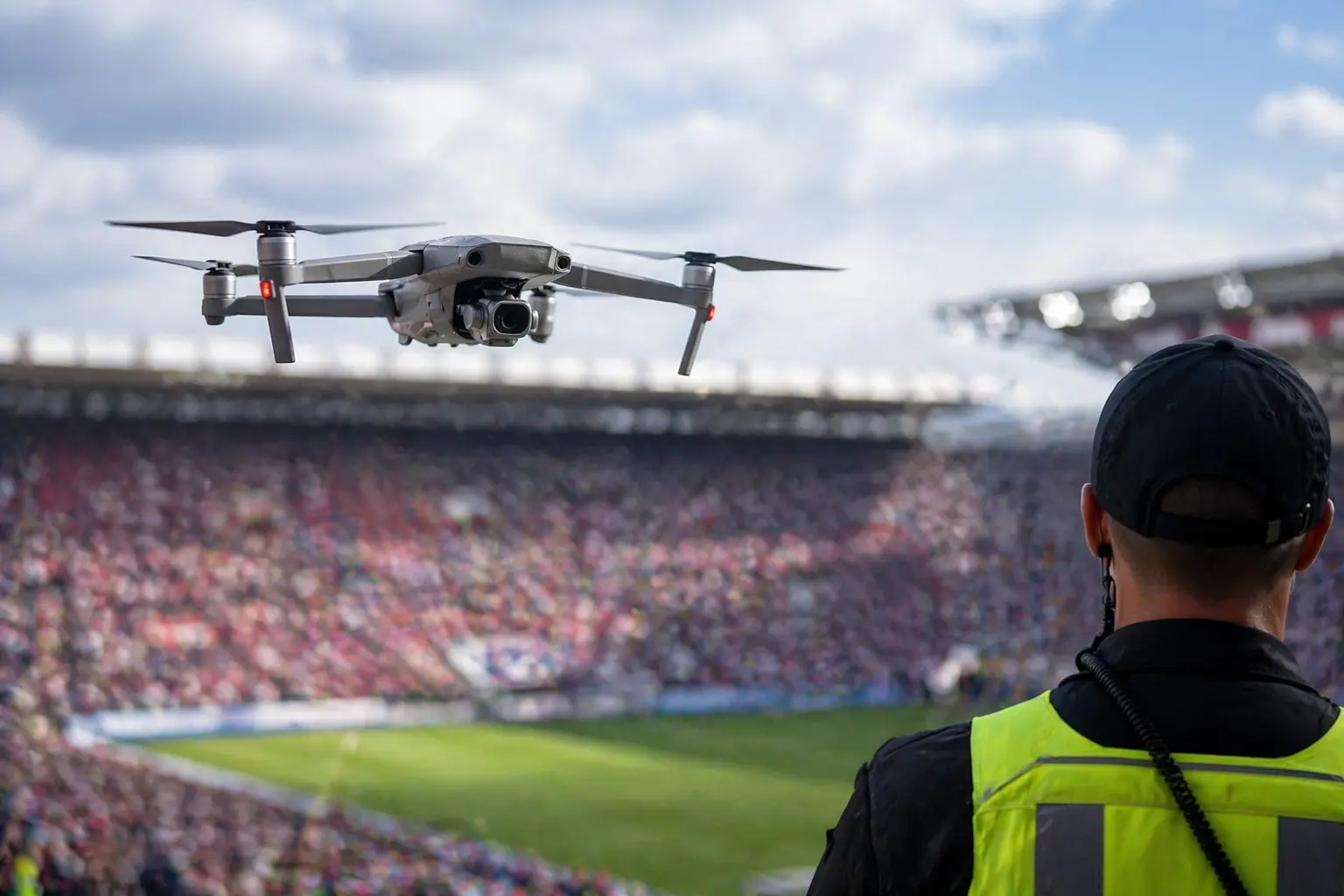
Drones Are Now a Core Risk at Major Public Events
A CIS white paper on FIFA World Cup 2026 security lays out how drones have become a frontline threat at large-scale public gatherings.
FAA Drops Criminal Threat for Drone Flights Near Vehicles
FAA rescinds NOTAM FDC 6/4375, removing criminal prosecution threats for drone pilots flying near federal law enforcement assets.
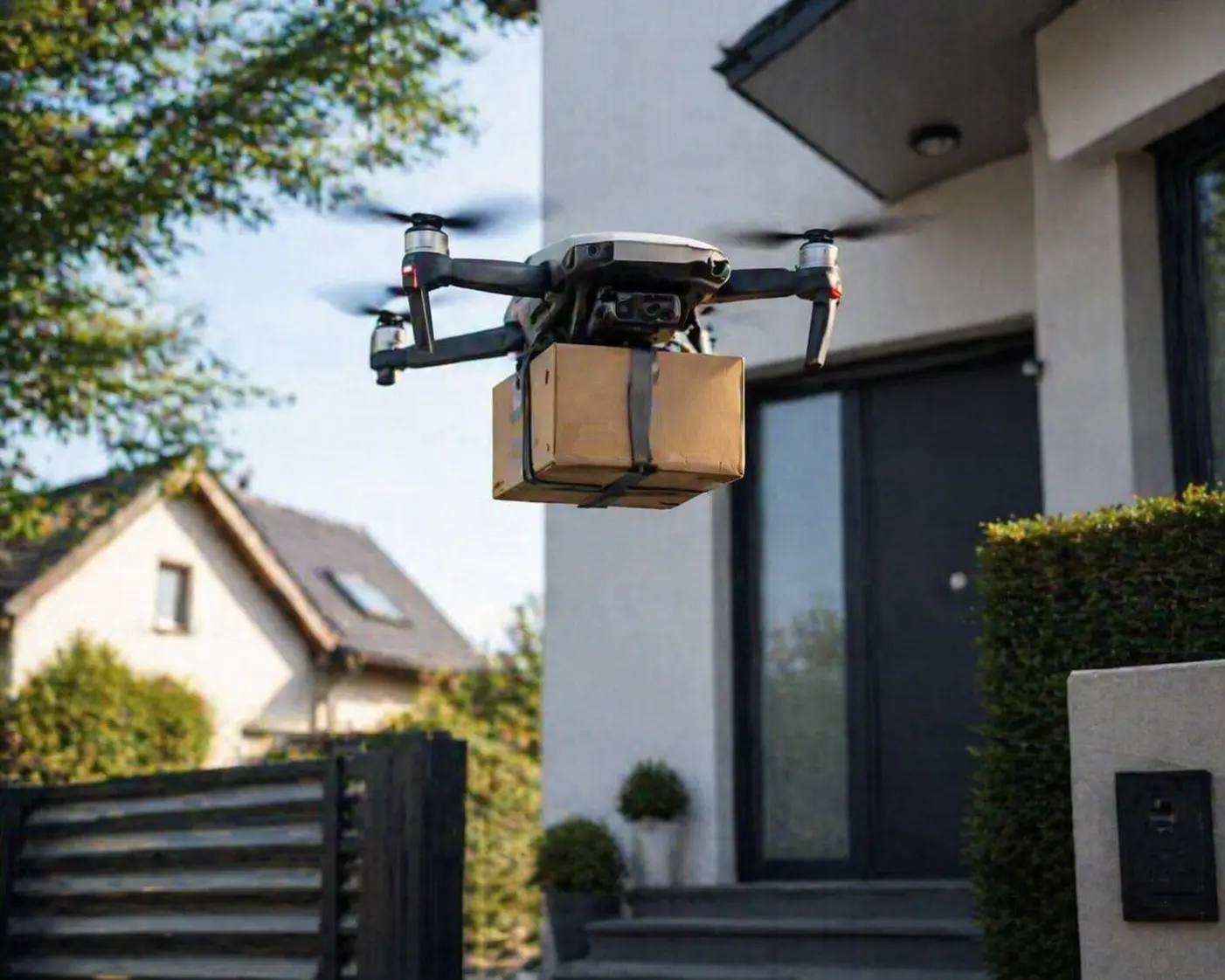
SoftBank Robotics Backs Matternet for US Drone Delivery
Matternet and SoftBank Robotics America partner to expand autonomous drone delivery in healthcare and enterprise logistics across the US.

Thales Wins Singapore's National UTM System Contract
Singapore's CAAS awards its national unmanned traffic management system contract to Thales Solutions Asia after a two-stage tender process.
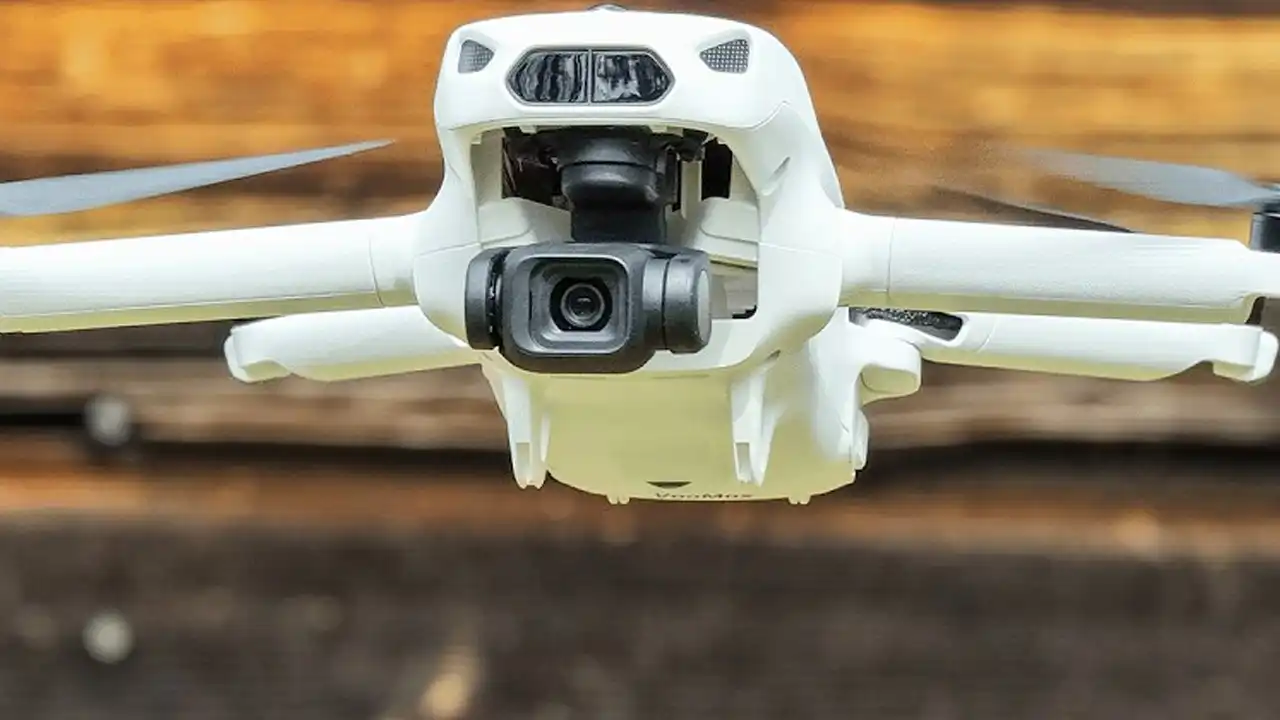
DJI Lito X1: Sub-250g Drone Nears US Launch
DJI's Lito X1 weighs under 249g, includes a three-axis gimbal and HEVC support, and has cleared US regulatory certification ahead of imminent launch.
Archer and Joby: Who Gets FAA Certification First in 2026?
Archer Aviation and Joby Aviation are both targeting FAA type certification in 2026. Here's where each program stands and what's left to clear.
FAA Launches eVTOL Pilot Program Across 26 States
The FAA has selected eight projects for its eVTOL Integration Pilot Program, with operations expected to begin by summer 2026 across 26 states.
FAA ICE Drone Ban Faces First Amendment Challenge
A 21-month FAA flight restriction banning drones near ICE vehicles has drawn a federal court challenge on First Amendment grounds.
Corvus Robotics Cuts 65 Labor Hours Weekly With Drones
Southern Glazer's deployed 40+ Corvus One drones across nine US distribution centers, logging 5,000 flights and 35,000 flags.
FCC Opens Drone Spectrum Review, Comments Due May 1
The FCC is asking how drones should access radio spectrum at scale, as BVLOS operations expose the limits of shared consumer frequency bands.
Companies
Wing
Alphabet's drone delivery subsidiary, operating commercial package delivery in the United States and internationally, largely through a partnership with Walmart.
United States
Zipline
US operator of autonomous drone delivery networks, running medical logistics in Africa and consumer delivery in the United States.
United States
Flytrex
Israeli drone delivery company running suburban restaurant delivery in Texas and North Carolina through DoorDash and Uber Eats, flying under partner Causey Aviation Unmanned's FAA air carrier certificate.
Israel
Amazon Prime Air
Amazon's drone delivery division, running autonomous last-mile delivery in the US and UK and attempting a sixfold expansion of its service area during 2026.
United States
Archer Aviation
US eVTOL company developing the Midnight air taxi, now acquiring Boeing's Wisk Aero, Insitu and SkyGrid to add autonomy and defense manufacturing.
United States
Joby Aviation
US eVTOL company developing a five-seat electric air taxi, the furthest along in FAA type certification among civilian eVTOL manufacturers.
United States
Matternet
US drone delivery company whose M2 aircraft holds FAA type and production certification, now an SEC-reporting company with minimal revenue and a going-concern warning.
United States
Anduril Industries
US defense technology company building autonomous weapons, counter-UAS, and AI command software, and manufacturing them at its own Arsenal-1 plant in Ohio.
United States
Products
DJI Mini 4 Pro
DJI
The most capable sub-250g drone available, and the right choice for anyone who wants serious image quality without triggering registration requirements in most markets.
DJI Air 3
DJI
A dual-camera mid-range drone that covers most shooting scenarios for enthusiast creators, sitting cleanly between the Mini 4 Pro and Mavic 3 Pro in capability and price.
DJI Mavic 3 Pro
DJI
The best three-camera consumer drone on the market, priced for serious enthusiasts and semi-professional creators who need optical zoom without switching platforms.
DJI Matrice 350 RTK
DJI
The benchmark enterprise inspection platform — IP55-rated, dual-operator capable, and compatible with the broadest payload ecosystem available, but off-limits for US federal government use under NDAA restrictions.
DJI Mavic 3 Enterprise
DJI
A polished enterprise drone that still sets the pace for portable mapping and inspection workflows.
Recent Funding
Recent Contracts
defense
US Army PAE Fires, Anduril Industries
Three-year contract to supply a minimum of 3,000 surface-launched Barracuda-500M missiles with...
defense
US Army Portfolio Acquisition Executive Fires, Anduril Industries
Three-year production agreement for a minimum of 3,000 Surface-Launched Barracuda-500M cruise...
defense
U.S. Department of Defense, Anduril Industries
Contract modification adding $100.3M to upgrade the Space Surveillance Network with mesh...
defense
Powerus (Autonomous Power Corporation), Unusual Machines
Supply contract for US-manufactured components for counter-UAS interceptor systems and 10-inch...
defense
U.S. Air Forces Central, Skydio
Order for Skydio Dock and X10 autonomous drone systems to provide perimeter security at USAFCENT...