

eVTOL
What Is eVTOL? The Complete Guide to Electric Air Taxis
What eVTOL means, how electric air taxis work, which companies are still standing after the 2026 shakeout, and when passengers will actually ride one.
Last updated:
11 news articles on eVTOL ↓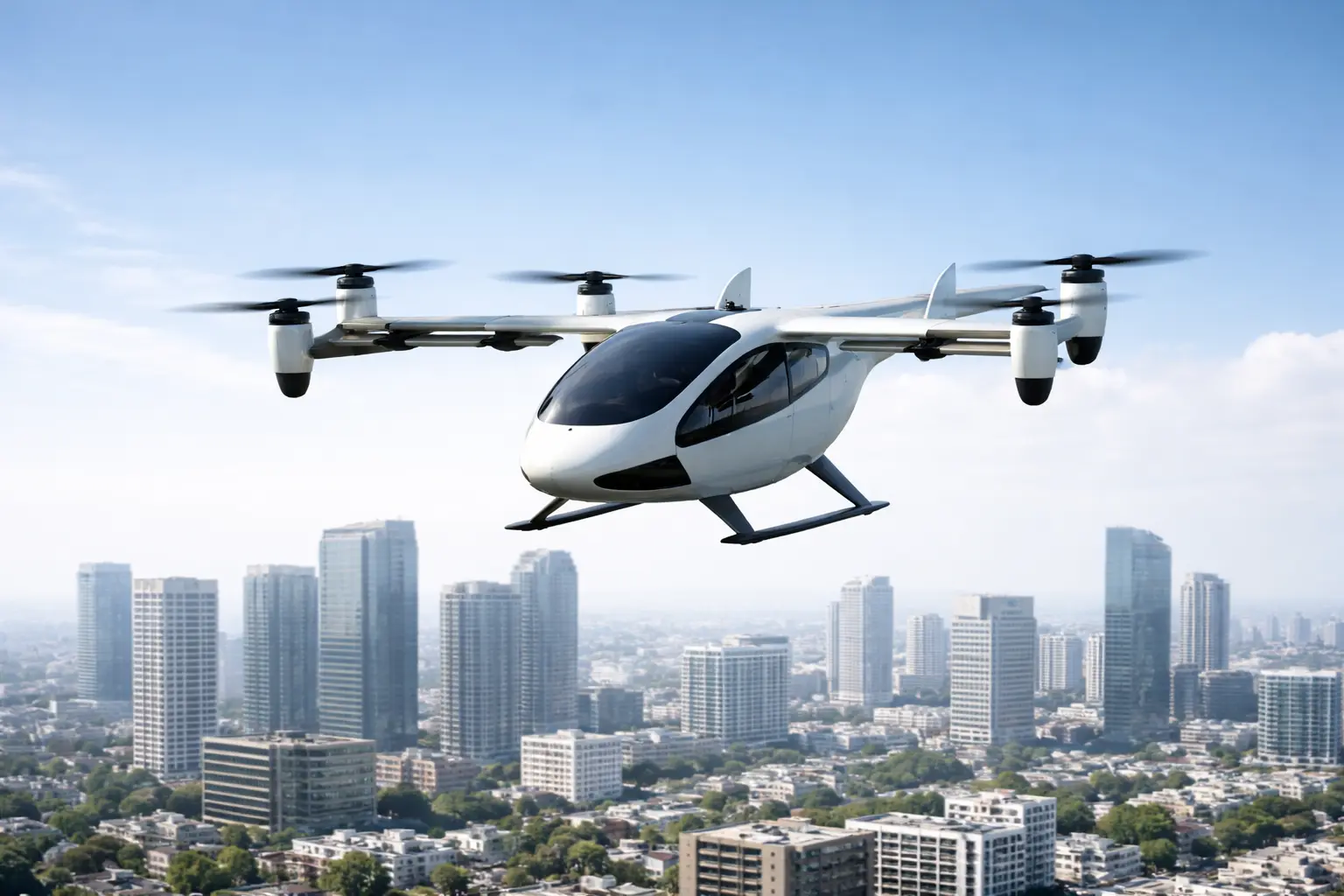
Guide overview
eVTOL stands for electric vertical takeoff and landing — battery-powered aircraft that take off and land vertically like helicopters but use distributed electric motors instead of combustion engines. 2026 was the year the industry had promised its first commercial passenger service. With four months left, no eVTOL manufacturer has an FAA type certificate, no Western operator has flown a paying passenger, and the two programmes closest to service are launching in Dubai and Abu Dhabi rather than the United States.
That is not a failure of the technology. The aircraft fly, they transition, they are quiet, and one of them has been carrying passengers commercially in China for two years. It is a failure of the timelines, and 2026 was the year the gap between the two became impossible to paper over. Three well-funded programmes shrank, paused or changed owner during it.
This guide explains how the technology works, then goes through who is actually still in the race and what each of them can honestly claim.
How Does eVTOL Work?
The fundamental difference between an eVTOL and a helicopter is not the ability to hover — it is how power reaches the rotors. A helicopter uses a combustion engine driving a single large main rotor through a complex transmission with gearboxes, shafts, and a swashplate mechanism that controls blade pitch. An eVTOL routes power electrically to multiple independent motors, each spinning its own rotor or propeller. There are no gearboxes, no swashplates, and no tail rotor.
That architectural shift has cascading effects. Electric motors deliver instant torque with millisecond response times, enabling software to stabilise the aircraft by varying individual motor speeds rather than mechanical blade pitch. Failure of a single motor is survivable because the remaining motors compensate — the redundancy is structural, not bolted on. Maintenance requirements drop substantially from having fewer moving parts. And the distributed propulsion arrangement, with many small rotors instead of one large one, dramatically reduces the blade-vortex interaction that makes helicopters so loud.
The noise reduction is one of the most practically significant advantages. Joby’s S4 measures 45.2 dBA at 500 metres in cruise — barely perceptible against urban ambient noise — and under 65 dBA during takeoff and landing. A comparable helicopter produces 87 dBA or more at similar distances. A 20 dBA reduction is perceived as roughly four to six times quieter by the human ear. For urban operations, where noise is the primary community objection to helicopter routes, this matters as much as the emissions story.
What Are the Different eVTOL Configurations?
Three distinct aircraft architectures have emerged, each with different trade-offs between simplicity, range, and efficiency.
Multirotor
The simplest configuration uses multiple fixed vertical rotors throughout all phases of flight — hover, transition, and cruise. Attitude control comes entirely from differential rotor speeds. Volocopter’s VoloCity and EHang’s EH216 are multirotor designs. The advantage is mechanical simplicity and the highest redundancy: losing one of twelve or eighteen rotors has a minimal effect on flight. The disadvantage is aerodynamic inefficiency in cruise, because vertical rotors generate significant drag when the aircraft is flying horizontally. Practical range for multirotors is typically 20 to 40 kilometres — enough for short urban hops but not for meaningful route networks.
Notably, this is the only configuration that has actually been certified anywhere in the world and carried commercial passengers. Simplicity turned out to be worth something.
Lift Plus Cruise
This configuration uses dedicated vertical lift rotors for takeoff and hover, plus separate forward-facing propellers and fixed wings for cruise. The lift rotors are switched off or folded once the aircraft transitions to forward flight, where the wings provide most of the lift and the cruise propeller provides thrust. Eve’s aircraft and Beta’s A250 use this approach. The advantage is that each propulsion system is optimised for its specific flight phase. The disadvantage is that the lift rotors become dead weight and aerodynamic drag in cruise. Range improves substantially over multirotor, but the two-system architecture adds weight and complexity.
Vectored Thrust
Vectored thrust designs use rotors or propeller nacelles that physically tilt from vertical to horizontal, serving as the sole propulsion system across all flight phases. Joby’s S4 uses six tilting propellers — two on each wing and two on the tail — that rotate from pointing upward for takeoff to pointing forward for cruise. Archer’s Midnight and Vertical’s Valo use similar configurations. This approach offers the best efficiency across both hover and cruise, enabling the 100-mile range targets that city-scale air taxi networks require. The cost is mechanical complexity in the tilting mechanisms and the most demanding certification path of the three.
What Is Limiting eVTOL Range and Payload?
Battery energy density is the binding constraint on the entire industry. Current production lithium-ion packs deliver approximately 250 to 300 Wh/kg at the pack level after safety and thermal management overhead. That energy density limits practical passenger range to 50 to 150 miles depending on configuration, with reserves required for instrument flight rules.
The physics of eVTOL operation make the battery problem more acute than in electric cars. Hover demands extremely high discharge rates — roughly 2.5 to 4.5C during vertical flight phases — which generates heat and accelerates cell degradation. Cruise is far gentler at 0.75 to 1.5C, but the transition demands spike the requirement. The entire cycle must be managed by thermal systems that add weight and consume some of the energy budget.
The industry threshold for commercial viability at scale is approximately 400 Wh/kg at the cell level. Solid-state and lithium-metal chemistries targeting 500 Wh/kg are in testing at several manufacturers, with production-ready cells potentially available by 2028 to 2030. Until that chemistry arrives, eVTOL range and payload remain constrained. Typical payload for current designs is 500 to 1,000 pounds of useful load — adequate for four passengers and luggage but nothing like the 3,000-plus pounds a medium helicopter can carry.
This is the quiet reason the sector’s economics are so hard. An aircraft that carries four passengers 50 miles cannot spread its fixed costs the way one carrying nine passengers 250 miles can, and no amount of certification progress changes that until the cells improve.
What Is a Vertiport and What Does One Cost?
A vertiport is the ground infrastructure for eVTOL operations: a purpose-built landing and takeoff facility with charging, passenger handling, and maintenance capability. The physical requirements include a takeoff and landing pad sized to the aircraft plus clearance margins, high-voltage charging equipment capable of 1 to 2 megawatts per pad to recharge a depleted pack in 30 to 60 minutes, passenger terminal space, and maintenance facilities.
Cost varies enormously with site and scale. A minimal vertiport retrofitted into an existing helipad or parking structure runs $1 to $5 million. A purpose-built full facility handling 500-plus daily operations runs $30 to $50 million or more. Joby and Skyports are building vertiports in Dubai — the first near Dubai International Airport, with further sites planned at Dubai Mall, Atlantis The Royal and the American University in Dubai — at roughly $10 million per site.
Energy grid access is the constraint that the industry underestimated. A busy vertiport drawing 5 to 10 megawatts requires utility-grade infrastructure that many urban sites simply do not have, and grid upgrade timelines of 18 to 36 months from approval to energisation are common. It is entirely possible for an aircraft to be certified and for the places it needs to land to be years behind it.
Which eVTOL Companies Are Closest to Certification?
Joby Aviation
Joby is the most technically advanced Western eVTOL programme by most measurable criteria. Its S4 carries a pilot plus four passengers at 200 mph over a 100-mile range, at 45.2 dBA at 500 metres in cruise.
Joby has reached stage five of five in the FAA’s powered-lift type certification process — the type certificate itself. Five aircraft are flying and twelve more are in production. What remains is completing for-credit flight testing with FAA test pilots at the controls, demonstrating compliance with the outstanding airworthiness standards in actual flight, and the final administrative determination. This is genuinely the last gate, though “last gate” has been a description of Joby’s position for longer than the company would like.
The company is far better capitalised than any competitor, with $2.3 billion in cash, equivalents and marketable securities at the end of June 2026, against guided second-half cash use of $385 to $415 million. Toyota has committed roughly $900 million. Second-quarter revenue was $38.6 million and full-year guidance is $115 to $125 million — but that revenue comes from the Blade passenger business Joby bought in 2025, which flies helicopters. It is not eVTOL revenue.
In Dubai, where Joby holds a six-year exclusive with the Road and Transport Authority, it has completed piloted test flights with full transitions and the first vertiport is built. Commercial service there has been targeted for 2026 and had not begun as of early September.
Archer Aviation
Archer’s Midnight uses a similar vectored-thrust configuration, carrying a pilot plus four passengers at roughly 150 mph over a 100-mile range at approximately 45 dBA. Archer was the first eVTOL company to have 100% of its Means of Compliance accepted by the FAA — all 797 of them — meaning the agency has approved every method Archer proposed for proving the aircraft meets each safety requirement.
The bigger 2026 story is that Archer stopped being only an eVTOL company. In August it agreed to acquire Wisk Aero, Insitu and SkyGrid from Boeing, with Boeing taking payment in shares: 19.75% of Archer’s Class A stock, options to buy more over four years, and a commitment to invest up to a further $55 million before March 2027. Boeing retains the right to keep using Wisk’s autonomous flight technology in its own programmes. The deal is expected to close by the end of 2026 and has not closed yet.
If it does, Archer acquires an autonomy programme, an established military drone manufacturer in Insitu, and airspace management software — transforming a single-product air taxi company into a diversified aerospace business, and giving it revenue that does not depend on certifying Midnight.
Financially Archer has less room than Joby: cash fell to $951.1 million at the end of the first quarter against total liquidity near $1.8 billion, at a burn rate around $180 million a quarter. It holds a $142 million US Air Force contract and a United Airlines order for 200 Midnight aircraft. In Abu Dhabi, Archer is the first manufacturer admitted to the UAE’s Restricted Type Certificate programme and has flown a full envelope test campaign in country, targeting service in 2026.
Beta Technologies
Beta took a different route and it is looking like the better one. Its lead certification programme, the ALIA CX300, is a conventional takeoff and landing electric aeroplane — it uses a runway, not a vertiport. The vertical-lift variant, the A250, follows behind it. Beta’s reasoning was that fixed-wing certification is a known process, cargo and medical missions need no new infrastructure, and the economics work better at longer range.
Certification planning for the CX300 is 89% complete, with the FAA having accepted the aircraft’s full set of compliance requirements, and Beta targets certification by the end of 2026. If it lands, it will be the first certified electric aircraft of this generation — from the company that deliberately skipped the vertical takeoff.
Beta listed on the NYSE in November 2025 at $34 a share, raising about $1.1 billion net. Full-year 2025 revenue was $35.6 million against a net loss of $745.9 million. Second-quarter 2026 revenue was $14.7 million, up 146%, with full-year guidance of $42 to $50 million and cash of $1.48 billion at the end of June. Backlog was reported at 1,001 aircraft and $3.9 billion. The shares trade well below the IPO price.
Beta also builds the charging hardware — Charge Cubes and thermal management units — sold as products in their own right, and service revenue including charging and training is currently its larger revenue line. In July 2026 it launched the MV250, an autonomous hybrid-electric VTOL for military logistics developed with GE Aerospace, with Sikorsky integrating its MATRIX autonomy suite.
EHang
EHang remains the only company in the world whose aircraft holds a full civil aviation certificate set enabling commercial passenger operations. The EH216-S has a type certificate, production certificate and standard airworthiness certificate from China’s CAAC, and EHang holds an air operator certificate. It delivered 35 EH216-series units in the second quarter of 2026 alone.
The commercial reality is more modest than the certification suggests. Revenue was RMB25.7 million in the first quarter and RMB77.9 million in the second, against full-year guidance of RMB600 million. Operations are sightseeing and tourist routes rather than transport. The share price has fallen roughly 77% from its 52-week high, the market capitalisation is under $400 million, and Goldman Sachs, JPMorgan and Bank of America have all downgraded the stock.
EHang proves the autonomous multirotor model works and that a regulator will certify it. Its Chinese certification has no transferability to FAA or EASA jurisdiction, and as a Chinese company listed in New York it carries delisting risk under the HFCAA.
Volocopter
Volocopter’s position changed completely and most descriptions of it have not caught up. The company filed for insolvency in December 2024 after failing to fly at the Paris Olympics, and in March 2025 its assets were bought by China’s Wanfeng Auto Holding Group through its Austrian subsidiary Diamond Aircraft, in a deal reported at around €10 million against assets valued near €42 million. Just over 180 of roughly 500 employees were retained. It now trades as Volocopter Technologies inside Diamond Aircraft.
The certification work survived the ownership change, but the product did not. VoloCity had completed around three quarters of EASA’s certification requirements before the insolvency, and the company holds both design and production organisation approvals. Type certification for it is now expected in 2027.
What Volocopter is actually certifying first is something else. In April 2026 it launched the VoloXPro, a two-seat electric multicopter — 18 rotors, 40 km range, 70 km/h cruise, 600 kg maximum takeoff weight — aimed at flight schools, flying clubs, air sports and sightseeing operators. It is going through the German ultralight category, not EASA type certification, with approval and market entry targeted for the end of 2026. It reuses VoloCity components, which is how the engineering survives.
That distinction matters and is widely misreported, including in an earlier version of this guide. The end-2026 date belongs to an ultralight for hobbyists, not to a certified air taxi. Volocopter may well be the first company here to put a certified electric aircraft in customers’ hands — from the weakest starting position of any of them — but it will not be the aircraft it raised €590 million to build.
Wisk Aero
Wisk is pursuing the hardest regulatory path in the industry: full autonomous passenger operations with no pilot on board. Its Generation 6 aircraft first flew in December 2025 and Wisk supports the FAA’s eIPP with a Texas focus specifically to gather autonomy data.
Wisk was wholly owned by Boeing, which gave it a parent with effectively unlimited patience. Under the announced sale it becomes part of Archer — a pre-revenue listed company with its own piloted aircraft to certify first. Whether Archer sustains an expensive, slower autonomous programme alongside Midnight is the open question, and the answer matters beyond Wisk: it is the only well-funded Western attempt at certifying pilotless passenger flight, and FAA rules for that do not exist in final form. Commercial autonomous service remains a post-2030 proposition.
Eve Air Mobility
Eve, backed by Embraer and listed on the NYSE as EVEX, is developing a lift-plus-cruise aircraft for four passengers plus a pilot. It completed the first low-speed hover test of its full-scale prototype in December 2025, had flown 58 flight tests by early summer 2026, and reported its first transition flight in August 2026.
Eve pushed its certification and entry-into-service target to 2028, having previously moved it from 2026 to 2027. The conforming prototype’s first crewed flight is not expected until the second half of 2027, and European certification is expected 12 to 15 months after Brazilian and US approvals.
The order book needs reading carefully. Eve reports a pre-order backlog of roughly 2,700 aircraft valued at $13.5 billion, but only about 100 of those are firm orders — 50 from Revo announced at the 2025 Paris Air Show and 50 from AirX in February 2026. The rest are letters of intent. Second-quarter 2026 showed a net loss of $34.2 million, cash consumption of $49.4 million, and $403.3 million of cash and investments against total liquidity of $531.3 million including BNDES credit lines.
Vertical Aerospace
Vertical retired the VX4 name in December 2025. The certification-intent production aircraft is the Valo, with an updated airframe, wing and propeller architecture, targeting four passengers over 100 miles and entry into service in 2028.
In April 2026 Vertical closed a financing package of up to $850 million with Mudrick Capital Management and Yorkville Advisors, intended to cover an estimated $700 million cost of certifying Valo. That headline is not what it appears. Immediate working capital after a $50 million equity raise was around $160 million, and the market capitalisation is roughly $103 million against a share price near $0.60. A facility of up to $850 million drawn against a company worth $103 million is a facility whose equity-linked portions are severely dilutive to existing shareholders — which is a large part of why the shares are where they are.
The engineering is real: five consecutive days of flying at Farnborough, a Critical Design Review expected by the end of 2026, and manufacturing facilities announced. Vertical is the only European developer with a full-scale programme still running under its own name. Whether it reaches 2028 with equity value intact is a separate question from whether the aircraft flies.
Supernal
Hyundai’s eVTOL programme has effectively stopped, and the S-A2 is no longer the product. Development was paused in late summer 2025 after the CEO and CTO both left. In late February 2026 Supernal laid off 296 people — roughly 80% of staff — across Irvine, Fremont and the Mojave Air & Space Port, leaving a core team of 70 to 80. It has had no permanent CEO since.
In May 2026 Hyundai and Korea Aerospace Industries signed a memorandum of understanding to develop an advanced air mobility aircraft together, with Supernal as design authority and technical lead and KAI providing airframe manufacturing and certification experience. Supernal says the S-A2 will be used to “refine our proprietary design guides” as it moves toward a next-generation aircraft. No timeline, funding figure or hiring commitment was disclosed, and the original 2028 commercial target has no announced replacement.
Anyone still reading that Hyundai has committed $1.5 billion to an aircraft entering service in 2028 is reading a 2024 press release.
Lilium
Lilium filed for insolvency for the second time in February 2025 after a €200 million rescue package failed and the German government declined loan guarantees. Its ducted-fan configuration was technically distinctive but extraordinarily capital-intensive. Archer acquired roughly 300 Lilium patents covering high-voltage systems, batteries and flight controls for €18 million in October 2025. No successor is developing the original design and the equity has no value.
How Does FAA Certification Work for eVTOL?
The FAA created a new powered-lift aircraft category specifically for eVTOL, operating under Part 21.17(b) as a special class that blends requirements from Part 23 small aircraft rules, Part 25 transport category rules, and rotorcraft standards. Existing categories did not accommodate aircraft that take off vertically, transition to horizontal flight using tilting rotors, and run on distributed electric propulsion.
A type certificate proves through ground and flight testing that the aircraft design meets all applicable safety standards. The process has five stages, and Joby is in the fifth. Type Inspection Authorization is the point at which FAA test pilots fly conforming, production-representative aircraft — the for-credit testing that produces the evidence the certification decision rests on.
Means of Compliance are the specific test methods a manufacturer proposes to demonstrate each requirement is met. Archer’s 100% acceptance means the FAA approved every one of its 797 proposed methods — a design-freeze milestone signalling the compliance plan is complete.
A type certificate alone is not sufficient to fly paying passengers. Operators also need a Part 135 Air Carrier Certificate. Pilots need type ratings specific to the aircraft. Operations manuals, maintenance programmes and vertiport approvals run as separate processes. The full stack adds 12 to 24 months beyond the type certificate date, and this is the step most public timelines quietly omit.
EASA’s equivalent pathway is Special Condition VTOL. FAA and EASA have reciprocal validation agreements, so a certificate from one significantly accelerates the other without replacing it.
Certification has consistently taken longer than the industry predicted in 2019 to 2021, for compounding reasons: the powered-lift category was genuinely novel with no regulatory precedent, distributed electric propulsion introduced failure modes requiring new analytical frameworks, battery fire and thermal runaway certification required extensive testing, and supply chain disruption extended physical test programmes. The companies that raised billions on 2024 certification timelines were not being fraudulent. The timelines were wrong because nobody had certified this problem before.
The Two Routes That Bypass the Wait
Two mechanisms now let aircraft carry people before a full FAA type certificate exists, and both matter more than they sound.
The FAA’s eVTOL Integration Pilot Program. In March 2026 the Department of Transportation selected eight projects across 26 states, pairing manufacturers and operators with state partners to test urban air taxi, emergency medical and cargo concepts under real operating conditions. Beta and United Therapeutics, with the Pennsylvania Department of Transportation, flight-tested organ transport from Virginia to Maryland. These are structured trials with specific route approvals, not open commercial service, but they generate the operational data the certification process needs and they put aircraft in front of the public.
The UAE’s Restricted Type Certificate pathway. Dubai and Abu Dhabi have built a route aligned with, but faster than, full FAA certification, allowing limited commercial operations without waiting on Washington. Joby holds a six-year exclusive with Dubai’s RTA; Archer is the first manufacturer admitted to Abu Dhabi’s programme. The UAE has positioned itself to become the world’s first dual-operator eVTOL market.
The strategic consequence is worth stating plainly: the first commercial electric air taxi flights by a Western manufacturer will very likely happen in the Gulf, not in America or Europe, because a regulator there decided to build a pathway rather than wait for one.
What Will an eVTOL Ride Cost?
First-generation commercial operations will be priced as a premium service. Joby has indicated initial pricing around $3 to $5 per passenger-mile, which is roughly $90 to $150 for a typical urban hop of 20 to 30 miles. A comparable helicopter charter costs $8 to $15 per mile, so the eVTOL premium over ground transport is real but the discount to helicopters is real too.
The long-term target, once autonomy removes the pilot cost and production scales, is $1 to $2 per passenger-mile — competitive with ground transport once time savings are counted. Getting there requires resolving all three constraints at once: certification, battery chemistry, and production volume.
City-scale operations need hundreds to thousands of aircraft per metro area to reach the frequency that makes air taxi a transport option rather than a novelty. The first commercial operations will be limited routes in favourable regulatory environments — airport shuttles, high-demand corridors, tourist routes.
When Will You Actually Ride an eVTOL?
If you are in China, you can already ride an EHang EH216 on a sightseeing route, and more than a hundred have been flying for two years.
For everyone else: the UAE is first, with Joby in Dubai and Archer in Abu Dhabi both targeting 2026 under restricted type certificates. Neither had launched paying passenger service as of early September 2026.
In the United States, eIPP trials are running now, but full commercial passenger service — booking a ride in an app, on a certified aircraft, operated by a licensed air carrier — realistically lands in 2028 or later once the Part 135 stack is added to a type certificate that does not yet exist. European service under EASA follows Volocopter’s certification if it holds, with the larger vectored-thrust aircraft behind it.
Scaled autonomous operations with no pilot on board are post-2030, dependent on FAA rulemaking that has not been written.
The most useful correction to make to the popular picture is this: the first certified electric aircraft of this generation will probably not be an air taxi at all. It will be Beta’s CX300, taking off from a runway, carrying cargo and organs.
What to Watch Through 2027
Joby’s for-credit TIA flight testing. FAA test pilots flying conforming aircraft and filing their reports is the final data-gathering phase before a type certificate decision. Every delay moves the certificate by the same amount.
Whether Beta certifies the CX300 by the end of 2026. It is targeting the lower regulatory bar and is 89% through certification planning. Success would be the sector’s first hard proof that an electric aircraft can be certified and sold, and it would arrive from the company that skipped vertical takeoff.
Whether the UAE launches actually happen in 2026. Both Joby and Archer have named the year. The Gulf is where the industry’s first commercial revenue will be tested against its first commercial reality.
Whether VoloXPro certifies by the end of 2026. A German ultralight approval would put a certified electric aircraft in customers’ hands from the company that went through insolvency — a lower bar than EASA type certification, and still the first of these programmes to deliver one. The separate question is whether VoloCity’s 2027 type certification target holds now that it sits behind a different product in its own company’s priorities.
Whether the Archer-Boeing deal closes, and what Archer then does with Wisk. The only well-funded Western autonomous passenger programme is about to change hands to an owner with a more urgent priority.
Vertical’s capital structure. The engineering milestones and the equity value are now separate questions. Watch the drawdown terms, not the headline facility size.
Battery chemistry. Production-ready solid-state cells in the 2028 to 2030 window would transform the economics by extending range and cutting cost per cycle. Toyota’s involvement in Joby gives that programme first access to whatever its battery research produces.
Vertiport grid connections. Aircraft certification is no longer obviously the long pole. If sites cannot be energised, a certified aircraft has nowhere useful to land.
Latest Coverage
Volocopter's first product is now a two-seat ultralight
The company that was going to fly the Paris Olympics is certifying an aircraft for flying clubs. Supernal cut 80% of staff. Vertical trades at $0.60.
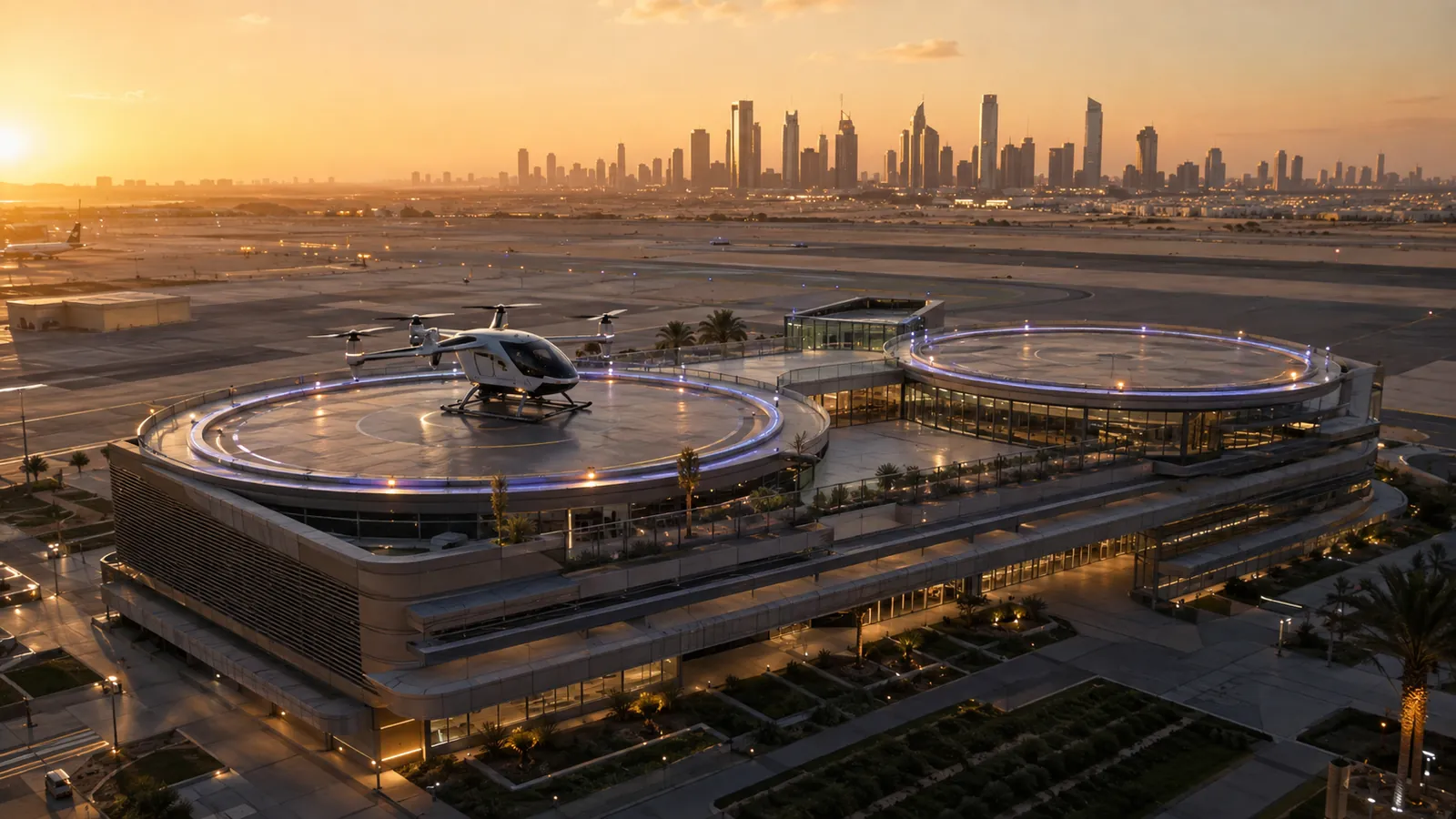
Dubai Certifies the First Purpose-Built Commercial Vertiport
The UAE's GCAA has certified VDX, the Skyports vertiport next to Dubai International, the first purpose-built commercial vertiport to be certified.
Archer Buys Boeing's Wisk, Insitu and SkyGrid in eVTOL Shakeup
Archer is acquiring Boeing's Wisk Aero, Insitu and SkyGrid, absorbing a rival air taxi programme and a profitable military drone unit in one deal.
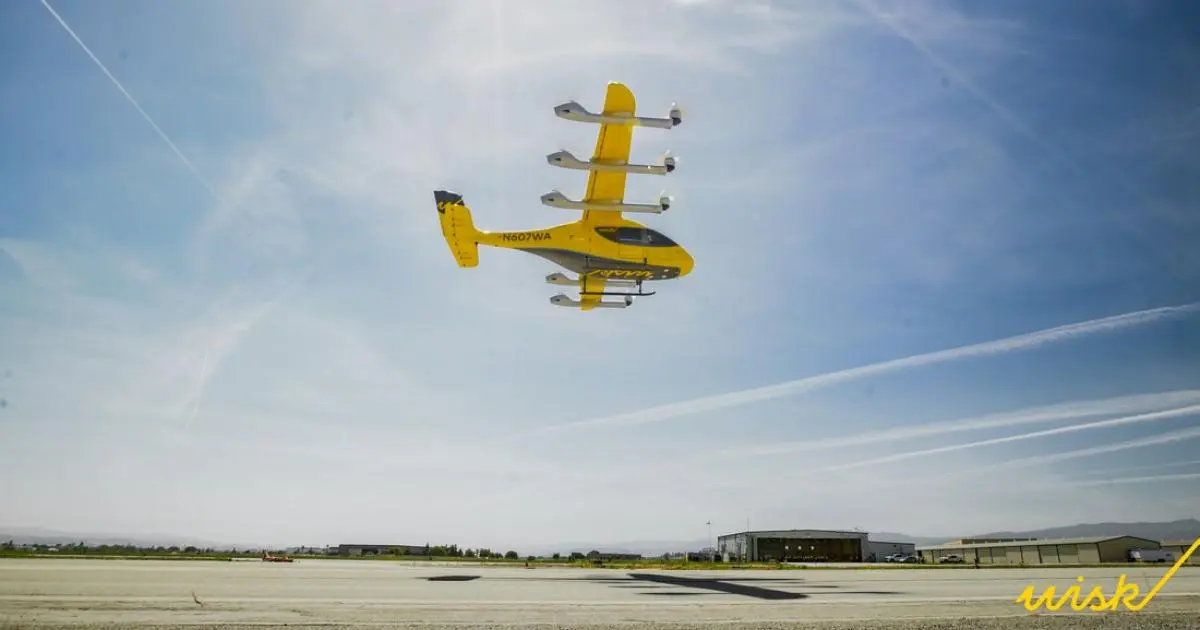
Wisk Aero's Second Gen 6 eVTOL Prototype Completes First Flight
Wisk Aero's second Gen 6 autonomous eVTOL prototype has flown for the first time, joining the original in a California flight test campaign.
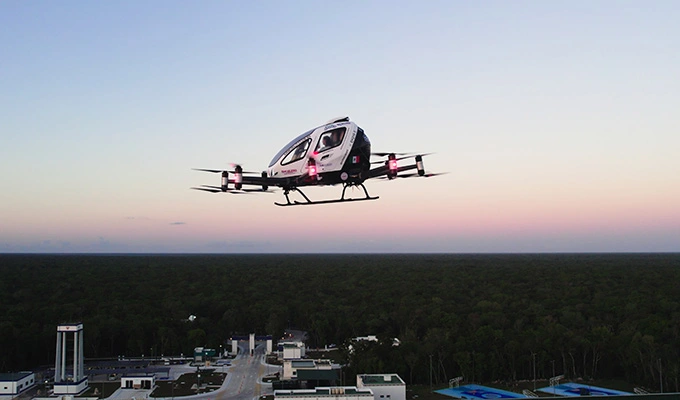
EHang EH216-S Makes First Crewed eVTOL Flights in Mexico
EHang's EH216-S pilotless eVTOL completed its first people-carrying flights in Mexico and Latin America at the FAMEX Tulum Air Show 2026.
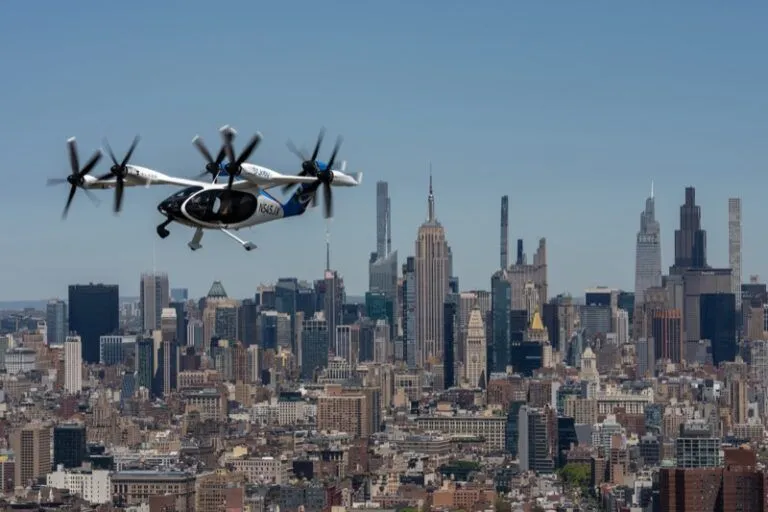
Joby Aviation Flies eVTOL Over New York City
Joby Aviation flew its S4 eVTOL between JFK and Manhattan heliports in New York City's first electric air taxi flights.
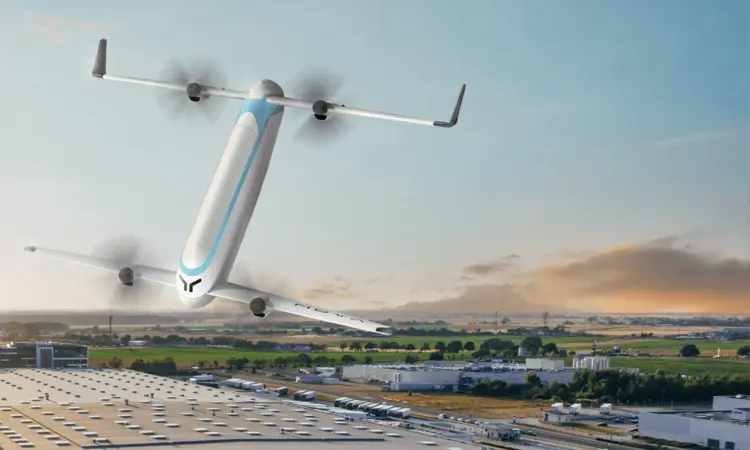
Speedbird and Moya Aero Partner on eVTOL Logistics
Speedbird Aero and Moya Aero have signed an MoU to explore combining Moya's tilt-body eVTOL with Speedbird's BVLOS drone logistics operations.
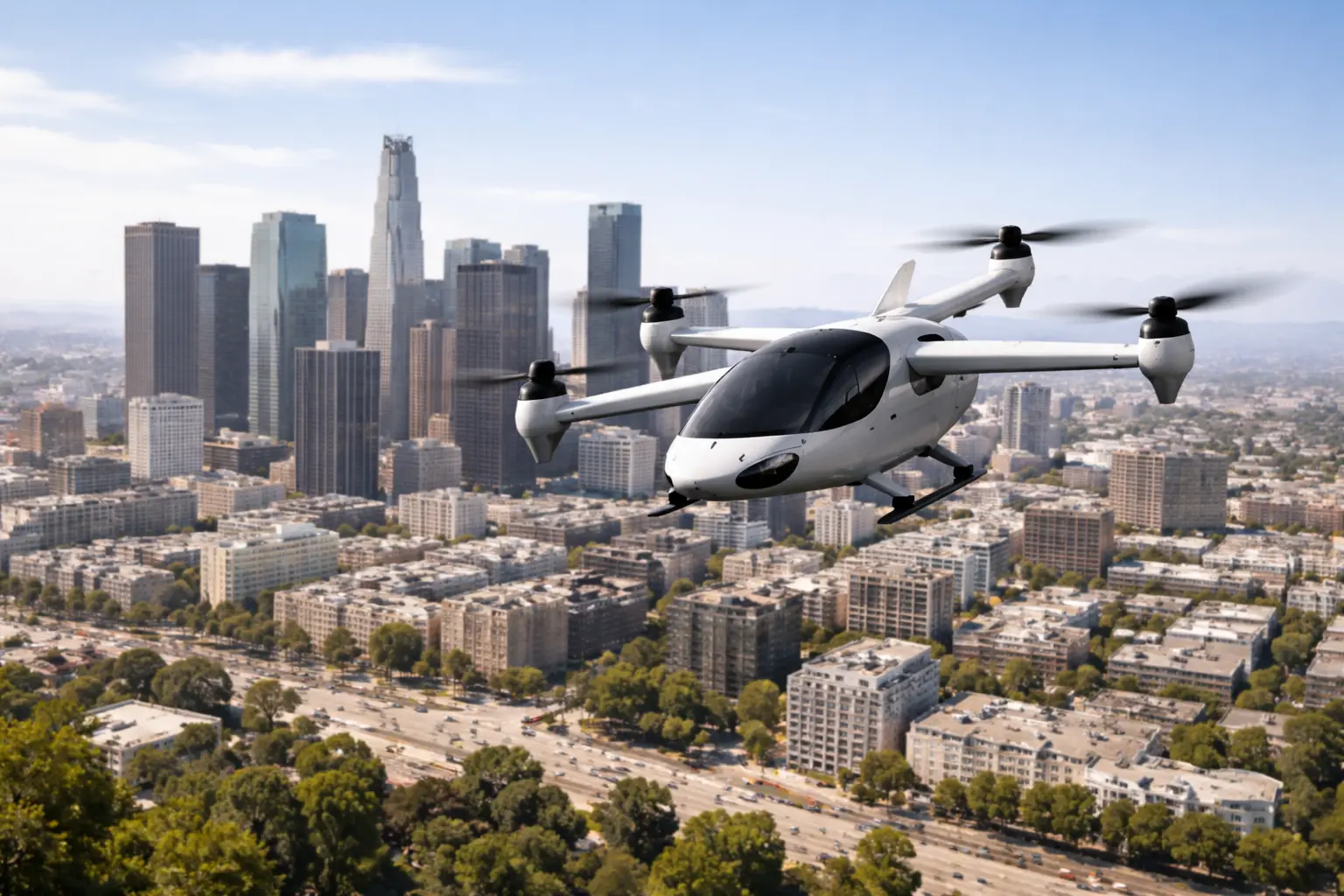
Archer and Joby: Who Gets FAA Certification First in 2026?
Archer Aviation and Joby Aviation are both targeting FAA type certification in 2026. Here's where each program stands and what's left to clear.
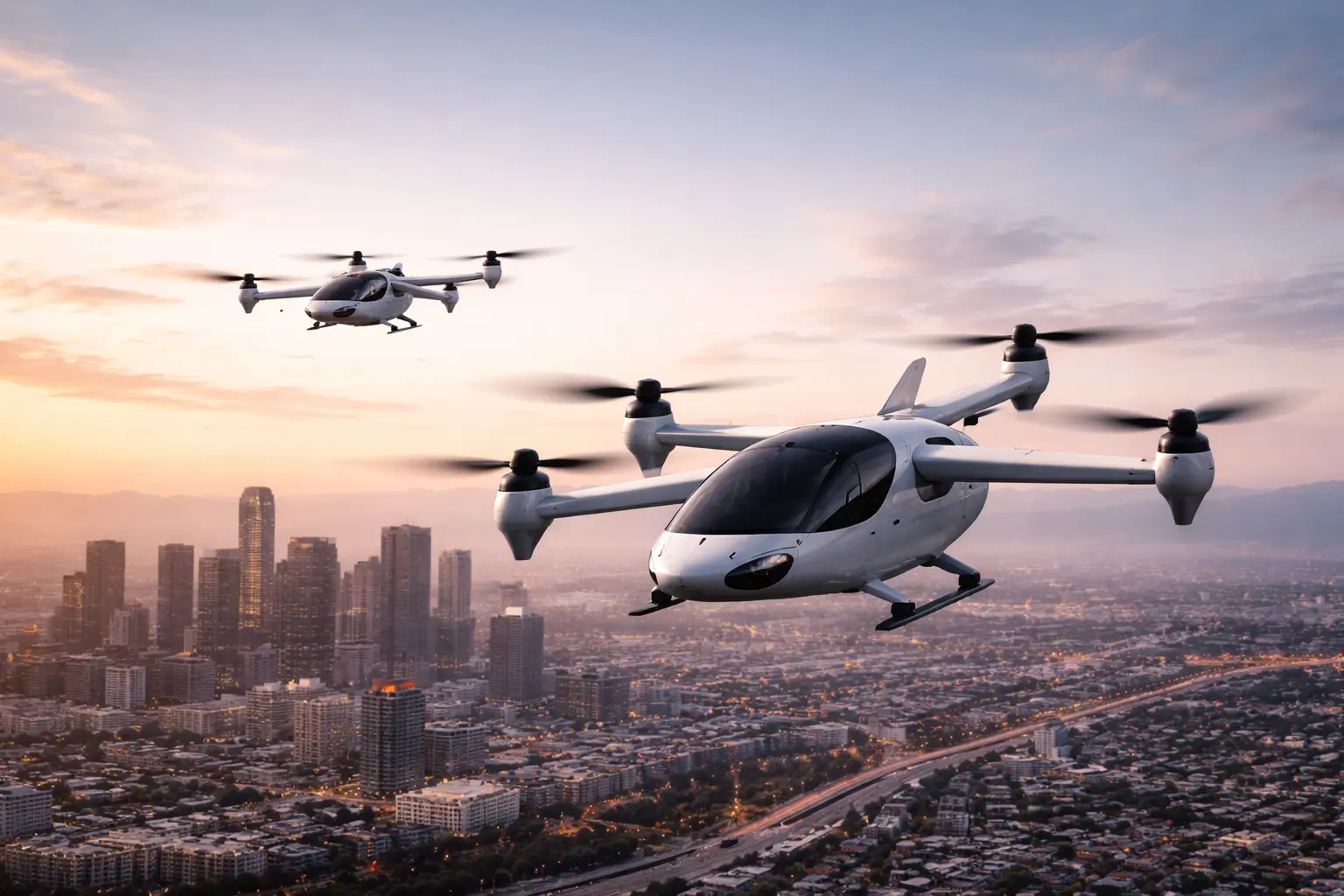
FAA Launches eVTOL Pilot Program Across 26 States
The FAA has selected eight projects for its eVTOL Integration Pilot Program, with operations expected to begin by summer 2026 across 26 states.
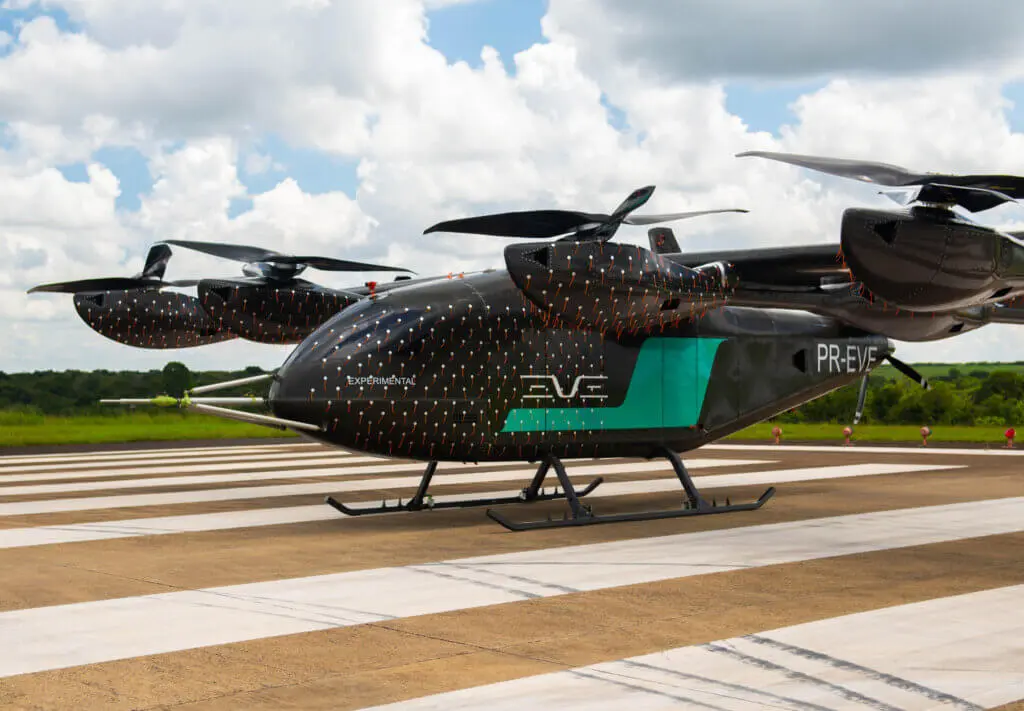
Eve Air Mobility Targets Helicopter Operators in 2026
Eve Air Mobility arrives at VERTICON 2026 with 2,700 eVTOL orders and near-daily test flights targeting helicopter fleets.
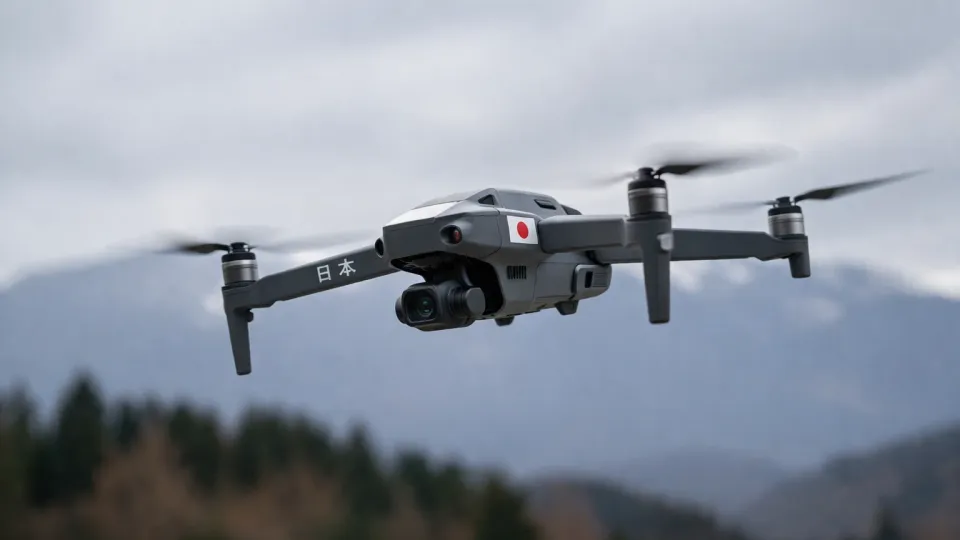
Japan's AAM Roadmap Is Built to Actually Work
Japan's advanced air mobility plan phases infrastructure, regulation, and public trust alongside aircraft development to 2030.
Companies
Joby Aviation
US eVTOL company developing a five-seat electric air taxi, the furthest along in FAA type certification among civilian eVTOL manufacturers.
United States
Archer Aviation
US eVTOL company developing the Midnight air taxi, now acquiring Boeing's Wisk Aero, Insitu and SkyGrid to add autonomy and defense manufacturing.
United States
Wisk Aero
US developer of an autonomous, pilotless four-seat air taxi, wholly owned by Boeing and being sold to Archer Aviation in a deal expected to close by the end of 2026.
United States
Boeing
Boeing is a US aerospace manufacturer with commercial-airplane, defense and space, and fleet-services businesses.
United States
EHang
Chinese autonomous aerial vehicle company with a type-certified EH216-S passenger eVTOL and related aerial-mobility products.
China
Bell Textron
US rotorcraft manufacturer and advanced air mobility developer, making military helicopters, tiltrotors, and autonomous cargo drone platforms.
United States
BETA Technologies
Vermont-based electric aircraft maker, listed on the NYSE, building the ALIA CX300 and A250 and the charging network they run on.
United States
Elroy Air
US developer of the Chaparral autonomous hybrid-electric VTOL cargo aircraft, contracted by the US Army and heading for a Nasdaq listing via SPAC merger.
United States