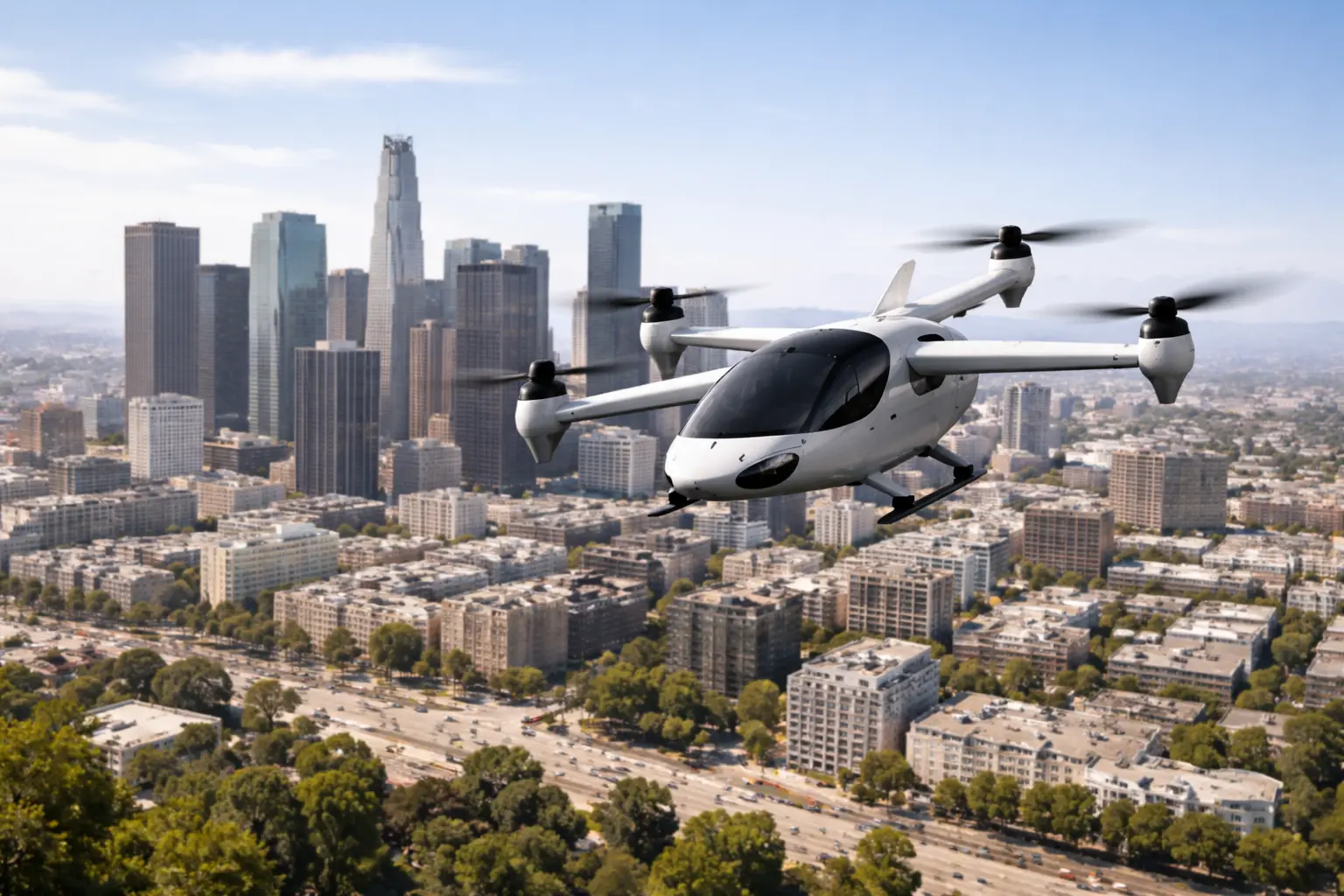

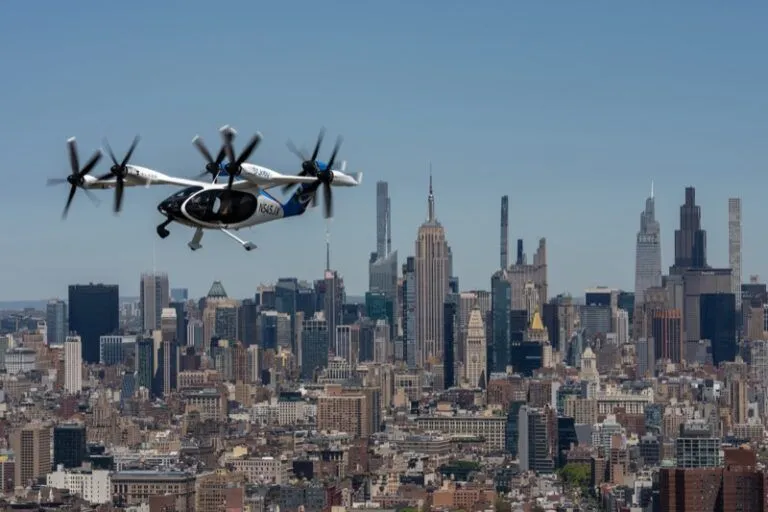
Joby Aviation has flown its S4 eVTOL aircraft over New York City for the first time, completing demonstration flights between JFK Airport and three Manhattan heliports — Downtown Skyport, West 30th Street, and East 34th Street — along the exact routes it plans to operate commercially.
The flights are part of Joby’s “2026 Electric Skies Tour” and were conducted under the White House’s eVTOL Integration Pilot Program, which selected New York City as a launch site in March. The Port Authority of New York and New Jersey participated as an operational partner. The target: connect Lower Manhattan and Midtown to JFK in under ten minutes, a journey that currently takes between one and two hours by car.
How Close Is Commercial Service?
Joby says it is in the final phase of FAA certification, having recently completed the maiden flight of its first conforming aircraft under Type Inspection Authorization — the step that allows FAA pilots to conduct creditable test flights toward type certification. No commercial launch date has been announced.
The S4 carries one pilot and four passengers on battery power. Pilot production is already underway in Marina, California, backed in part by a $500 million investment from Toyota. Delta Air Lines and Uber are partners on the ground-to-air integration side.
To establish its New York foothold before certification closes, Joby acquired Blade Air Mobility’s passenger business in 2025. Blade transported more than 90,000 passengers on Manhattan-to-airport helicopter routes last year, giving Joby an existing customer base and heliport relationships rather than starting from zero.
Why New York Is the Right Market to Demonstrate First
The existing heliport infrastructure is the key variable. Joby doesn’t need to build vertiports to operate in New York — it needs to upgrade existing pads with eVTOL charging equipment, a project the NYCEDC is pursuing with Skyports Infrastructure and Vertiports by Atlantic. That’s a faster path to revenue than markets requiring ground-up infrastructure.
Joby’s stock has lost nearly 40 percent since the start of 2026, leaving the company valued at roughly $8.5 billion. Visible operational milestones in a market as high-profile as New York matter as much for investor confidence as they do for regulatory momentum. Once FAA certification is complete, New York is positioned to be its first commercial route.