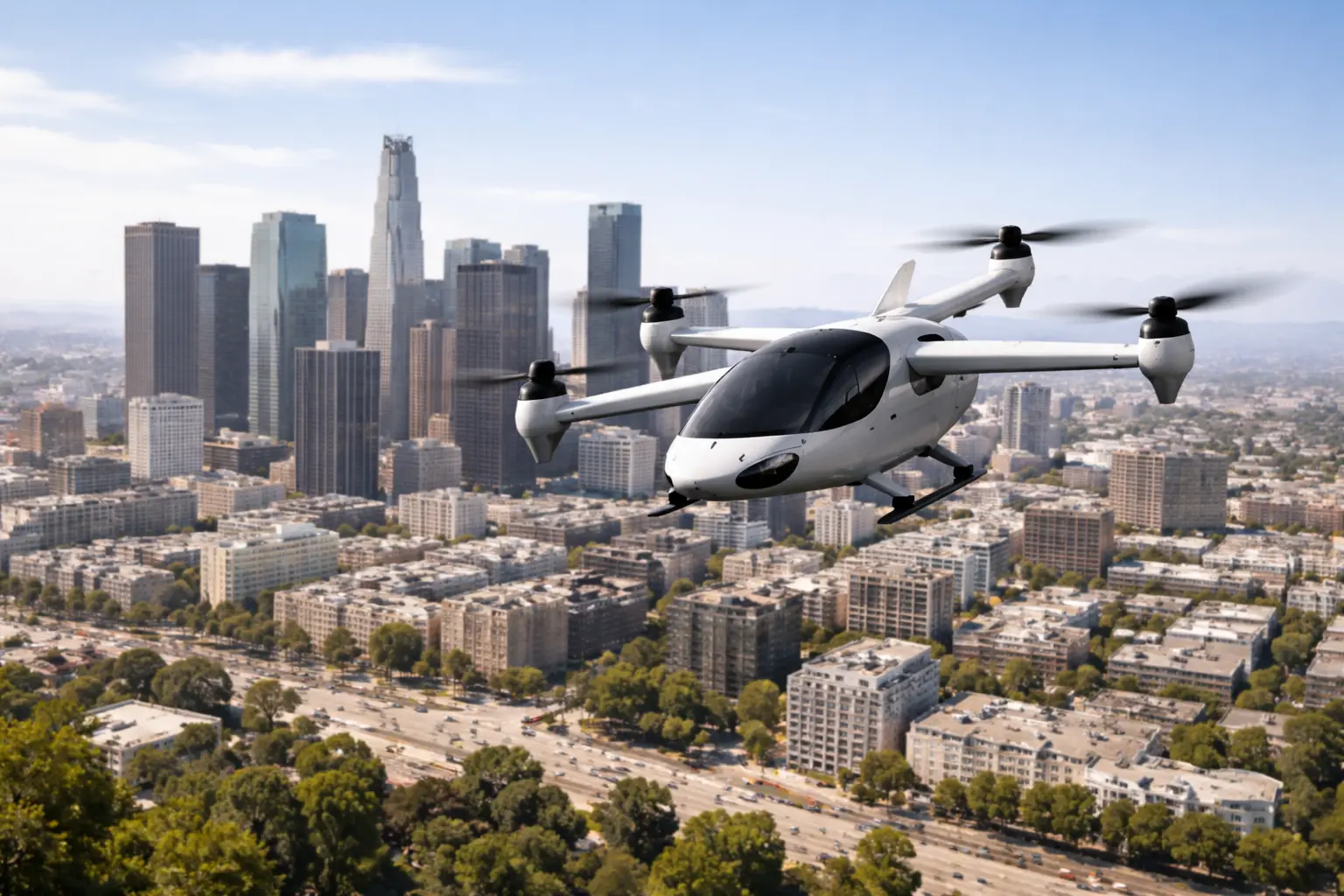


The FAA has selected eight projects for its eVTOL Integration Pilot Program, with operations expected to begin across 26 states by summer 2026. The three-year program — stood up under a Trump executive order from June 2025 — is the closest thing to a commercial eVTOL launch the US has seen, and it arrives while every participating company is still working through full FAA type certification.
That last point is the important context. eIPP is not certification. Participating companies must already be in the certification process, but none have completed it. What the program does is create a structured environment for actual operations to begin before the final regulatory framework is fully set — operational experience that the FAA says will directly inform the standards it still needs to write.
What the Eight Projects Cover
The selected projects span urban air taxi services, regional passenger transport, cargo and logistics, emergency medical response, autonomous flight, and offshore energy-sector transportation. Joby Aviation, Archer Aviation, Elroy Air, and Electra are among the confirmed commercial participants. The FAA has not published a full list of all eight selected projects alongside their geographic footprints, but the program map covers 26 states — a scope that signals this is intended as a genuine national rollout rather than a contained sandbox.
The three-year program clock starts when the first project begins operations, which the FAA has committed will happen by summer 2026.
DARPA’s X-76 Is a Separate but Related Move
On the same week as the eIPP announcement, DARPA confirmed that Bell Textron’s X-76 experimental aircraft has cleared its critical design review and is moving into manufacturing and assembly. The X-76 is not electric — it is a tiltrotor-style VTOL designed to cruise at over 400 knots, roughly 460 mph, compared to the V-22 Osprey’s 275-knot cruise. DARPA expects the X-76 ready for flight testing by early 2028. The program is distinct from the commercial eVTOL push but reflects the same broader institutional momentum around next-generation vertical lift across both military and civil aviation.
Why This Matters for the Certification Stalemate
The eVTOL sector has spent the past two years in a holding pattern. Joby, Archer, and others have been in FAA certification processes that have moved slower than their investors expected, and several European eVTOL companies — Lilium, Volocopter — have hit financial walls waiting for the regulatory path to clear.
eIPP does not solve certification, but it changes the dynamic. Actual operations generate data that paper-based certification processes cannot. The FAA’s explicit statement that eIPP will inform future regulation means the program is partly a mechanism for the agency to learn what it needs to know to finish writing the rules. For Joby and Archer, getting aircraft in the air under eIPP while certification continues in parallel is a materially better position than waiting for certification before flying a single commercial route.
The summer 2026 operations start date is now a public commitment from the FAA. Whether that holds — and which projects actually lift off first — will determine how much of the eVTOL sector’s long-delayed commercial narrative finally becomes real.