

BETA Technologies
Vermont-based electric aircraft maker, listed on the NYSE, building the ALIA CX300 and A250 and the charging network they run on.
1 article
BETA Technologies
BETA Technologies is a Burlington, Vermont electric aviation company that designs and builds electric aircraft, electric propulsion components, and the ground charging equipment that supports them. Unlike most of the eVTOL field it did not lead with an air taxi: its first certification programme is a conventional takeoff and landing aeroplane, with the vertical-lift variant behind it. Customers to date are cargo, medical logistics, defence, and regional airline operators rather than passenger ride-hailing.
Aircraft and Charging
The ALIA platform is now marketed as two distinct aircraft plus a military derivative.
ALIA CX300 — the all-electric conventional takeoff and landing aircraft, the lead certification programme. BETA says it carries up to five passengers or roughly 1,400 lb of cargo.
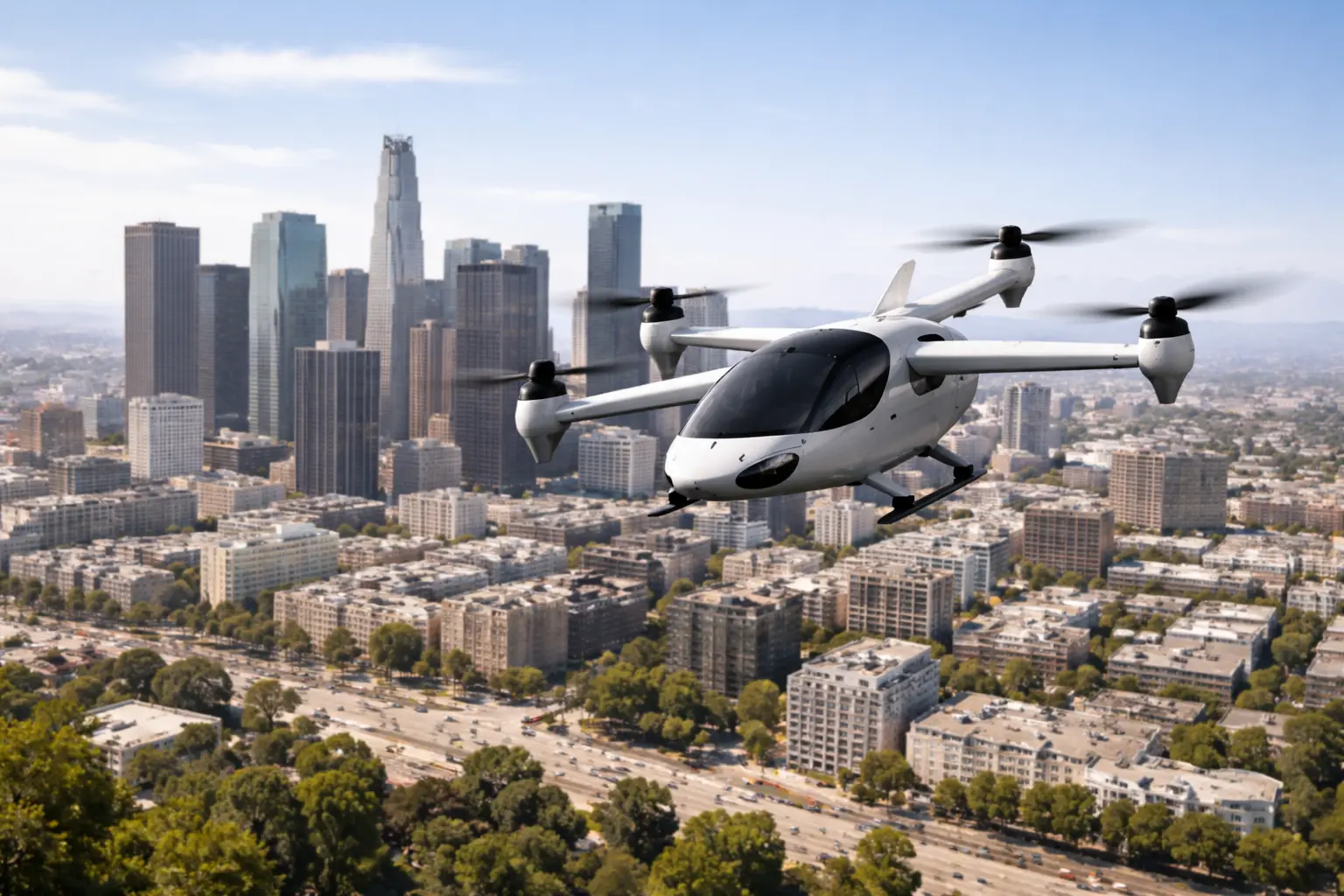
ALIA A250 — the vertical takeoff and landing variant, following the CX300 through development.
MV250 — an autonomous hybrid-electric VTOL for military logistics, launched at the Farnborough International Airshow in July 2026, with hybrid-electric propulsion developed alongside GE Aerospace. In July 2026 Sikorsky announced it would integrate its MATRIX autonomy suite into the aircraft.
Charging hardware — Charge Cubes, Mini Cubes, and thermal management units, sold as products in their own right and deployed as a network. Service revenue, which includes charging and training, is currently the larger of BETA’s two revenue lines.
Financial Position
BETA is public. It listed on the New York Stock Exchange under the ticker BETA on 4 November 2025, selling 34,330,882 Class A shares at $34.00 for net proceeds of about $1,103 million and an implied valuation near $7.4 billion. The shares have since traded well below that: market capitalisation was roughly $4.9 billion in early September 2026.
Full-year 2025 revenue was $35.6 million against a net loss of $745.9 million, with $1.71 billion of cash at 31 December 2025. Second-quarter 2026 revenue was $14.7 million, net loss $148.8 million, adjusted EBITDA negative $109.8 million, and cash $1,479.5 million at 30 June 2026. The company guides to $42–50 million of revenue and adjusted EBITDA of negative $400–445 million for full-year 2026 — a target, not a result. Product backlog was reported at 1,001 aircraft and $3.9 billion at the end of the first quarter of 2026.
Why It Matters
BETA has the strongest balance sheet in electric aviation and a cargo-and-defence customer base that does not depend on a passenger market that does not yet exist. It has flown real missions, including the first operations under the FAA’s eVTOL Integration Pilot Program, carrying organs for United Therapeutics.
The problem is arithmetic. Revenue of $14.7 million a quarter against a $109.8 million quarterly EBITDA loss means the $1.48 billion cash pile funds roughly three years at the current burn, and none of the backlog converts until the CX300 is certified. The backlog figure is also weaker than it looks, resting on term sheets and orders rather than delivered aircraft. Certification timing, not demand, is the variable that decides this company.
Coverage
Topics
Guides
Guide
What Is eVTOL? The Complete Guide to Electric Air Taxis
What eVTOL means, how electric air taxis work, which companies are still standing after the 2026 shakeout, and when passengers will actually ride one.
Guide
Drone BVLOS Rules 2026: FAA Part 108 and EU U-Space
Part 108 is in final review and could make routine BVLOS legal in the US. Europe regulated first and is now simplifying. Where both stand.