
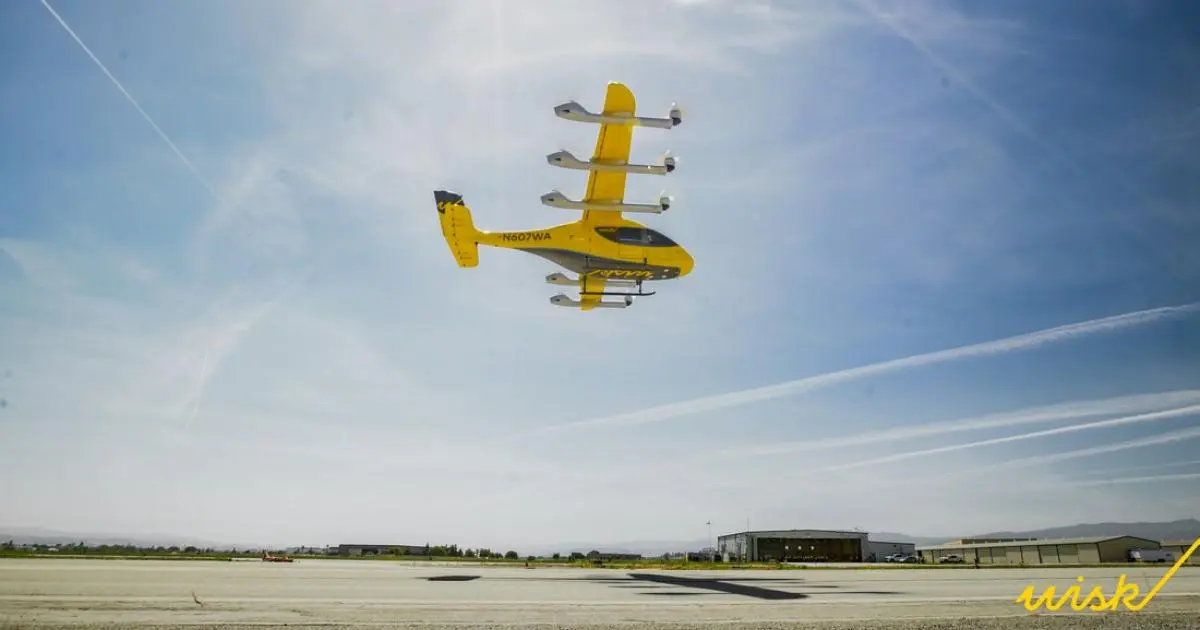
Wisk Aero’s second Gen 6 eVTOL prototype completed its first flight less than two months after rolling out of the company’s Hollister, California hangar - a pace that matched the timeline the Boeing subsidiary laid out in March.
The aircraft, registered N707WA, performed vertical takeoff, hover, and chirp maneuvers during the debut flight. It now joins the original Gen 6 prototype, N606WA, which has been flying since December 2025, in an ongoing autonomous flight test campaign. Both aircraft will work toward expanding the flight envelope, with transition from hover to wing-borne flight as the next major milestone.
Why Two Prototypes Accelerate the Program
Running two aircraft simultaneously is a data throughput decision. Each test flight generates systems validation data; two aircraft generate it at roughly double the rate. CEO Sebastien Vigneron framed it directly: multiple aircraft in flight testing allows the company to “move faster, learn quicker, and stay on the leading edge of autonomous aviation.” A third prototype is slated to join the campaign, expanding capacity further.
The second unit incorporates minor design refinements over the first - weight savings and improved airframe stiffness in select elements - partly to offset the additional instrumentation mass carried by the lead test vehicle. Guillaume Beauchamp, Wisk’s head of aircraft development, disclosed the changes in March.
The Gen 6 Configuration and Certification Target
Gen 6 is the configuration Wisk intends to certify with the FAA. The aircraft is designed for four passengers, a range of up to 145 kilometers, and cruise speeds of up to 120 knots at altitudes between 2,500 and 4,000 feet. Wisk has logged roughly 1,750 test flights across its previous five generations - work that validated the distributed electric propulsion and autonomous operational concepts that Gen 6 is built on.
The company is targeting type certification and entry into service by the end of the decade. Achieving the hover-to-wing-borne transition milestone with both aircraft will be a prerequisite for the sustained envelope expansion testing that certification requires.