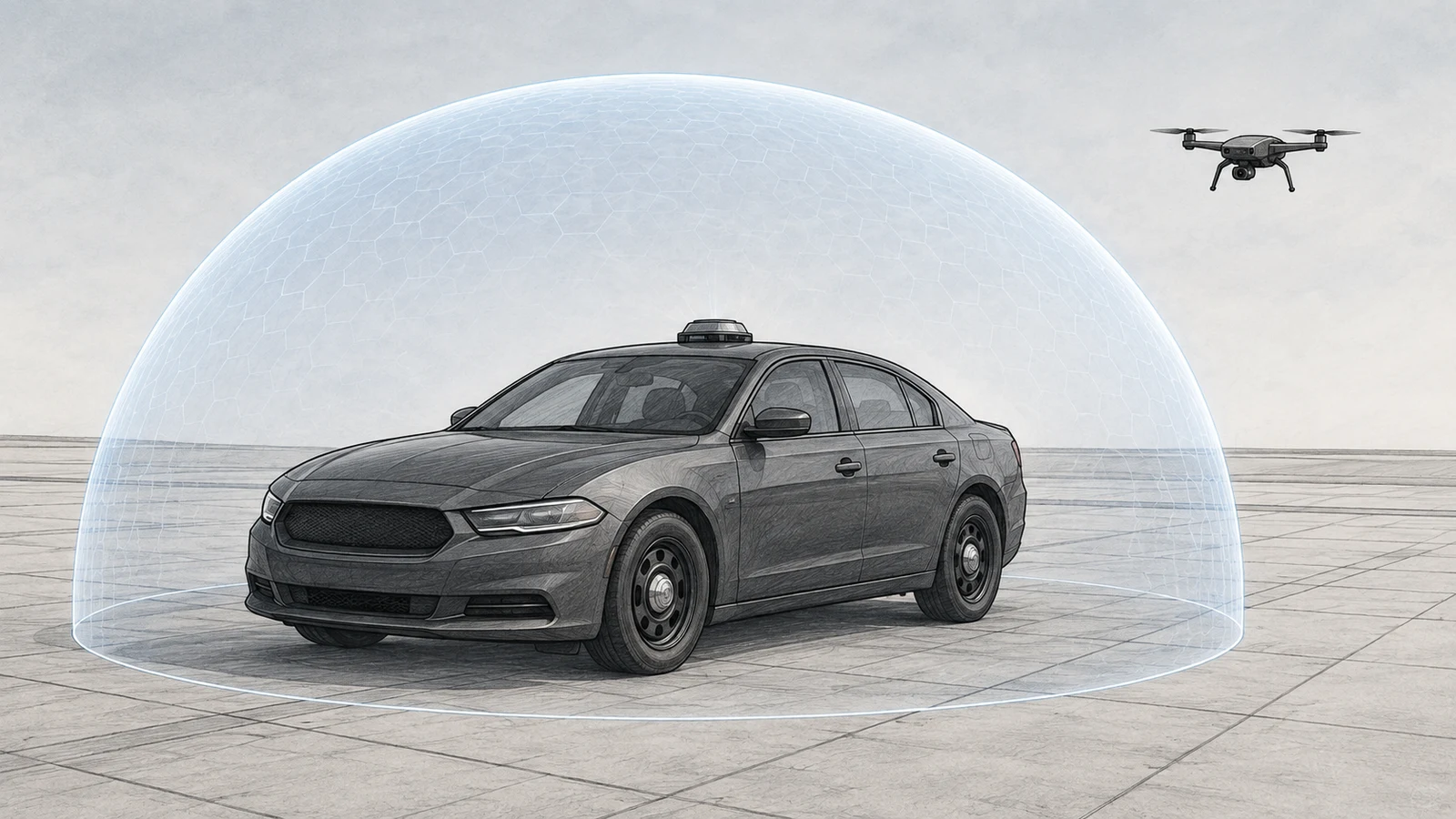

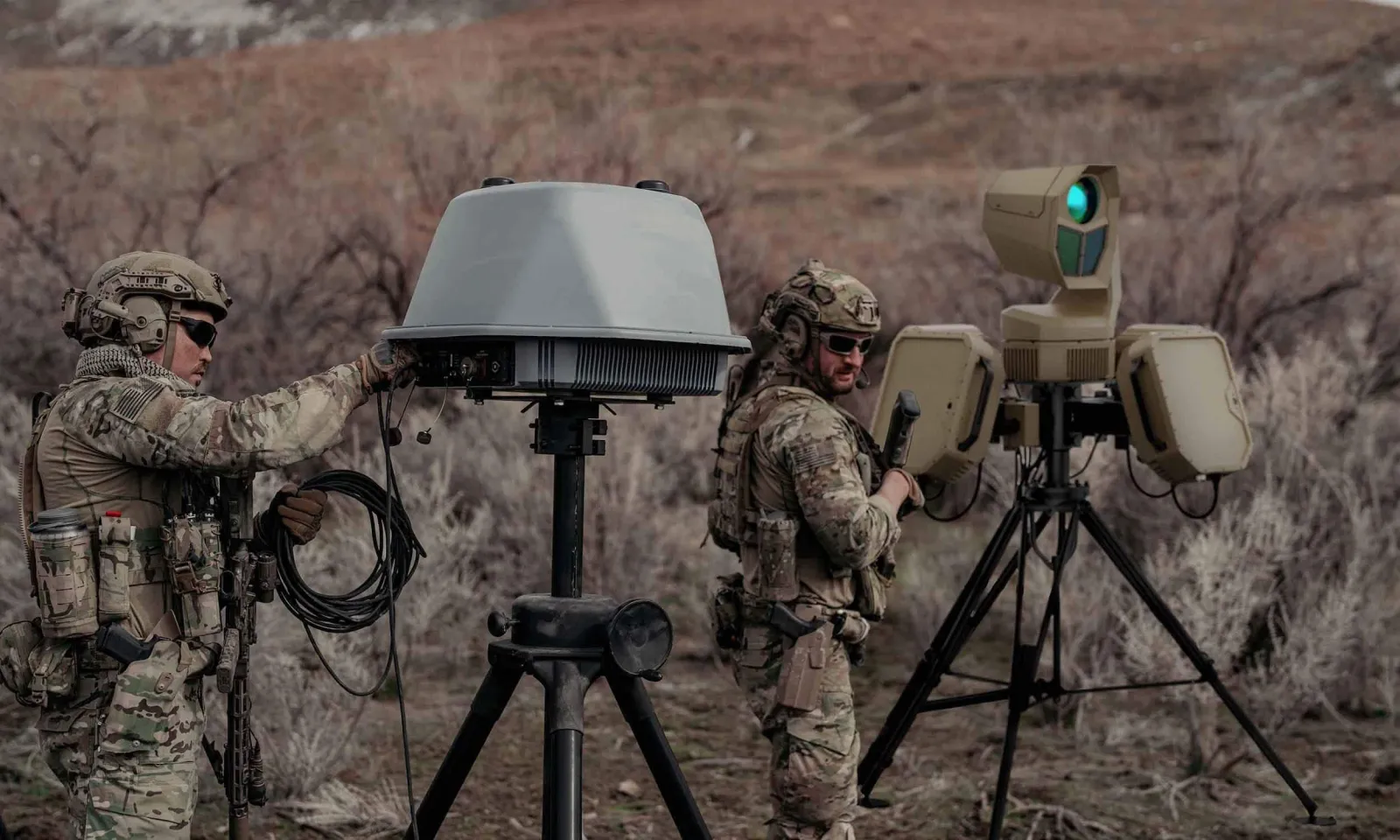
Most C-UAS companies are divisions. Business units inside Boeing, Raytheon, or L3Harris — where counter-drone work competes for budget, attention, and headcount against radar systems, missiles, and fighter jet contracts. DroneShield is none of that. The Australian company does one thing: detect, track, and defeat unauthorized drones. That focus is increasingly rare, and increasingly valuable.
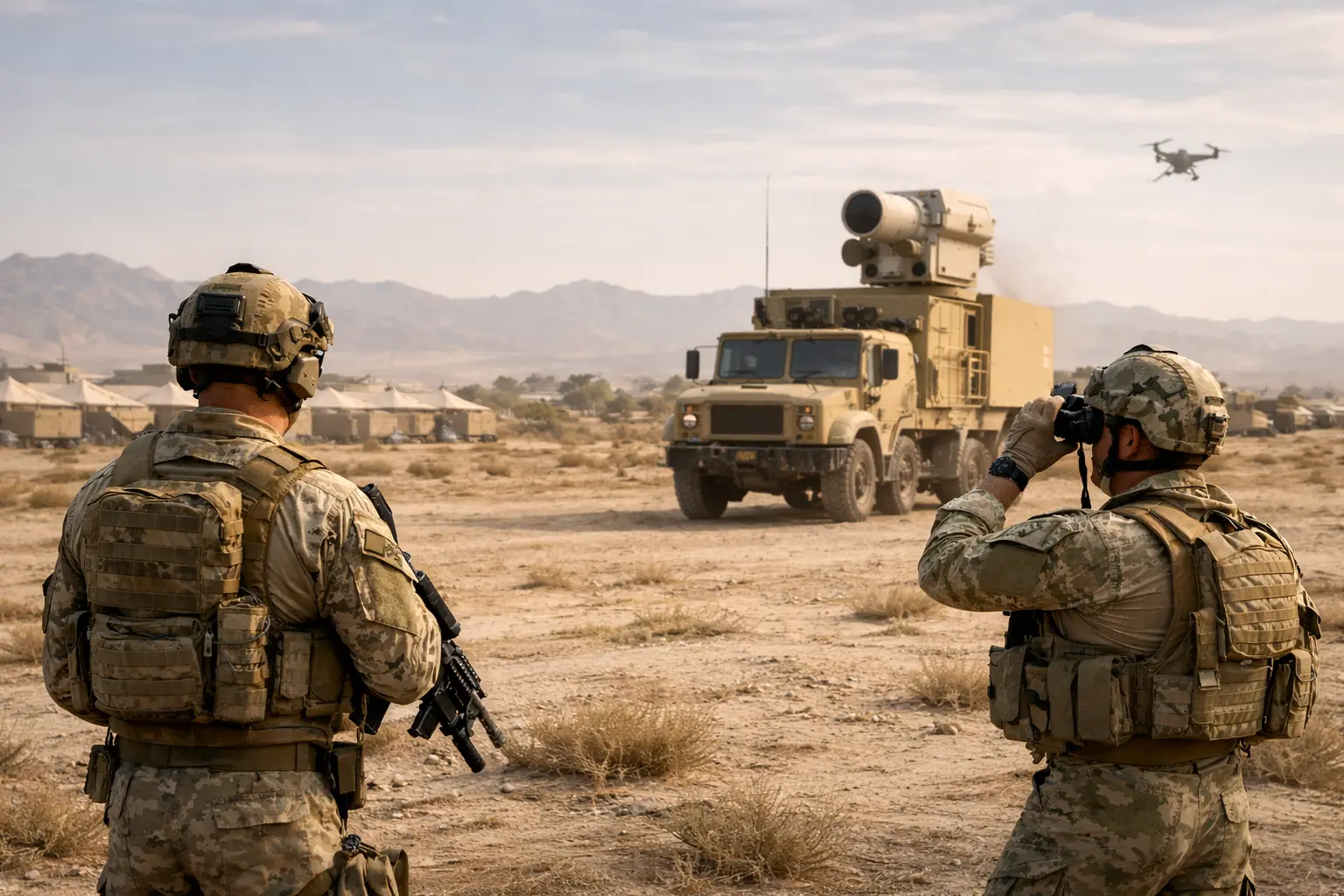
The company’s core product lineup runs from the DroneGun Tactical — a portable RF jammer that cuts the link between drone and operator without kinetic engagement — up to DroneSentry, a fixed or mobile platform that fuses RF sensors, cameras, radar, and acoustics into a 360-degree detection picture. The software layer on top handles threat classification, tracking, and operator alerting, with recent updates targeting swarm scenarios where dozens of drones arrive simultaneously and human operators can’t keep up.
Why the ASX Listing Is an Asset, Not a Liability
DroneShield trades on the Australian Securities Exchange under the ticker DRO, which makes it invisible to most U.S. defense investors who screen domestic exchanges only. That’s a structural inefficiency worth knowing about.
The ASX listing gives the company something U.S.-listed peers don’t have: credible neutrality. NATO allies and Indo-Pacific nations increasingly want C-UAS suppliers that aren’t subject to U.S. export control politics. DroneShield’s Australian base, combined with a Virginia office and U.S. manufacturing capability, lets it bid on Pentagon contracts while remaining accessible to buyers who want supply chain diversification away from American primes. It sits in an unusual position — trusted enough for U.S. DoD work, neutral enough for everyone else.
For U.S. investors, the stock is accessible through most major brokers with international trading capability. The AUD denomination adds currency exposure, but for a defense asset denominated in a stable allied currency, that’s a manageable risk.
The Market It’s Riding
Conflict has done more for C-UAS procurement than any lobbying campaign could. Ukrainian FPV drones costing a few hundred dollars have destroyed tanks worth millions. Houthi drones have disrupted global shipping lanes. The calculation for every military and critical infrastructure operator has shifted: the question is no longer whether to invest in counter-drone capability, but how fast.
DroneShield’s defense revenue accounts for over 60% of its business, with the remainder split across government agencies, critical infrastructure operators, and commercial venues. The addressable market keeps expanding as the threat does — airports, prisons, energy facilities, and public events are all active procurement categories now, not future ones.
The competitive field includes Dedrone, Fortem Technologies, and the C-UAS divisions of the large U.S. primes. DroneShield’s edge is integration depth and portability — systems that work as standalone units without requiring a full base infrastructure to operate. For deployed military units and rapid-response scenarios, that matters.
The main risks are execution and contract timing. A company this size lives and dies by whether large orders arrive on schedule. Watch quarterly order intake figures — backlog growth is the leading indicator that matters most here, ahead of revenue recognition.