

Drone Stocks
Drone Stocks 2026: Every Publicly Traded Drone Company
Every publicly traded drone and eVTOL stock after the 2026 selloff: tickers, market caps, revenue, backlogs, and which businesses the numbers actually support.
Last updated:
11 news articles on Drone Stocks ↓
Guide overview
The drone sector spent the first half of 2026 being repriced, hard. AeroVironment trades at roughly a third of its 52-week high. Kratos is down about 64% from its peak. Joby sits near a 52-week low. Vertical Aerospace has lost more than three quarters of its value and now carries a market capitalisation smaller than the quarterly cash burn of its two largest competitors.
At the same time, revenue across the sector is growing faster than at any point in its history, order backlogs are at record levels, and the Pentagon’s FY2027 request asks for more money for drones and counter-drone systems than the entire category has ever received. Both of those things are true at once, and the gap between them is the whole story of drone stocks in 2026.
This guide covers every significant publicly traded name: ticker, market cap, what the company actually makes, what the financial statements say, and how to think about the risk. All prices and market capitalisations are as of the 4 September 2026 close.
Why Did Drone Stocks Fall in 2026?
Three separate things happened, and they are often conflated.
Company-specific damage at the biggest name. In January 2026 the US government issued a stop-work order on AeroVironment’s BADGER antenna agreement under the Space Force’s SCAR programme. In March the government notified the company it intended to terminate for convenience. The contract carried an estimated $1.7 billion in value, and roughly $1.5 billion of AeroVironment’s $3 billion unfunded backlog was tied to it. The stock fell from $392.86 to $207.73 — over 47% — and a securities class action followed, alleging misrepresentations about the contract. AeroVironment is the sector’s benchmark stock, and its index-level weight meant the damage did not stay contained.
Valuation compression across the speculative names. Kratos entered 2026 trading at a price-to-earnings multiple that only made sense on a growth path several years out. Red Cat, Ondas and Unusual Machines had all run up on narrative rather than delivered revenue. When risk appetite faded through July and August, those were the positions that got sold first — Red Cat fell 26% in a single month over the summer. This was a multiple correction, not a deterioration in the underlying businesses.
The eVTOL certification clock ran down without a certificate. Joby and Archer both entered 2026 targeting FAA type certification within the year. Both made real progress and neither has finished. Every quarter without a certificate is another quarter of burn against a fixed cash pile, and the market has begun pricing the delay rather than the destination.
What did not happen is a collapse in demand. AeroVironment closed fiscal 2026 with $2.7 billion in record bookings and a funded backlog up 63%. Kratos backlog passed $2 billion. Ondas backlog reached $757 million. DroneShield reaffirmed full-year guidance of A$250–270 million. The order books and the share prices moved in opposite directions this year, which is the single most important fact for anyone looking at the sector now.
How to Think About Drone Stocks
The phrase “drone stock” covers four fundamentally different businesses, and confusing them is expensive.
Defense drone manufacturers sell hardware and munitions to governments under multi-year contracts. Demand is driven by geopolitics and defense budgets, not consumer adoption. Revenue is real and contracts are binding — though as AeroVironment demonstrated this year, a government contract can be terminated for convenience with a signature. AeroVironment, Kratos, Aevex and Red Cat are this category.
Supply-chain and components is the newest investable category and the one most directly created by policy. Unusual Machines makes NDAA-compliant flight controllers, motors and cameras in Florida. Its thesis is not that drones grow; it is that Chinese components get legislated out of the US market. The September 2026 tariffs made that thesis considerably more concrete.
Counter-UAS is a separate business from building drones and is currently growing faster. DroneShield and the counter-drone lines inside AeroVironment and Ondas benefit from drone proliferation regardless of who wins the manufacturing race.
eVTOL companies are ventures betting on FAA certification, air mobility infrastructure and unit economics that do not yet exist at scale. Joby, Archer and Beta are the best-funded examples. Their share prices reflect optionality, not earnings — though for the first time in 2026, two of them have meaningful revenue lines that came from acquisitions rather than air taxis.
The Numbers at a Glance
| Company | Ticker | Price | Market cap | TTM revenue | Net income |
|---|---|---|---|---|---|
| AeroVironment | AVAV | $144.65 | $7.29B | $1.98B | -$265.1M |
| Kratos Defense | KTOS | $47.82 | $8.98B | $1.52B | +$30.9M |
| Aevex Aerospace | AVEX | $16.47 | $1.88B | $697.0M | +$22.4M |
| Ondas | ONDS | $7.62 | $4.35B | $174.1M | +$85.8M |
| Red Cat | RCAT | $8.37 | $1.28B | $71.5M | -$97.5M |
| Unusual Machines | UMAC | $23.76 | $1.19B | $31.9M | -$6.5M |
| Joby Aviation | JOBY | $6.74 | $6.67B | $116.3M | -$878.2M |
| Beta Technologies | BETA | $22.20 | $5.19B | $44.8M | -$1.05B |
| Archer Aviation | ACHR | $5.71 | $4.40B | $6.9M | -$799.7M |
| EHang | EH | $4.69 | $355.7M | $56.3M | -$51.4M |
| Vertical Aerospace | EVTL | $0.60 | $102.7M | n/a | n/a |
Ondas’ positive net income is an accounting artefact rather than a profitable business — see its entry below. Two companies on this list generate genuine operating profit: Kratos and Aevex.
Defense Drone Stocks
AeroVironment (AVAV)
Ticker: AVAV, NASDAQ. Price $144.65, market cap $7.29 billion. 52-week range $135.20 to $417.86.
AeroVironment remains the benchmark pure-play drone stock and had the worst year of any large name in the sector. Its portfolio spans Switchblade 300 and 600 loitering munitions, Puma and Raven small ISR drones, the JUMP 20, the P550, and the counter-UAS and directed-energy lines acquired in the $4.1 billion BlueHalo deal that closed in May 2025.
Fiscal 2026, which ended in April, produced revenue of nearly $2.0 billion — up 141% year over year, with 26% organic growth. Bookings hit a record $2.7 billion and funded backlog reached $1.2 billion, up 63%. The company nonetheless reported a net loss of $265.1 million, or $5.40 per share, driven mainly by $240.7 million of goodwill impairment and acquisition amortisation. Fiscal 2027 guidance is $2.125 to $2.225 billion of revenue with adjusted EBITDA of $305 to $325 million.
The SCAR termination is what broke the stock, and its effects are not finished: the goodwill write-down in the space division, a securities class action, and a disclosed material weakness in internal controls are all consequences. Capital expenditure is guided to 12–14% of revenue as manufacturing expands in Salt Lake City, Huntsville and Albuquerque, and free cash flow is expected to be negative in fiscal 2027.
Against that, the contract wins have kept coming. On 2 September the Army awarded AeroVironment $464.8 million for LOCUST X3 under the Enduring-High Energy Laser programme — the first production contract for a high-energy laser weapon in US history, covering a 30-kilowatt system aimed at Group 1–3 drones. The company also holds a $117.3 million Army production award for 82 P550 aircraft under Long Range Reconnaissance.
Twenty analysts rate the stock Buy with an average target around $226, which implies the sell side has not marked its models down to match the share price. Quarterly results are due 9 September 2026, and they are the near-term event that matters.
Kratos Defense & Security Solutions (KTOS)
Ticker: KTOS, NASDAQ. Price $47.82, market cap $8.98 billion. 52-week range $43.09 to $134.00.
Kratos builds the XQ-58A Valkyrie loyal wingman, aerial target drones including the BQM-167, tactical ISR systems, satellite communications hardware and rocket propulsion. Trailing revenue is $1.52 billion, up 25.5%, with net income of $30.9 million. Backlog passed $2 billion at the end of the first quarter, roughly 72% of it funded.
The stock is down about 64% from its high, and the reason is arithmetic rather than operational. Even after the fall, Kratos trades at a price-to-earnings ratio near 280. The business is profitable but only barely, and the valuation was built on the assumption that the Pentagon’s shift toward affordable attritable aircraft converts into Kratos revenue at scale. That thesis is intact — the FY2027 budget request funds it explicitly — but the timing is a matter of procurement cycles, and the market spent 2026 discounting for how long those take.
Twenty-one analysts rate it Strong Buy with an average target near $106. Kratos pays no dividend. The risks are programme timing and budget allocation rather than existential questions about the business.
Aevex Aerospace (AVEX)
Ticker: AVEX, NYSE. Price $16.47, market cap $1.88 billion. 52-week range $13.07 to $42.34.
Aevex is the most important addition to this list since it was last written, and the only genuinely profitable pure-play defense drone manufacturer available to public investors. It listed on 17 April 2026, selling 16 million shares at $20 to raise $320 million, and opened at $23.01 for a valuation around $2.57 billion. The stock more than doubled within two sessions, reaching roughly $40 by 20 April, and has since given all of that back and more.
The business is real. Trailing revenue is $697 million, up 10.4%, with net income of $22.4 million. Two segments: Tactical Systems, which builds autonomous defense aircraft and contributes about 75% of revenue, and Global Solutions, which provides aircraft modification, engineering and AI-enabled ISR services. Aevex is best known for the Phoenix Ghost one-way attack aircraft and says it has delivered more than 6,200 systems. In 2026 it announced a $650 million acquisition of BlackSea Technologies, moving it into uncrewed surface vessels.
Aevex is the closest thing the public market offers to an Anduril-style business, and it trades at roughly 2.7 times revenue against Kratos at nearly six. The share-price round trip from $20 to $40 to $16 within five months is a fair warning about how thinly this part of the market trades. Eight analysts rate it Buy with an average target near $36.
Red Cat Holdings (RCAT)
Ticker: RCAT, NASDAQ. Price $8.37, market cap $1.28 billion. 52-week range $5.77 to $18.78.
Red Cat is a pure defense play through Teal Drones. Its Black Widow won the US Army’s Short Range Reconnaissance programme of record in November 2024 and is NATO-approved; the Teal 2, Golden Eagle and Fang F7 sit on the Blue UAS Cleared List.
The company has moved to a calendar fiscal year, and the growth is genuine: second-quarter 2026 revenue was $20.2 million, up 527% year over year, and full-year guidance of $150 to $180 million has been affirmed. Customer concentration is improving — Army revenue fell to 50% of the total in the first half from 73% in fiscal 2025, with a Japanese customer now second-largest and NATO’s Support and Procurement Agency third.
The problems are margin and cash. Gross margin was 16.1% in the quarter, adjusted EBITDA was negative $31.8 million, operating cash flow was negative $78.7 million, and the quarter missed consensus revenue. Cash stood at $325.6 million, which funds the ramp but not indefinitely at that burn. Chinese export restrictions on critical components were a specific headwind this year — an unusually direct illustration of why the NDAA supply-chain rules exist.
Red Cat remains an asymmetric bet on production execution. Eight analysts rate it Strong Buy with a target near $17, roughly double the current price.
Ondas (ONDS)
Ticker: ONDS, NASDAQ. Price $7.62, market cap $4.35 billion. 52-week range $4.90 to $15.28.
Ondas is unrecognisable from the company described in earlier versions of this guide. Second-quarter revenue was $83.8 million — up 67% sequentially and more than thirteen times the $6.3 million of a year earlier. Full-year 2026 guidance is $525 to $550 million, third-quarter guidance is $140 to $155 million, pro forma backlog is $757 million, and the balance sheet holds roughly $1.4 billion in cash and investments. The company has been acquiring aggressively, adding Cyberhawk and Aran Defense, and holds an Israeli programme for next-generation tactical drones alongside US Army orders. Its American Robotics Optimus went onto the Blue UAS Cleared List in February 2026.
Read the earnings statement carefully. The trailing net income figure of $85.8 million is not operating profit. Ondas issued warrants alongside its October 2025 and January 2026 equity raises, and those warrants are remeasured at fair value every reporting period, producing enormous non-cash swings: a $361.2 million net gain in the first quarter, a $89.7 million net loss in the second. Underneath that, the second-quarter operating loss was $162.9 million. The company itself notes these gains are unrelated to core operating performance.
Short interest exceeds 40% of float, which is the highest on this list and reflects a genuine two-sided argument about whether guidance of this magnitude can be delivered. Nine analysts rate it Strong Buy with an average target near $19.
Unusual Machines (UMAC)
Ticker: UMAC, NYSE American. Price $23.76, market cap $1.19 billion. 52-week range $7.25 to $34.93.
Unusual Machines is not a drone manufacturer. It makes NDAA-compliant components — flight controllers, ESCs, motors, cameras — in Florida, and the investment thesis is entirely geopolitical: as Chinese components are restricted, US-made alternatives capture the market.
That thesis got a large push in 2026. Second-quarter revenue was $16.7 million against consensus of $9.19 million, up 687% year over year, with gross margin at 34.7% and headcount doubled to 240. Trailing revenue is $31.9 million and cash is $229.6 million. The company has been added to the Russell 2000 and targets $250 million of annual revenue by 2027.
The Section 232 tariffs that took effect on 3 September are the most direct policy tailwind any company on this list has received. They apply 100% duties to drone critical components and 25% to sub-25kg aircraft, and the proclamation explicitly offers duty-free import for companies committing to US manufacturing build-outs. Unusual Machines is the purest listed expression of that trade. It is also priced for it, at roughly 37 times trailing revenue, and the $250 million target is a company projection rather than a booked order.
DroneShield (DRO)
Exchange: ASX. OTC in the US as DRSHF.
DroneShield builds counter-UAS systems — RF detection, AI threat identification and jamming hardware. It is not a drone manufacturer, and it benefits from drone proliferation regardless of who builds them.
First-half 2026 revenue was a record A$125.8 million, up 74%, with recurring revenue up 229% to A$11.5 million. Full-year guidance of A$250 to A$270 million was reaffirmed. The company nonetheless posted a statutory loss of A$32.2 million against a A$2.1 million profit a year earlier, and underlying EBITDA of negative A$12.4 million, as it spends on production capacity, enterprise systems, long-lead inventory and headcount.
This is a deliberate investment phase in a business with real, growing, increasingly recurring revenue. The ASX listing limits accessibility for US retail investors; the OTC line provides a route with the usual spread and liquidity costs.
AgEagle Aerial Systems (UAVS)
AgEagle produces the eBee VISION and eBee TAC fixed-wing mapping drones, both on the Blue UAS Cleared List. Second-quarter 2026 revenue nearly doubled sequentially, and the company secured the two largest orders in its history — $5.5 million combined from the French Army and UAE security forces. That is meaningful for AgEagle and immaterial for anyone else, which is the correct way to read this company. It has executed two reverse stock splits since 2024, revenue remains in the single-digit millions, and dilution risk is high. The Blue UAS listing is a genuine regulatory advantage attached to a precarious balance sheet.
Parrot (PARRO)
Euronext Paris. Parrot makes the ANAFI USA, one of the few non-US platforms on the Blue UAS Cleared List, and runs a revenue-generating enterprise business that is subscale against US competitors. The Section 232 allied tariff cap of 15% for EU member states applies only where an importer can certify that substantially all critical components and technology originate in qualifying jurisdictions — a test Commerce has not yet defined. For a European manufacturer whose motors, batteries and radios still route through China, the cap may not be reachable.
eVTOL and Air Mobility Stocks
Joby Aviation (JOBY)
Ticker: JOBY, NYSE. Price $6.74, market cap $6.67 billion. 52-week range $6.61 to $19.98.
Joby is building the S4 eVTOL and remains the most technically advanced and best-capitalised air taxi company in the world. It has reached the fifth and final stage of FAA type certification — the type certificate itself — with five aircraft flying and twelve more in production. What remains is completing for-credit flight testing with FAA pilots at the controls, demonstrating compliance with outstanding airworthiness standards in flight, and the final administrative determination.
The financial picture has changed shape. Second-quarter revenue was $38.6 million and full-year guidance has been raised to $115 to $125 million — but that revenue comes from the Blade passenger business Joby acquired for up to $125 million in 2025, not from eVTOL operations. Trailing revenue is $116.3 million against a trailing net loss of $878.2 million. Cash and investments stood at $2.3 billion at the end of the second quarter, with second-half cash use guided at $385 to $415 million. Joby has continued to spend into that position, adding Resonant Sciences for $500 million and building a Fort Worth hub, and it expects first flights under the FAA’s eVTOL Integration Pilot Program in Texas from September.
Toyota has committed roughly $900 million. The Department of Defense funds a hybrid military variant. These partnerships de-risk commercialisation but do not accelerate certification, which the FAA governs regardless of investor pressure.
Eleven analysts rate it Hold with an average target near $11. That Hold consensus, against Buy or Strong Buy on almost everything else in this guide, is the sell side saying the same thing the share price is: the runway is adequate, the aircraft works, and the date keeps moving.
Archer Aviation (ACHR)
Ticker: ACHR, NYSE. Price $5.71, market cap $4.40 billion. 52-week range $4.30 to $14.62.
Archer builds the Midnight eVTOL, a twelve-rotor piloted air taxi for short urban routes. It was the first eVTOL company to have 100% of its Means of Compliance — all 797 of them — accepted by the FAA, and it holds a $142 million US Air Force contract.
The 2026 story is a transformation rather than a certification. Archer agreed to acquire Wisk Aero, Insitu and SkyGrid from Boeing in exchange for Boeing taking a stake of nearly 20%. That single transaction gives Archer an autonomous flight programme, an established military UAS manufacturer in Insitu, and airspace management software — and it removes Boeing from the list of companies with wholly owned eVTOL exposure.
The financial position is the constraint. Trailing revenue is $6.9 million against a trailing net loss of $799.7 million. Cash fell $188.8 million sequentially to $951.1 million in the first quarter against total liquidity of roughly $1.8 billion, at a burn rate near $180 million a quarter. Archer has less room for a certification slip than Joby does, and it has just taken on the integration of three businesses at once.
Nine analysts rate it Buy with a target near $11. Both Archer and Joby entered 2026 targeting certification within the year, and neither has it.
Beta Technologies (BETA)
Ticker: BETA, NYSE. Price $22.20, market cap $5.19 billion. 52-week range $13.43 to $39.50. IPO November 2025 at $34.
Beta takes a different route: the CX300 is a fixed-wing electric aircraft rather than a multirotor, targeting cargo, defense and medical transport before passenger service, which means a materially lower certification bar than full eVTOL.
Second-quarter revenue was $14.7 million, up 146%, with full-year guidance of $42 to $50 million — the largest revenue base of any eVTOL-native company here. Backlog stands at 1,001 aircraft valued at $3.9 billion, and the company has outlined up to $1 billion in EXIM financing. CX300 certification planning is 89% complete with the FAA having accepted the full set of compliance requirements, and Beta targets certification by the end of 2026. Loganair has signed a term sheet for five aircraft with options on five more, and Beta unveiled the autonomous hybrid-electric MV250 at Farnborough.
The trailing net loss is $1.05 billion, the largest on this list, and the stock trades well below its $34 IPO price. Beta has the most credible near-term revenue path in the category and is spending accordingly.
EHang (EH)
Ticker: EH, NASDAQ. Price $4.69, market cap $355.7 million. 52-week range $4.35 to $20.20.
EHang is the only eVTOL operator whose aircraft carries a full regulatory set: the EH216-S holds the world’s first type certificate, production certificate and standard airworthiness certificate for a pilotless eVTOL, all from the Civil Aviation Administration of China. It delivered 35 EH216-series units in the second quarter.
Revenue is recovering from a weak start to the year — RMB25.7 million in the first quarter, RMB77.9 million in the second, against full-year guidance of RMB600 million — but the market has lost patience. The stock is down roughly 77% from its 52-week high, Goldman Sachs, JPMorgan and Bank of America have all downgraded it over regulatory delays and valuation, and the market capitalisation has fallen below $400 million.
The investment case is complicated by geopolitics in both directions. EHang is a Chinese company listed on a US exchange and carries HFCAA delisting risk. Its regulatory advantage in China has no US analog. For investors comfortable with that risk, EHang offers proof that autonomous passenger flight works commercially at some scale. For investors who are not, the delisting risk alone warrants avoidance.
Vertical Aerospace (EVTL)
Ticker: EVTL, NYSE. Price $0.60, market cap $102.7 million. 52-week range $0.57 to $7.33.
Vertical is building the VX4 and is in the most precarious position of any company in this guide. It secured roughly $100 million of financing commitments in the first half of 2026, flew the aircraft on five consecutive days at Farnborough, and expects a Critical Design Review by the end of the year. Those are real milestones.
They do not change the arithmetic. A market capitalisation near $100 million against the capital requirements of eVTOL certification means any further raise is heavily dilutive at a share price near sixty cents. Deutsche Bank cut its target on funding concerns. Vertical faces the same obstacles as Joby and Archer with a small fraction of their cash. Analyst targets near $8 imply upside above 1,200%, which should be read as a statement about how far the stock has fallen rather than a forecast.
Strata Critical Medical (SRTA) — formerly Blade Air Mobility
Blade Air Mobility no longer exists as an air mobility investment. It sold its entire passenger division — US and European operations, terminals, and the Blade brand — to Joby in 2025 and rebranded the remainder as Strata Critical Medical, a medical logistics and services business. Strata retains a long-term partnership giving it access to Joby aircraft for medical transport. Anyone holding BLDE for eVTOL exposure now owns a medical logistics company with an option attached.
Defense Primes: Drone Exposure Without Drone Focus
The major defense contractors all have drone programmes but none derives the majority of revenue from unmanned systems. Their share prices move on overall defense budgets, not drone-specific news.
Northrop Grumman (NOC) has the most meaningful UAS exposure through the RQ-4 Global Hawk and MQ-4C Triton.
Lockheed Martin (LMT) produces classified UAS platforms, but the F-35 dominates the revenue picture.
Boeing (BA) produces the MQ-25 Stingray and ScanEagle. Its position changed materially in 2026: it agreed to divest Wisk Aero, Insitu and SkyGrid to Archer for a stake of nearly 20% in that company, converting direct ownership of an eVTOL and UAS portfolio into equity in a pure play.
RTX contributes sensors, payloads and the Coyote counter-UAS interceptor — systems that go onto drones and shoot them down rather than complete aircraft.
Textron (TXT) operates through Textron Systems with the Aerosonde platform. The RQ-7 Shadow has been retired by the US Army, making next-generation wins critical.
L3Harris (LHX) provides ISR payloads, EO/IR sensors and electronic warfare systems that appear throughout the Blue UAS ecosystem, including WESCAM sensor turrets.
The Companies You Cannot Buy
Three of the most important drone companies in the world remain private, and their absence distorts the public market.
Anduril is valued around $61 billion. Palmer Luckey has said the company will go public, and CEO Brian Schimpf has cautioned against listing into a hype cycle. There is no S-1 and no confirmed date; the signal has been that a listing follows Arsenal-1 delivering at scale.
Shield AI was valued at roughly $12.7 billion in a 2026 financing with projected 2026 revenue near $540 million. Its V-BAT is on the Blue UAS Cleared List. No S-1, no ticker.
Skydio is the largest US drone manufacturer by unit volume and was last valued at $2.2 billion in its 2021 Series D. It has not filed. Most estimates put a realistic window at 2027–2028.
General Atomics remains private and is the dominant global supplier of medium-altitude long-endurance UAS through the MQ-1 and MQ-9 family.
Aevex’s April listing was the first pure-play US defense drone manufacturer to reach the public markets in this cycle, and its first-day reception — doubling in two sessions — is a reasonable indicator of what pent-up demand for the private names looks like. Its subsequent 60% decline is a reasonable indicator of what happens after.
ETFs for Drone Exposure
The REX Drone ETF (DRNZ) tracks the VettaFi Drone Index and holds pure-play names including AeroVironment, with an expense ratio of 0.65%. It drew $11.28 million of net inflows in the opening week of July 2026.
The Defiance 2X Daily Long Pure Drone and Aerial Automation ETF (DRNL) provides 2x daily leveraged exposure to the BITA Pure Drone and Aerial Automation Index. Daily-reset leverage decays over any holding period longer than a day, particularly in a volatile sector — this is a trading instrument, not a holding.
The AdvisorShares Drone Technology ETF (UAV) is the longest-running direct vehicle, with limited assets under management.
For broader defense exposure with meaningful drone content, the Global X Defense Tech ETF (SHLD) holds Kratos and AeroVironment alongside the primes, and ARK Autonomous Technology & Robotics (ARKQ) carries both.
A concentrated thematic ETF in a sector this volatile inherits the volatility without diluting it much: the pure-play indices are dominated by the same handful of names covered above.
What Is Actually Driving the Sector
The FY2027 budget request. The Pentagon’s request earmarks roughly $75 billion for drones and counter-drone technology, the largest such request ever made. The single biggest line is $54.6 billion for the Defense Autonomous Working Group, up from $225.9 million, and the new Joint Interagency Task Force 401 requests $580.3 million in RDT&E against $6.5 million the prior year. Around $20 billion targets counter-drone systems, one-way attack drones, collaborative combat aircraft and the MQ-25. This is a request, not an appropriation, and Congress will change it — but the direction is unambiguous, and it is the reason backlogs are growing while share prices fall.
Section 232 tariffs, effective 3 September 2026. A 100% duty applies to uncrewed aircraft above 25kg, to any aircraft carrying a thermal imager, to docking stations and to a list of critical components. A 25% duty applies to everything at or below 25kg — the entire consumer and prosumer category and most enterprise inspection fleets. A further 25% hits a second component list from 9 February 2027. Allied caps of 15% and 10% exist but depend on a “substantially all” origin test Commerce has not yet defined. Platforms on the Blue UAS Cleared List or the FCC Conditional Approval List as of 2 September received a 180-day delay, handing compliant manufacturers a concrete pricing advantage.
The FCC Covered List exemption expires 1 January 2027. Blue UAS platforms, and products qualifying as domestic end products with more than 65% US content, are exempt from Covered List restrictions only until that date unless renewed. Renewal is the single largest regulatory unknown facing the compliant-manufacturer trade, and it cuts both ways: extension preserves the current advantage, expiry without a replacement mechanism creates disruption for the platforms currently relying on it.
Chinese export controls. Red Cat named component export bans as a specific 2026 headwind. The supply-chain reshoring thesis behind Unusual Machines is not theoretical; the restrictions are already binding on US manufacturers.
Which Companies Have a Realistic Path Forward?
The strongest positions entering the final quarter of 2026 are Kratos and Aevex — the only two names here generating operating profit — and Ondas, whose $1.4 billion cash pile and $757 million backlog buy it several years regardless of whether guidance lands. AeroVironment has the scale and the backlog but is absorbing a contract termination, an impairment, a control weakness and a class action simultaneously.
On cash runway, Joby at $2.3 billion is comfortable into 2028 at its guided burn. Archer at roughly $1.8 billion in liquidity is adequate but is now integrating three acquisitions. Red Cat at $325.6 million is funding a production ramp that is still losing money at the gross-margin line.
The highest dilution and distress risk sits with Vertical Aerospace, whose market capitalisation is now smaller than a single quarter of Archer’s cash burn, and AgEagle, which has already reverse-split twice. EHang has a certified aircraft and a collapsing valuation, and carries delisting risk on top.
One pattern is worth naming: analyst price targets across this entire sector sit 50% to 120% above current prices, and in Vertical’s case above 1,200%. Either the sell side is late marking down its models, or the market has overshot. Both have happened before in this sector. Neither is a reason to buy.
What to Watch Through 2027
AeroVironment’s 9 September results are the immediate event — the first full quarter reported after the SCAR termination worked through the accounts, and the first test of fiscal 2027 guidance.
FAA type certification for Joby. Joby is in the final stage with aircraft flying and FAA test pilots to come. A certificate in 2026 or early 2027 revalues the entire eVTOL category. Another slip pressures cash positions across all four names and forces dilutive raises at depressed prices.
Beta’s CX300 certification, targeted for end-2026 against a lower regulatory bar, may well arrive first and would be the sector’s first real proof that electric aircraft can be certified and sold.
The FY2027 appropriation as enacted, not as requested. The gap between the two determines whether the record backlogs at Kratos, AeroVironment and Ondas convert to revenue on the timeline current valuations assume.
The 1 January 2027 FCC exemption deadline, and whether Commerce defines the “substantially all” test that makes the allied tariff caps usable.
Whether Ondas delivers. Guidance of $525 to $550 million against $174 million of trailing revenue is the most aggressive forecast in the sector, and 40% short interest is a large number of people betting it does not happen. The third-quarter print, guided at $140 to $155 million, settles a lot of that argument.
Any S-1 from Anduril, Shield AI or Skydio. A listing from any of the three would immediately become the sector’s most important stock and would reprice everything around it.
Latest Coverage

XTI Aerospace Warns of Going-Concern Doubt After CEO Resigns
XTI Aerospace told the SEC its late second-quarter 10-Q is expected to disclose going-concern doubt, days after chairman and CEO Scott Pomeroy resigned.
Ondas Books $83.8M Quarter, Raises Guidance to $550M
Ondas grew Q2 2026 revenue more than 13-fold to $83.8 million and lifted full-year guidance, while adjusted EBITDA losses widened to $50.6 million.
Ondas Q1 Revenue Jumps 1,065% on Counter-Drone Demand
Ondas reported Q1 revenue of $50.1 million, up 1,065% year-over-year, and raised full-year guidance to $390 million on a $457 million backlog that grew 569% since end of 2025.
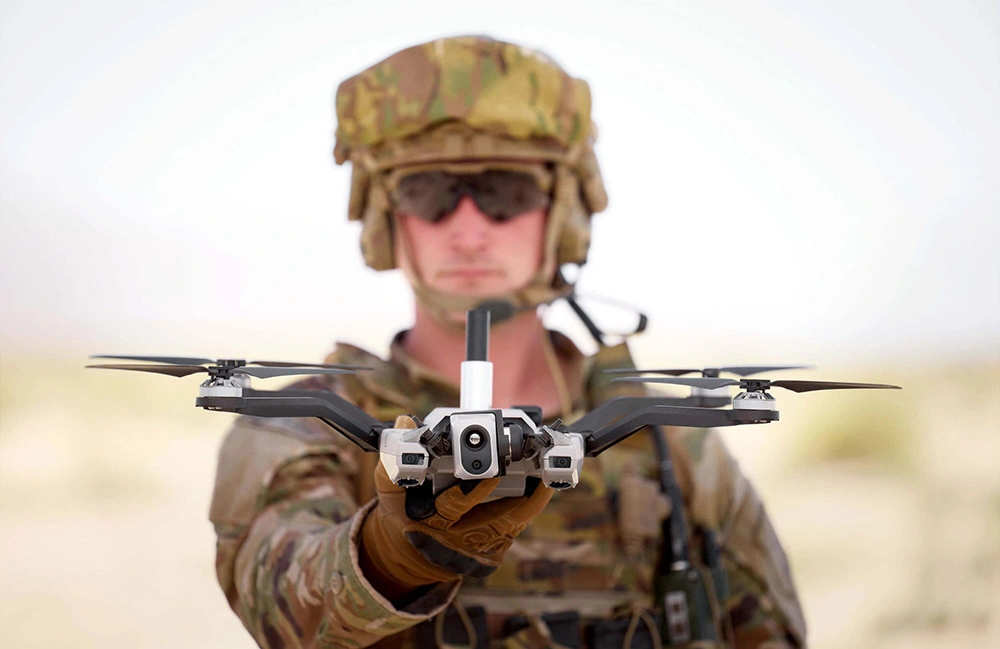
Red Cat Q1 2026: Revenue Up 849% to $15.5M, NATO and Asia-Pacific Orders
Red Cat Holdings posted $15.5M in Q1 2026 revenue, up 849% year-over-year, with new Black Widow orders from a NATO ally and a second Asia-Pacific customer.
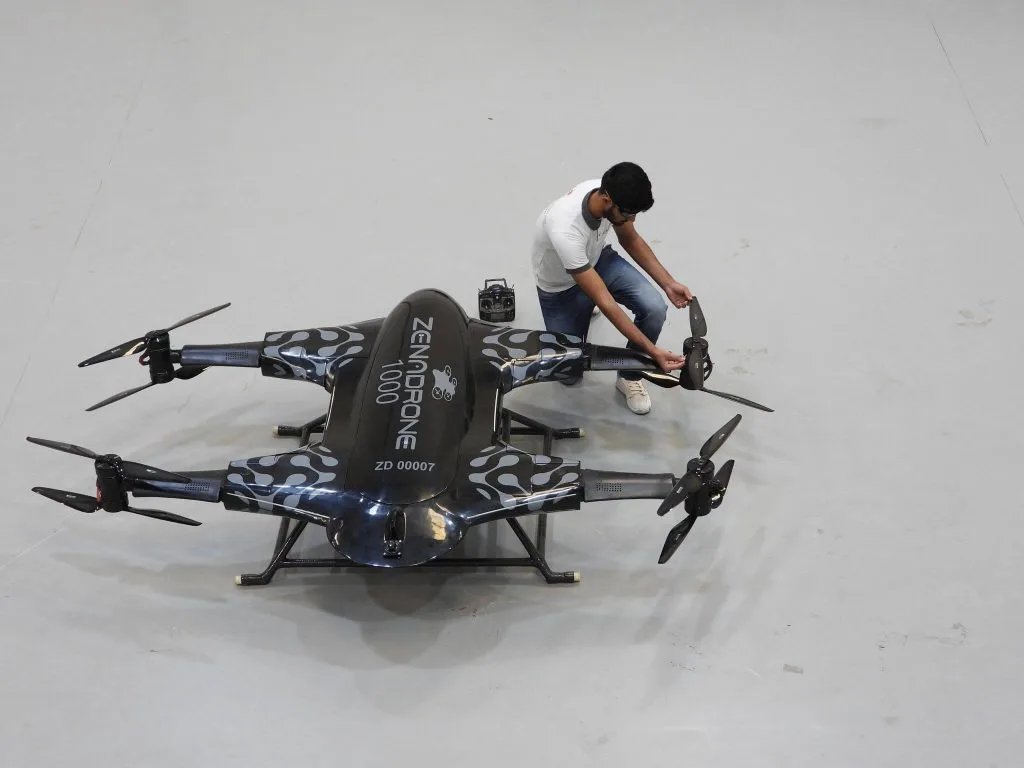
ZenaTech Revenue Jumps 558% to $12.9M on Drone-as-a-Service Push
ZenaTech posted $12.9M in 2025 revenue, up 558%, driven by 20 acquisitions and a new Drone as a Service segment that generated $10.1M in its first year.
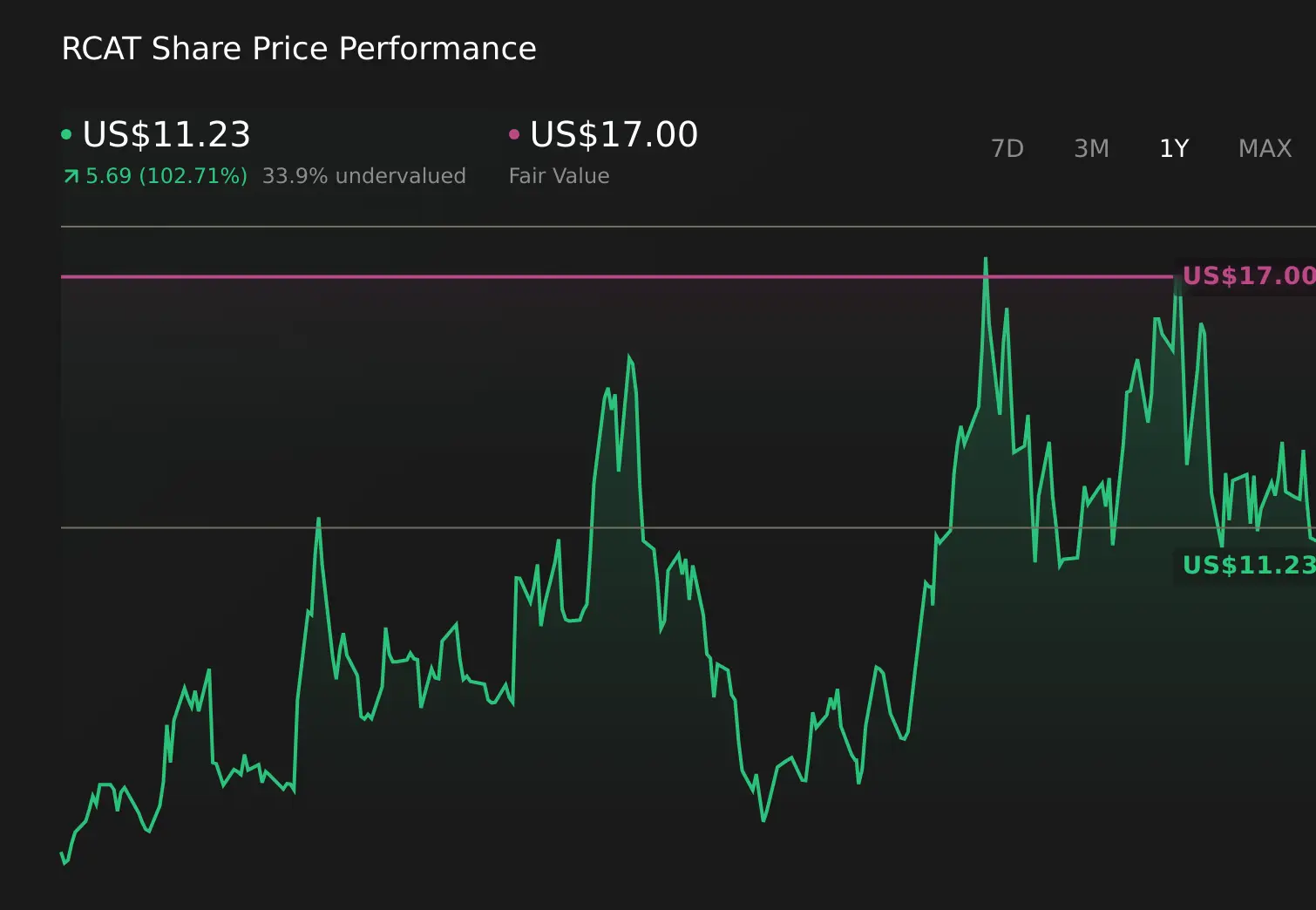
Red Cat Holdings: 172% Growth, 35x Price-to-Sales
Red Cat Holdings posted 172% revenue growth on Black Widow drone sales, but trades at 35x price-to-sales against an industry average of 4.6x.
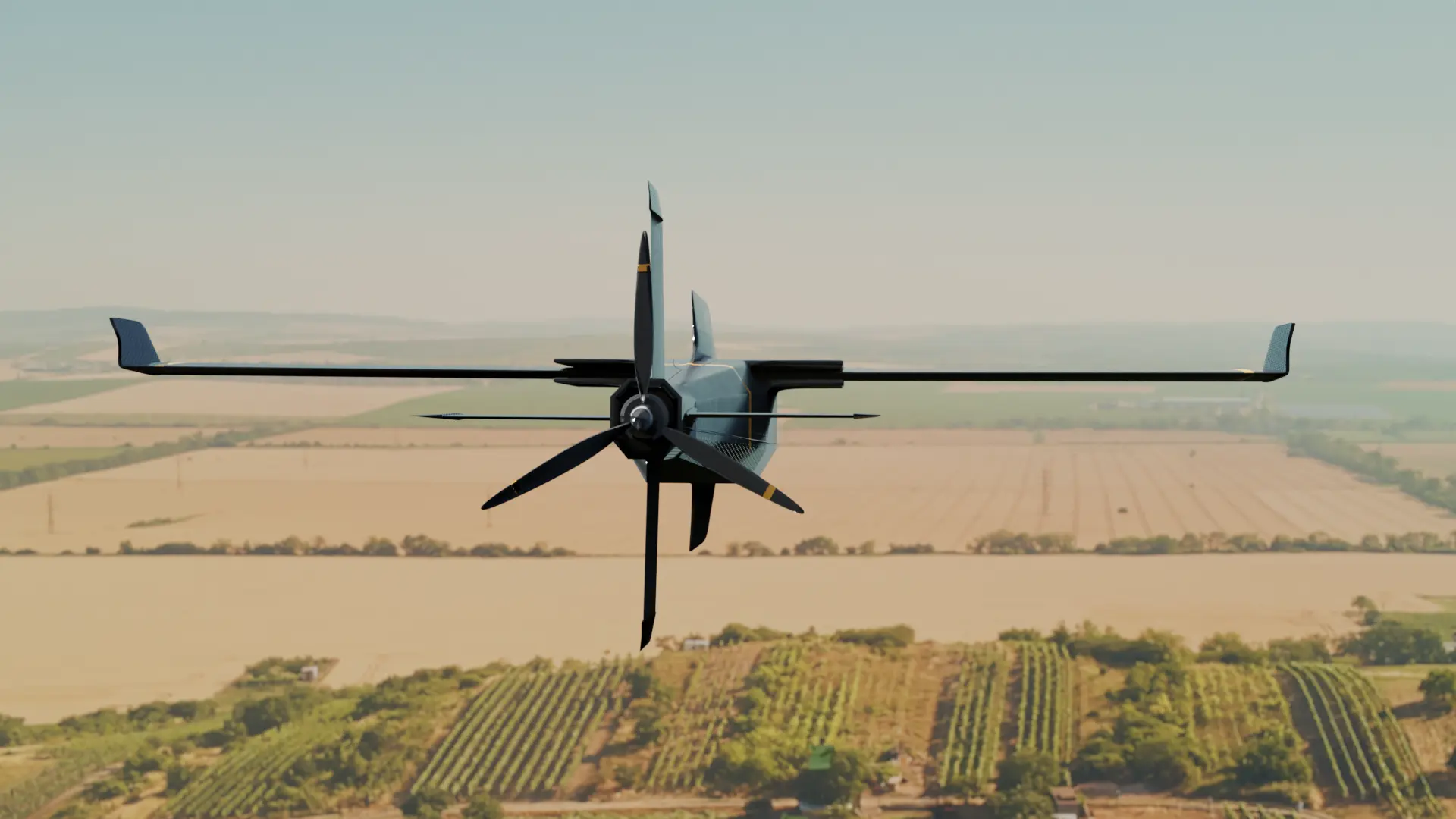
Rheinmetall's €2.4B Drone Contract Can't Stop Stock Slide
Rheinmetall wins a €2.4B loitering munition contract for Germany but shares hit a 52-week low on valuation concerns.
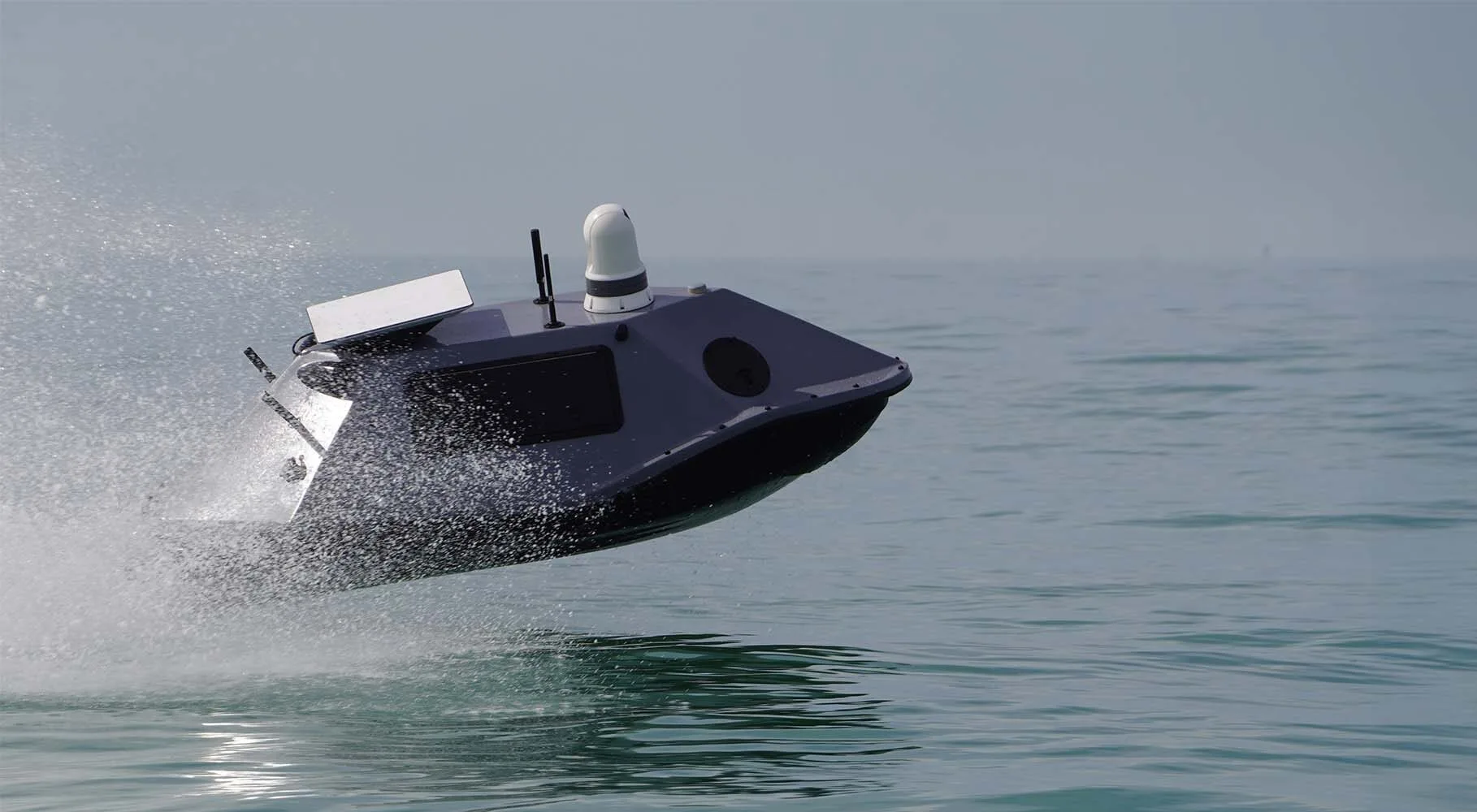
AEVEX Raises $320M in IPO at $2.57B Valuation
AEVEX Aerospace shares jumped 15% on NYSE debut, opening at $23.01 against a $20 offer price and valuing the defense drone maker at $2.57 billion.
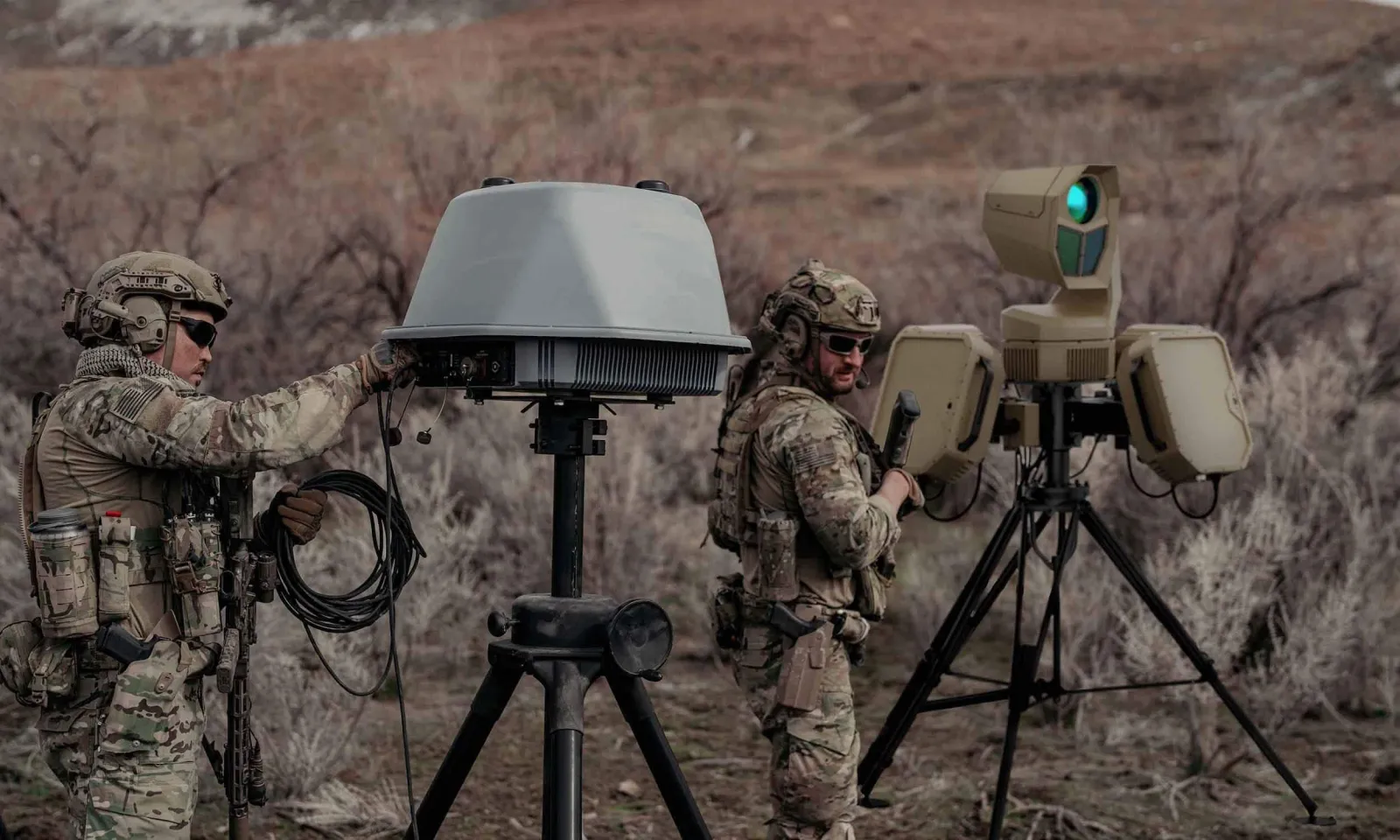
DroneShield: The C-UAS Pure-Play Investors Are Overlooking
DroneShield trades on the ASX but sells to NATO militaries. Here's why the Australian counter-drone specialist is worth watching.
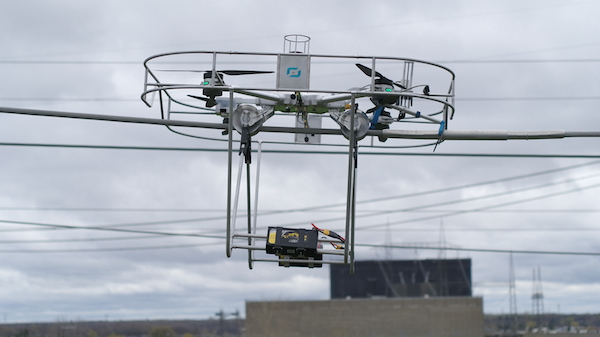
DRONE VOLT's LineDrone Signs Five High-Voltage Clients
French drone maker DRONE VOLT confirms five industrial clients for its LineDrone, built to operate on power lines carrying up to 735kV.
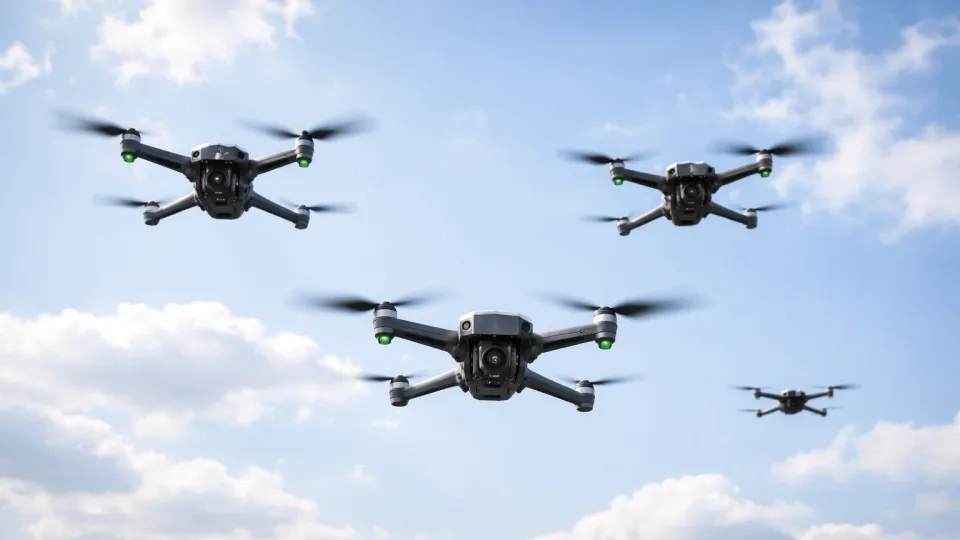
Unusual Machines Bets on Defense Drone Manufacturing
Unusual Machines is positioning as a domestic NDAA-compliant drone component supplier as US procurement rules tighten.
Companies
Red Cat Holdings
US defense drone company supplying NDAA-compliant small unmanned systems for military reconnaissance through its Teal Drones subsidiary.
United States
AeroVironment
US manufacturer of small tactical UAS, loitering munitions and counter-UAS systems, transformed in scale by its 2025 acquisition of BlueHalo.
United States
Unusual Machines
US drone manufacturer and components distributor building NDAA-compliant drones and supplying parts to reduce American dependence on Chinese drone supply chains.
United States
AEVEX Aerospace
U.S. defense company providing full-spectrum airborne intelligence, surveillance, and reconnaissance, from aircraft modification to mission data processing.
United States
Anduril Industries
US defense technology company building autonomous weapons, counter-UAS, and AI command software, and manufacturing them at its own Arsenal-1 plant in Ohio.
United States
Anzu Robotics
US drone company that built the Raptor series under licence from DJI, now owned by XTI Aerospace and developing a replacement after ending Raptor production.
United States
Dedrone
US counter-drone company, now part of Axon, providing airspace security platforms for military bases, prisons, airports and critical infrastructure.
United States
Drone Nerds
US drone distributor and enterprise solutions provider, acquired by XTI Aerospace in November 2025 and now the source of almost all of that company's revenue.
United States
Recent Funding
Recent Contracts
defense
U.S. Army, AeroVironment
Delivery order for additional Switchblade 600 Block 2 loitering munitions, plus Switchblade 600...
defense
US Army PAE Fires, Anduril Industries
Three-year contract to supply a minimum of 3,000 surface-launched Barracuda-500M missiles with...
defense
US Army Portfolio Acquisition Executive Fires, Anduril Industries
Three-year production agreement for a minimum of 3,000 Surface-Launched Barracuda-500M cruise...
defense
U.S. Department of Defense, Anduril Industries
Contract modification adding $100.3M to upgrade the Space Surveillance Network with mesh...
defense
U.S. Army, AeroVironment
Prototype agreement for the Low-Altitude Stalking and Strike Ordnance (LASSO) program covering...