

Rheinmetall has signed a framework agreement with the German armed forces worth up to €2.4 billion for loitering munitions under the FV-014 programme — and its stock hit a 52-week low anyway.
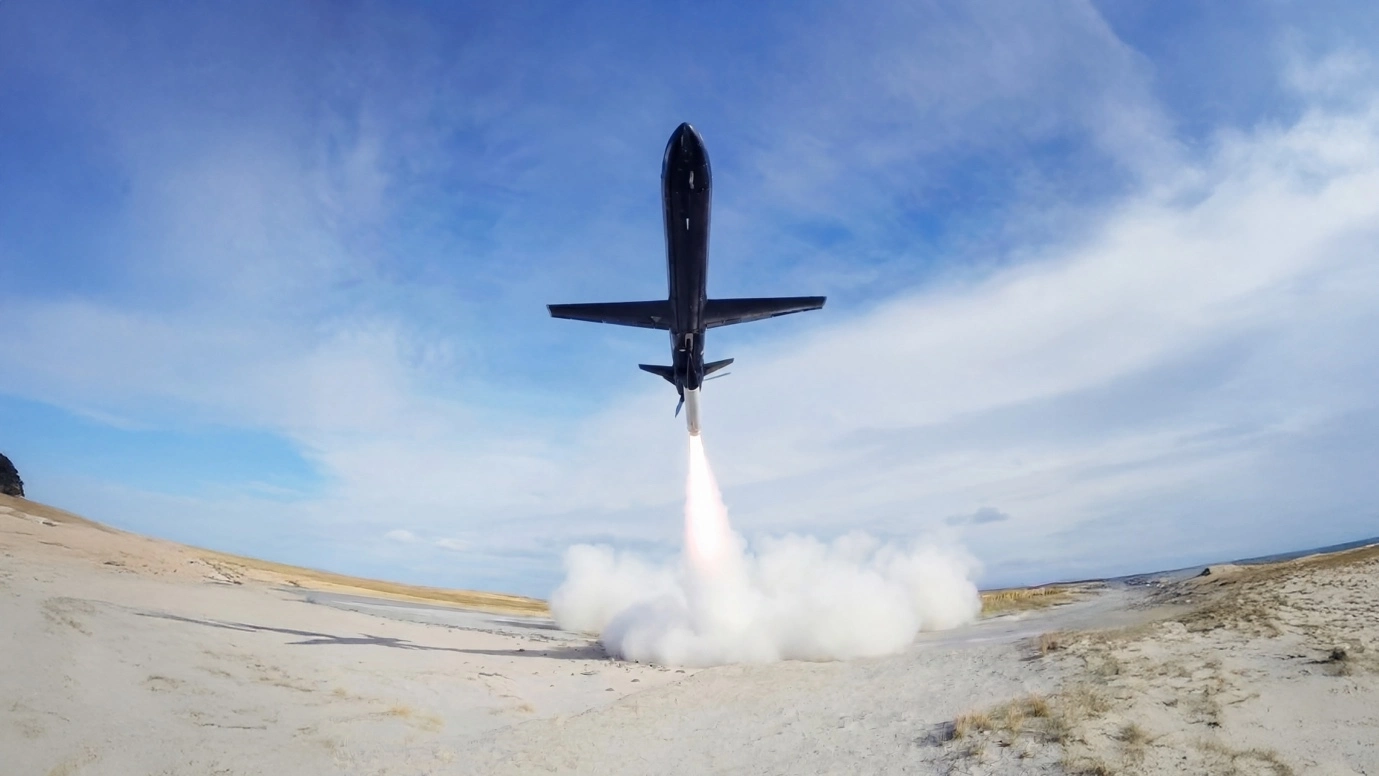
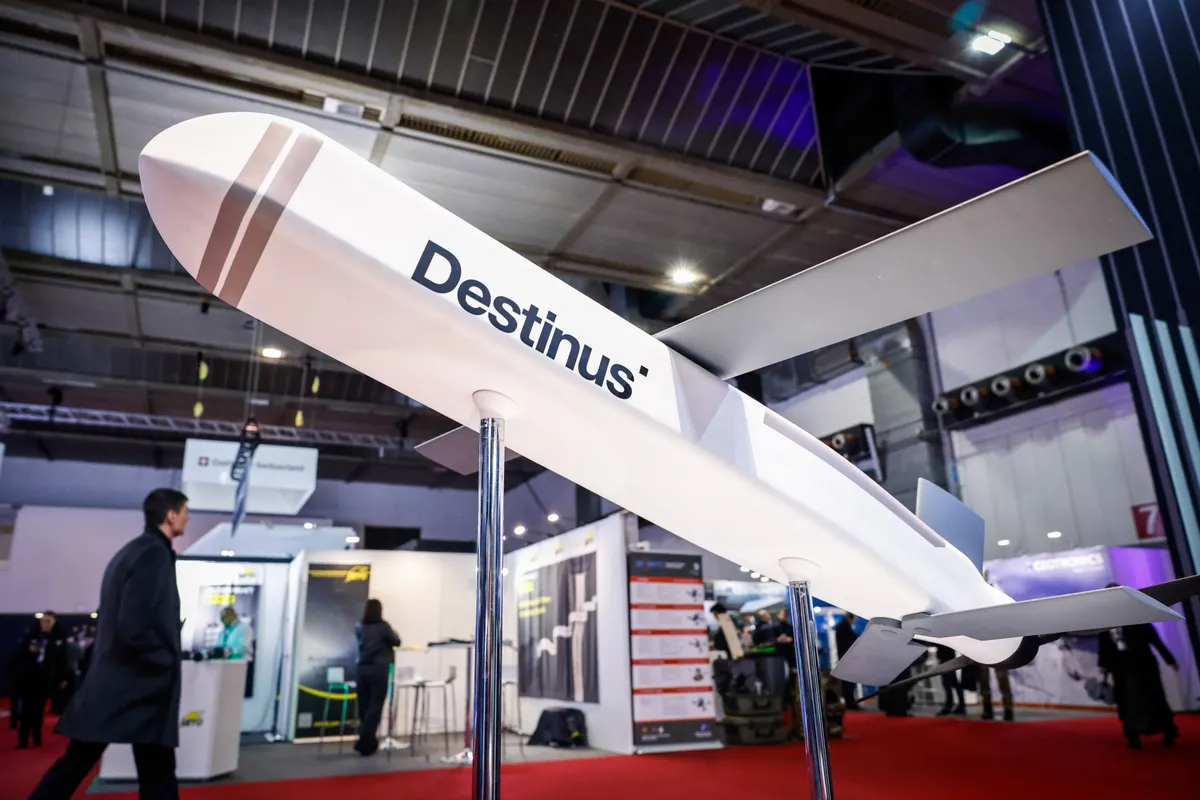
The initial call-off covers roughly 2,500 units valued at around €300 million, with options to scale beyond 10,000 kamikaze drones. The electrically powered systems engage targets at up to 100 kilometres, carry jamming resistance, and are designed to support swarm operations. Production is entirely European, with series deliveries from Rheinmetall’s Neuss plant scheduled for the first half of 2027. This is the company’s third major framework contract of the year.
Shares fell to €1,341.20 in late April — more than 16% below where they started the year and roughly a third off the 52-week high of nearly €2,000.
Why a Record Order Book Isn’t Moving the Stock
The operational picture at Rheinmetall is unambiguous. Revenue grew 29% last year to nearly €10 billion. The order backlog stands at almost €64 billion. Management is targeting revenue of up to €14.5 billion by 2026 at an operating margin around 19%, with over 90% revenue visibility from long-term framework contracts. By almost any measure, this is a company running at full operational capacity with demand it cannot fulfill fast enough.
The market’s problem is not the order book — it’s the multiple. Defence sector valuations expanded aggressively through 2024 and into early 2025 as European rearmament spending accelerated. Rheinmetall traded at nearly €2,000 at its peak. At €1,341, it has deflated roughly in line with broader defence sector multiple compression, even as the underlying business kept growing. Analysts are pointing to a gap between what guidance implies and what the market had already priced in at the highs.
The FV-014 contract does not help with the timing problem. An initial €300 million call-off is real revenue, but series deliveries don’t begin until H1 2027. Investors looking at the stock today are being asked to pay for production capacity that won’t be generating full revenue for another twelve months minimum. Framework contracts provide visibility, but they don’t move cash flow forward.
The China Supply Chain Problem
CEO Armin Papperger has a separate concern that has nothing to do with valuations: cotton linters, a critical input for propellant production, are sourced substantially from China. Rheinmetall is not pursuing a strict China-free policy — Papperger has said so explicitly — but the company is actively mapping alternative sources in Argentina and Australia and investing in its own precursor material production capacity. Supply chain reviews are now conducted weekly.
The exposure matters because it sits at the intersection of two risks. If China restricts raw material exports — a scenario that European defence planners increasingly treat as a planning assumption rather than a tail risk — Rheinmetall’s propellant production faces a direct constraint at exactly the moment when European militaries are trying to scale ammunition output. The company is moving to reduce that exposure, but the timeline for building alternative supply chains is measured in years, not quarters.
Two near-term catalysts could shift sentiment. Q1 results on May 7 will give analysts a read on order intake and margin trends. The annual general meeting on May 12 will see a proposed dividend of €11.50 per share — the fourth consecutive increase — which signals management confidence but won’t resolve the multiple debate on its own. Whether Q1 order inflows are strong enough to justify current valuation is the question that will determine whether the stock finds a floor before the first FV-014 deliveries arrive in 2027.