

Perennial Autonomy
US developer of low-cost interceptor and strike drones, funded by Eric Schmidt and supplying counter-drone systems to Ukraine and the US military.
1 article
Perennial Autonomy
Perennial Autonomy is a California defense startup building cheap, AI-guided interceptor drones that destroy other drones by flying into them. It was founded in 2023 by former Google chief executive Eric Schmidt, who funds it, and has changed names twice: launched as White Stork, rebranded to Project Eagle in February 2024, and to Perennial Autonomy in 2026. Ukrainian defence reporting also refers to the operation as Swift Beat. It was set up to supply Ukraine, and the Ukrainian war record is now the basis of its US sales pitch.
Systems
Merops, operational designation AS-3 Surveyor, is the flagship: a roughly three-foot fixed-wing interceptor launched from a truck-portable rail at up to about 175 mph, with a reported engagement range of three to twelve miles. It was built specifically to run down Shahed-type one-way attack drones.
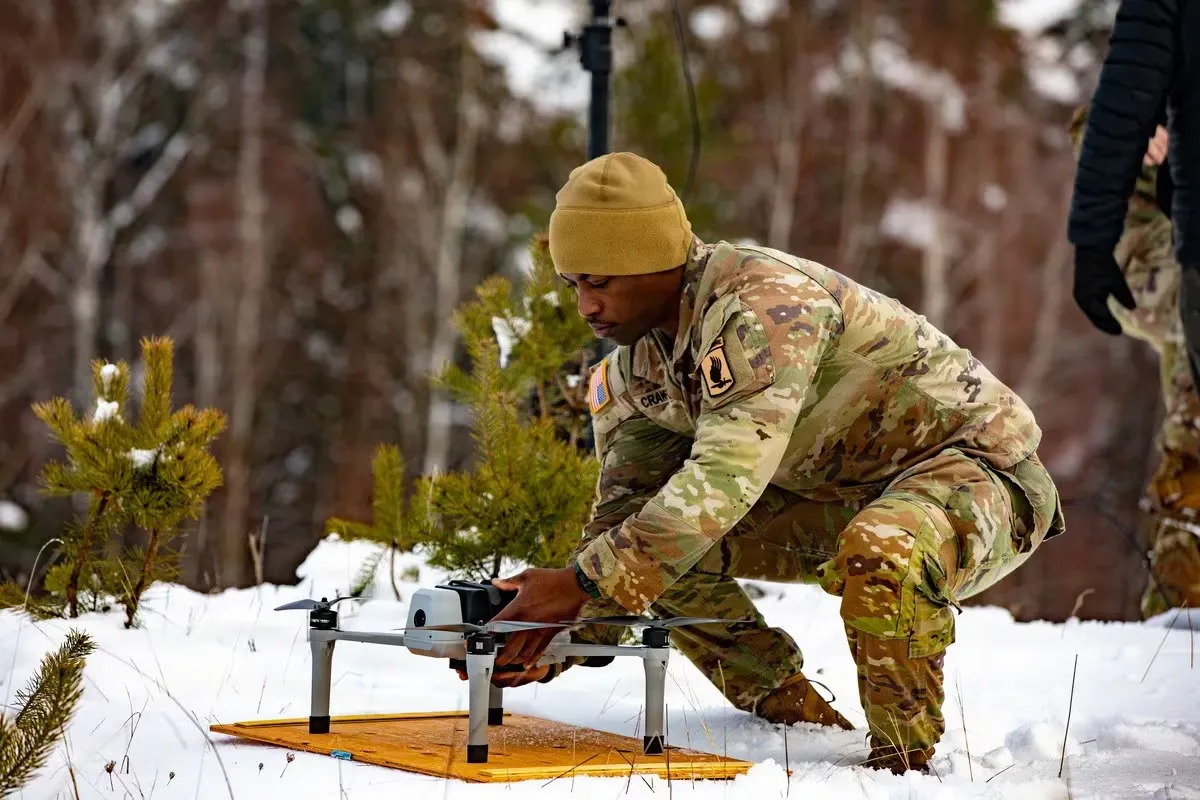
Bumblebee is a semi-autonomous quadcopter interceptor, now in a V2 version the company says is NDAA-compliant, using onboard software to identify, track and collide with a target aircraft.
Hornet is a pneumatically launched AI-enabled strike drone rather than a defensive system.
Contracts and Position
Two US awards define the company’s current standing, both from Joint Interagency Task Force 401, the Pentagon’s counter-drone task force. On 30 January 2026 JIATF-401 awarded $5.2 million for Bumblebee V2, with deliveries from March 2026, for operational assessment by the Army’s Global Response Force. On 19 May 2026 it awarded a three-year indefinite-delivery contract with a $500 million ceiling covering Merops, Bumblebee and Hornet — reported as the largest single counter-UAS award the Pentagon has made.
A ceiling is not obligated money, and Perennial declined to state expected production volumes under it. Separately, Army Secretary Daniel Driscoll told lawmakers in April 2026 that the service bought 13,000 Merops interceptors at roughly $15,000 each early in the conflict with Iran. JIATF-401 has said the systems are in use by forces in US Central Command; Perennial would not characterise how they performed there.
Perennial says Merops has intercepted more than 4,000 Russian drones in Ukraine since mid-2024. That is a company figure. In 2026 it began producing Merops in Germany with Munich-based Twentyfour Industries, giving European buyers a supply route that does not run through US export licensing.
Why It Matters
Perennial is the clearest example of the cost-exchange argument in air defence: a $15,000 interceptor against a Shahed that costs a similar amount, versus a missile that costs six figures. It has moved from a Ukraine-focused private project to a Pentagon vendor in under three years, which is fast even by current standards.
The weaknesses are the obvious ones for a company this young. It is privately funded by one wealthy backer with no disclosed venture round, its most-cited performance data comes from itself, its manufacturing base is thin and partly outsourced, and a $500 million ceiling is an option the Pentagon can decline to exercise.
Coverage
Topics
Contracts
Agreement between the Pentagon's Joint Interagency Task Force 401 and Perennial Autonomy to fund development and...