
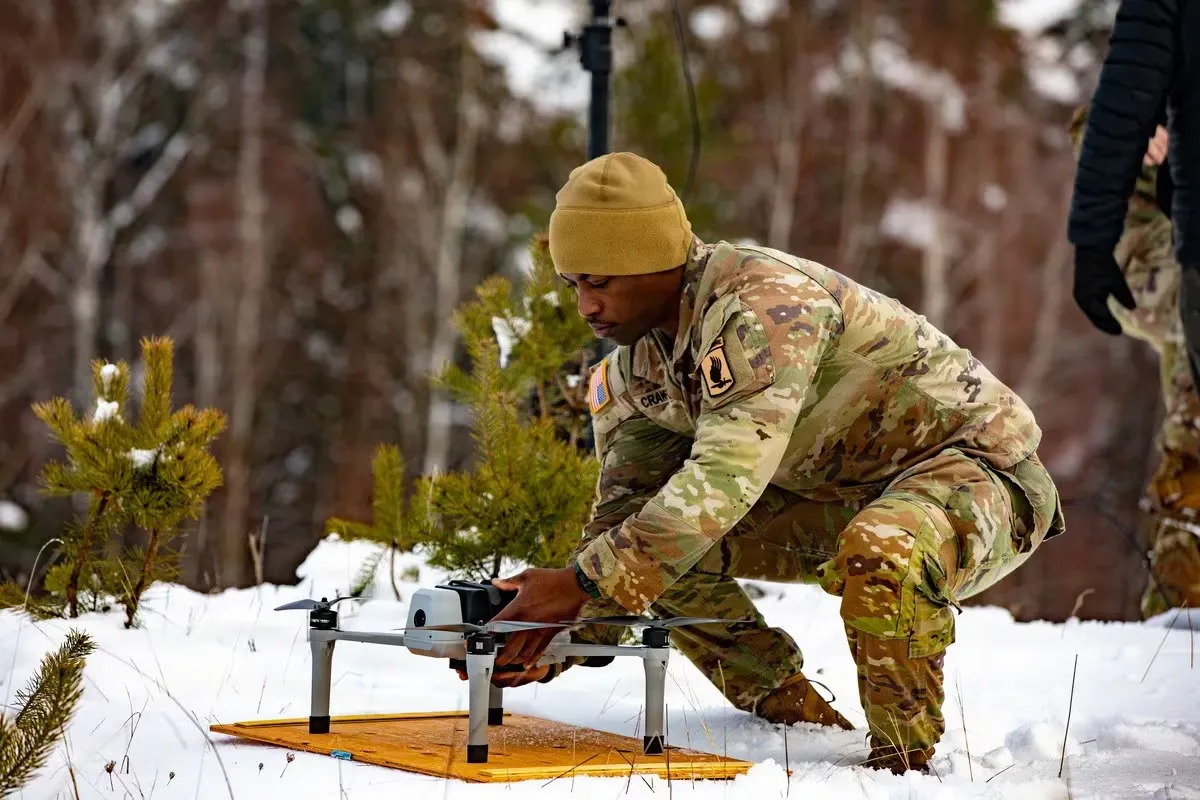
Twenty paratroopers from the 82nd Airborne Division trained on Perennial Autonomy’s Bumblebee V2 counter-drone interceptor at Fort Bragg on April 24, part of a $5.2 million agreement between the Pentagon’s Joint Interagency Task Force 401 and the company. The soldiers - most with little to no prior drone piloting experience - learned drone-on-drone intercept tactics in real time, developing the TTPs the Army needs before the capability can scale across units.
The Bumblebee V2 is an NDAA-compliant FPV multi-rotor designed specifically for counter-UAS intercept. It runs up to an hour on a single battery pack, carries both wide-angle and narrow-view camera sensors for target acquisition, and is priced to provide a low-cost alternative to missile-based intercept against small UAS threats. Deliveries began in March.
Drone-on-Drone at the Unit Level
The training model at Fort Bragg mirrors what Ukraine has validated at scale on the battlefield: two-drone teams coordinating to take down a single target, with operators managing the drone, camera, and command-and-control simultaneously. Sgt. Maj. Kellen Rowley, senior enlisted advisor to the JIATF-401 director, described the goal as building enough reps that soldiers can handle all three inputs at once under pressure.
That’s a different skill set from traditional military aviation. The Bumblebee program is explicitly designed for soldiers without prior piloting backgrounds - the intent is to make drone-on-drone intercept a general infantry skill rather than a specialist capability requiring months of pipeline training.
Lt. Col. Alex Morse, acquisition lead for JIATF-401, demonstrated the V2’s upgraded maneuverability during the exercise. The improved gimbal movement - full vertical articulation added over the V1 - allows operators to track targets moving through three dimensions rather than just following horizontal flight paths.
Why JIATF-401 Is Funding Low-Cost Interceptors
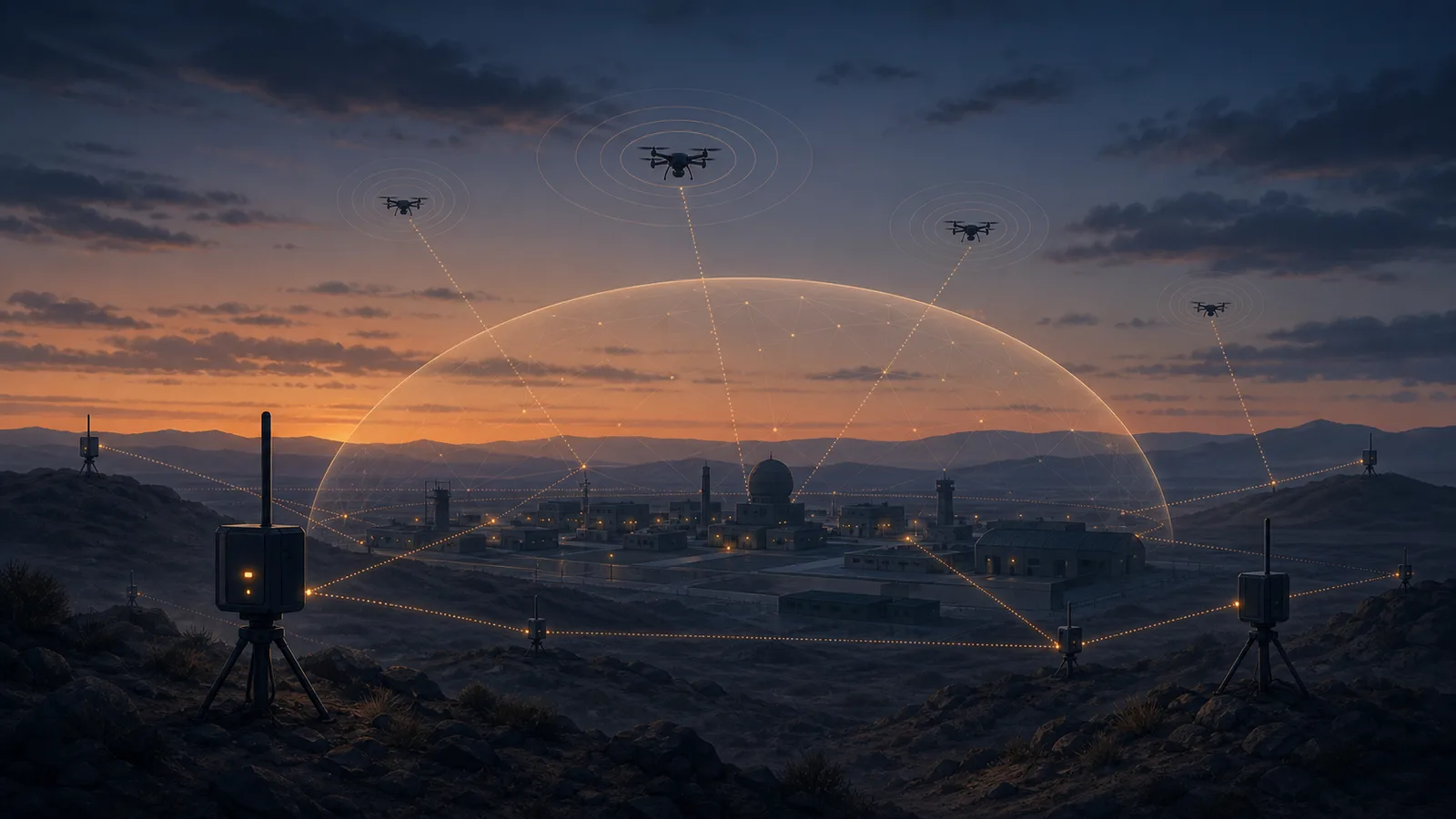
JIATF-401, the Pentagon’s joint counter-drone task force established in 2025, has been running parallel tracks on C-UAS: high-end systems like Epirus Leonidas HPM and Anduril Lattice for fixed and semi-fixed asset protection, and low-cost interceptors for tactical unit-level use. The Bumblebee V2 sits firmly in the second category.
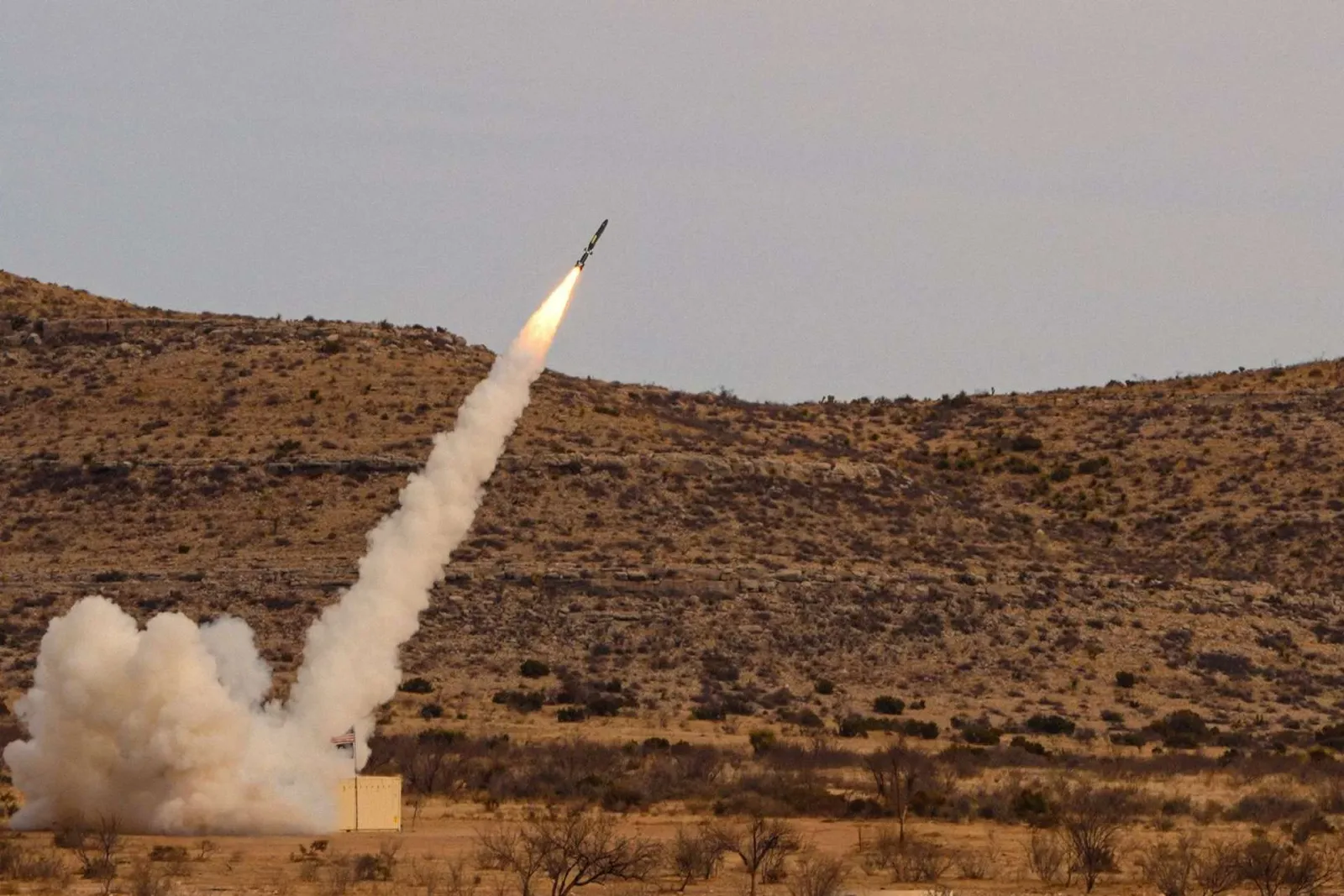
The cost logic is straightforward. A Coyote Block 2 missile interceptor costs roughly $100,000-$200,000 per shot. An FPV interceptor drone costs a fraction of that and can be operated by a trained infantryman rather than a specialist crew. Against the small, cheap UAS threats that dominate current conflict environments - commercial quadcopters, Group 1 surveillance platforms, improvised attack drones - the economics of missile-based defeat are increasingly difficult to justify.
The Bumblebee system is already deployed in Ukraine, where drone-on-drone intercept has become a primary counter to Russian Shahed and FPV threats. Fort Bragg is the industrial translation of that battlefield lesson into US Army doctrine - building the training pipeline, TTPs, and institutional knowledge before the threat arrives in the next conflict rather than after.
Military officials expect drone intercept to become a standard infantry skill alongside rifle qualification and map reading. The pace of that integration depends on how quickly JIATF-401 can scale procurement and training capacity beyond the initial 20-soldier cohort at Fort Bragg.