

NDAA
NDAA Compliant Drones: The Complete Guide for 2026
What NDAA compliance requires, who the law applies to, which platforms qualify, and what the September tariffs did to the compliance premium.
Last updated:
10 news articles on NDAA ↓
Guide overview
An NDAA compliant drone is one whose aircraft and critical components are not built by a covered foreign entity — in practice, China. Since 22 December 2025 that restriction has applied not only to the Department of Defense but to every federal agency, contractor and recipient of federal funds. DJI and Autel are also blocked from new FCC equipment authorizations, which closes the door on future US market entry for both.
One thing changed in September that most compliance advice has not caught up with. Section 232 tariffs took effect on 3 September: 25% on drones at or below 25 kg, and 100% on anything heavier, anything with a thermal imager at any weight, docking stations and a list of critical components. Compliance used to cost you a premium. Now non-compliance carries a tax of its own, and for thermal work the gap has narrowed sharply.
What Does “NDAA Compliant” Actually Mean?
The phrase gets used loosely in marketing. The legal definition is specific.
A drone is compliant if it and its critical components are not manufactured or assembled by a covered foreign entity — a company based in or controlled by China, Russia, Iran or North Korea.
Critical components go deep into the build: flight controllers, radios, data transmission devices, cameras and gimbals, network connectivity hardware, data storage, ground control systems and operating software. A drone assembled in the United States with a Chinese flight controller is not compliant.
The statute does not require Blue UAS certification, and an operator can self-certify. In practice federal procurement officials rarely accept self-declaration. Blue UAS listing is the standard they actually ask for, which is why the two terms get used interchangeably even though they are not the same thing.
What Is NDAA Section 848?
Section 848 of the FY2020 NDAA was the original statutory basis. It barred the Department of Defense from procuring, using or funding unmanned aircraft or components made by DJI, Autel, Parrot, Yuneec, or any entity owned or controlled by the governments of China, Russia, Iran or North Korea.
Section 848 applied only to DoD. The American Security Drone Act of 2023, carried in the FY2024 NDAA, extended the same restrictions government-wide. Section 848 started it; ASDA finished it.
Who Does the Law Apply To?
Everyone with a federal nexus, which is a much larger group than people assume.
ASDA covers every federal agency, every federal contractor, and every recipient of federal grants or cooperative agreements. The two-year transition ended on 22 December 2025 and full enforcement is in effect.
The funding hook is the detail most buyers miss. A university running a federally funded research programme, a utility on a federal infrastructure grant, a fire department with DHS money — all are covered, not because they are federal agencies but because federal money is involved.
Purely private buyers with no federal funding or contracting relationship face no direct legal mandate. Market pressure is a separate matter, and it is real.
Is the Autel EVO Max 4T NDAA Compliant?
No. Autel Robotics is headquartered in Bothell, Washington, but majority-owned by Autel Intelligent Technology of Shenzhen, which puts it inside the covered foreign entity definition. Autel is also on the FCC Covered List and blocked from new equipment authorizations.
Units already deployed are not retroactively banned. Federal agencies and contractors cannot buy new ones.
This is one of the most searched questions in this area, and the answer catches people out: operators who moved from DJI to Autel believing it was the safe alternative did not solve their compliance problem.
How the Law Changed, Year by Year
FY2020 NDAA — Section 848. DoD-only procurement and operation ban covering foreign-manufactured UAS and critical components. Established the “covered” concept everything else builds on.
FY2023 NDAA — Section 817. Pushed restrictions deeper into the DoD supply chain and tightened component definitions.
FY2024 NDAA — American Security Drone Act. The big one. Extended the bans government-wide to agencies, contractors and grant recipients, added operational prohibitions rather than just procurement bans, and attached funding restrictions. Full enforcement from 22 December 2025.
FY2025 NDAA — Section 1709. Directed the FCC to add DJI and Autel to the Covered List unless a national security determination exempted them. No determination was made. The FCC added foreign-made drones and components one day ahead of the deadline in December 2025.
FY2026 NDAA. No new procurement bans. The focus moved to counter-UAS authorities — including the SAFER SKIES Act, which lets certified state and local police mitigate drones — spectrum access, onshoring small UAS production, and international collaboration. The restriction framework is now set. The legislative story since has been about building the domestic supply chain to replace what was banned.
What Is the FCC Covered List?
The Covered List operates under the Secure and Trusted Communications Networks Act and controls which products can receive FCC equipment authorization — the clearance required to sell or import electronics in the US.
In December 2025 the FCC extended it to foreign-produced UAS and critical components broadly, not just named brands. New foreign-made models cannot receive authorization, which blocks them from entering the market through normal channels. Existing authorizations survive: hundreds of thousands of aircraft already in service, including the Mavic 3 Enterprise, Matrice 4 Enterprise and Docks 2 and 3, remain legal to operate.
Two temporary exemptions run to 1 January 2027: platforms and components on the Blue UAS Cleared List, and domestic end products meeting Buy American standards, generally more than 65% US content.
That date is the most consequential in the current environment. If the exemptions lapse without extension, the compliant platforms currently relying on them lose their carve-out at the same moment.
A separate conditional approval track exists. Four were granted in March 2026 — SiFly Aviation Q12, Mobilicom SkyHopper Series, ScoutDI Scout 137 and Verge Aero X1 — valid through 31 December 2026, and roughly seventeen holders were on the list by early September. That number matters more than it used to, because conditional approval holders also received the tariff delay described below.
Which Drones Are on the Blue UAS Cleared List?
The Blue UAS Cleared List is the DoD’s vetted roster of platforms and components approved for federal procurement. Inclusion requires passing government vetting on NDAA compliance, cybersecurity, supply-chain integrity and operational performance. It is not permanent — platforms come off for cybersecurity failures, unapproved design changes or end-of-life.
Management moved from the Defense Innovation Unit to the Defense Contract Management Agency. A Secretary of War memo of 10 July 2025 set that in motion and the transfer was announced on 3 December 2025, ahead of the ASDA enforcement deadline. DCMA’s Unmanned Systems-Experimental command in Palmdale now maintains it.
We do not reproduce the platform roster here. An earlier version of this guide carried its own copy, and it drifted: it listed AgEagle’s eBee VISION and eBee TAC after they came off the list, and omitted PDW’s C100, WISPR’s SkyScout 2+ and Ondas’ Optimus. It also claimed “over 50 platforms”, a figure that does not trace to any published DoD source. Maintaining two lists produced one wrong list.
The current roster, how a platform gets on it, why platforms come off, and the awkward business of actually reaching the DCMA portal are all covered in our Blue UAS Cleared List guide, which is the version we keep current. Manufacturers represented include Skydio, Red Cat and Teal Drones, Parrot, AeroVironment, Anduril, Shield AI, Inspired Flight, Freefly, Wingtra, Neros, Quantum Systems, Teledyne FLIR and Ondas, among others.
Check the DCMA portal before committing to a purchase, whatever any article tells you — this one included.
What Is Green UAS?
Green UAS is AUVSI’s industry-run certification, aligned with Blue UAS requirements but aimed at commercial, public safety and enterprise buyers rather than DoD procurement.
It mirrors the Blue UAS cybersecurity and supply-chain standards and adds corporate cyber hygiene, product and device security, and remote operations connectivity requirements. AUVSI positions it as a pathway into Blue UAS Cleared status. Green certification alone does not satisfy DoD procurement.
For enterprise buyers with no direct DoD relationship, it provides a recognised compliance signal without the full government vetting timeline. Utilities, infrastructure operators and public safety agencies increasingly use it as an RFP filter.
What Is DJI’s Status in 2026?
DJI is on the FCC Covered List. New models cannot receive equipment authorization. Federal agencies cannot procure or operate DJI aircraft under post-December 2025 enforcement, and no broad waivers have been announced. Existing hardware authorized before the listing can still be sold and used by non-federal buyers.
DJI is contesting it. The company filed a petition for reconsideration on 21 January 2026 and the comment cycle closed on 11 May. In filings before the Ninth Circuit, DJI said the Covered List action blocks 25 planned 2026 product launches and costs it roughly $1.56 billion in US revenue this calendar year.
Nothing has been reversed, and nothing in the current posture suggests it will be. Plan on the restrictions holding.
What Is Autel’s Status in 2026?
Identical position. Autel filed a parallel application for review on 21 January 2026, on the same schedule as DJI’s petition. The proceedings have not altered its Covered List status. New models cannot receive authorization; federal procurement and operation are prohibited.
What Does Compliance Cost Now?
This is the section the tariffs rewrote.
Compliant platforms have always carried a premium over equivalent DJI hardware, historically 50-100% or more depending on category and payload. The Freefly Astro Max starts around $26,000. The Inspired Flight IF800 Tomcat starts around $23,000. A Skydio X10D is $28,382 on the GSA schedule published by DHS.
What changed on 3 September is the other side of the comparison. A DJI Matrice 4T listed around $7,849 before the tariffs and carries a thermal imager, which puts it in the 100% bracket. A Matrice 4E, with no thermal, takes 25%. Docking stations are named in the 100% tranche, and a further 25% hits a second list of components on 9 February 2027.
The point buyers keep missing is that a tariff taxes importing. Skydio, Freefly and Inspired Flight build domestically, so no import duty touches them at all. Imported compliant platforms — Parrot’s ANAFI USA from France, Wingtra from Switzerland — face allied caps of 15%, and got a 180-day delay because platforms on the Blue UAS Cleared List or the FCC Conditional Approval List as of 2 September were granted one.
The allied cap has a catch worth raising with your reseller: it requires certifying that substantially all critical components and technology originate in the US or a qualifying jurisdiction, and Commerce has not defined “substantially all”.
The structural premium is still real, and it comes from volume — US manufacturers build a fraction of what DJI builds. But the gap you actually pay is now the premium minus the duty. For thermal work in particular, run that comparison before assuming the Chinese platform is cheaper. Our enterprise drones guide works through the specific platforms.
Which US Companies Are Leading the Compliant Market?
Skydio is the most prominent US compliant manufacturer. The X10 covers enterprise, public safety and drone-as-first-responder work; the X10D is the defense variant on the Blue UAS Cleared List. In March 2026 the Army ordered more than 2,500 X10D units for over $52 million, the largest single-vendor tactical small UAS order in Army history, awarded in under 72 hours. Skydio raised a $110 million Series F in late April 2026 at a $4.4 billion valuation and announced SkyForge, a planned $3.5 billion US manufacturing investment over five years. That last item matters most for compliance costs: production volume is the actual source of the premium.
Red Cat and Teal Drones produce the Teal 2 and Fang F7, both cleared, and the Black Widow that won the Army’s Short Range Reconnaissance programme of record. Red Cat’s second-quarter 2026 revenue was $20.2 million, up 527% year over year, with full-year guidance of $150-180 million affirmed — though gross margin was 16.1% and the company is still lossmaking. It named Chinese export bans on critical components as a specific 2026 headwind, which is the compliance problem viewed from the manufacturer’s side.
Unusual Machines does not build complete platforms. It makes compliant components — flight controllers, ESCs, motors, cameras, video transmission — in Florida. Its argument has been that it can reach cost parity with Chinese-made components, and it now has numbers behind the claim: second-quarter 2026 revenue was $16.7 million against consensus of $9.19 million, up 687% year over year, with gross margin at 34.7% and a stated target of $250 million in annual revenue by 2027. That target is a company projection, not a booked order.
Parrot holds Blue UAS listings for the ANAFI USA GOV/MIL and ANAFI UKR, making it the main non-US Western manufacturer with cleared status. European manufacture satisfies the covered-country exclusion, though as above, the tariff treatment of an imported compliant platform is less settled than a domestic one.
Does NDAA Compliance Matter for Private Companies?
Legally, no. With no federal funding, contracts or grants, the restrictions do not apply to you.
In practice, increasingly yes. Utilities, critical infrastructure operators, public safety agencies, energy companies and insurers have moved to compliant platforms regardless of mandate, driven by cyber risk policy, insurance requirements and the expectation of tighter rules. Enterprise procurement teams use Green UAS or Blue UAS listing as a baseline RFP filter. The market for non-compliant systems in those sectors is shrinking without any law requiring it.
The tariffs add a straightforwardly commercial reason on top of the regulatory one.
What to Watch Through 2027
1 January 2027. The FCC exemptions for Blue UAS platforms and Buy American domestic end products expire unless extended. This is the single most consequential date in the framework, and it cuts both ways — extension preserves the current advantage, lapse creates disruption for the platforms relying on it.
9 February 2027. A further 25% duty lands on a second list of components. Anyone building or maintaining fleets from parts should plan procurement around it.
Whether Commerce defines “substantially all”. Until it does, the 15% allied cap is a provision without a test, and every European compliant platform sits in that ambiguity.
Skydio’s SkyForge build-out and Unusual Machines’ $250 million target. Both are bets that domestic volume can close the price gap. If either lands, compliance stops being expensive for reasons no regulation could fix.
DJI and Autel’s FCC proceedings. Nothing suggests a reversal, but $1.56 billion a year buys a great deal of legal effort, and a change would reopen the market.
Latest Coverage
A trade association is the fast route onto the Blue UAS list
WISPR got Green UAS certification in February and was on the Pentagon's Blue UAS Cleared List ten weeks later. Four platforms joined in 2026.

46 Police Agencies Are Certified. The Rule Expects 1,850.
The SAFER SKIES counter-UAS rule lets US police disable drones, but only about 46 agencies are trained against the 1,850 the government expects.
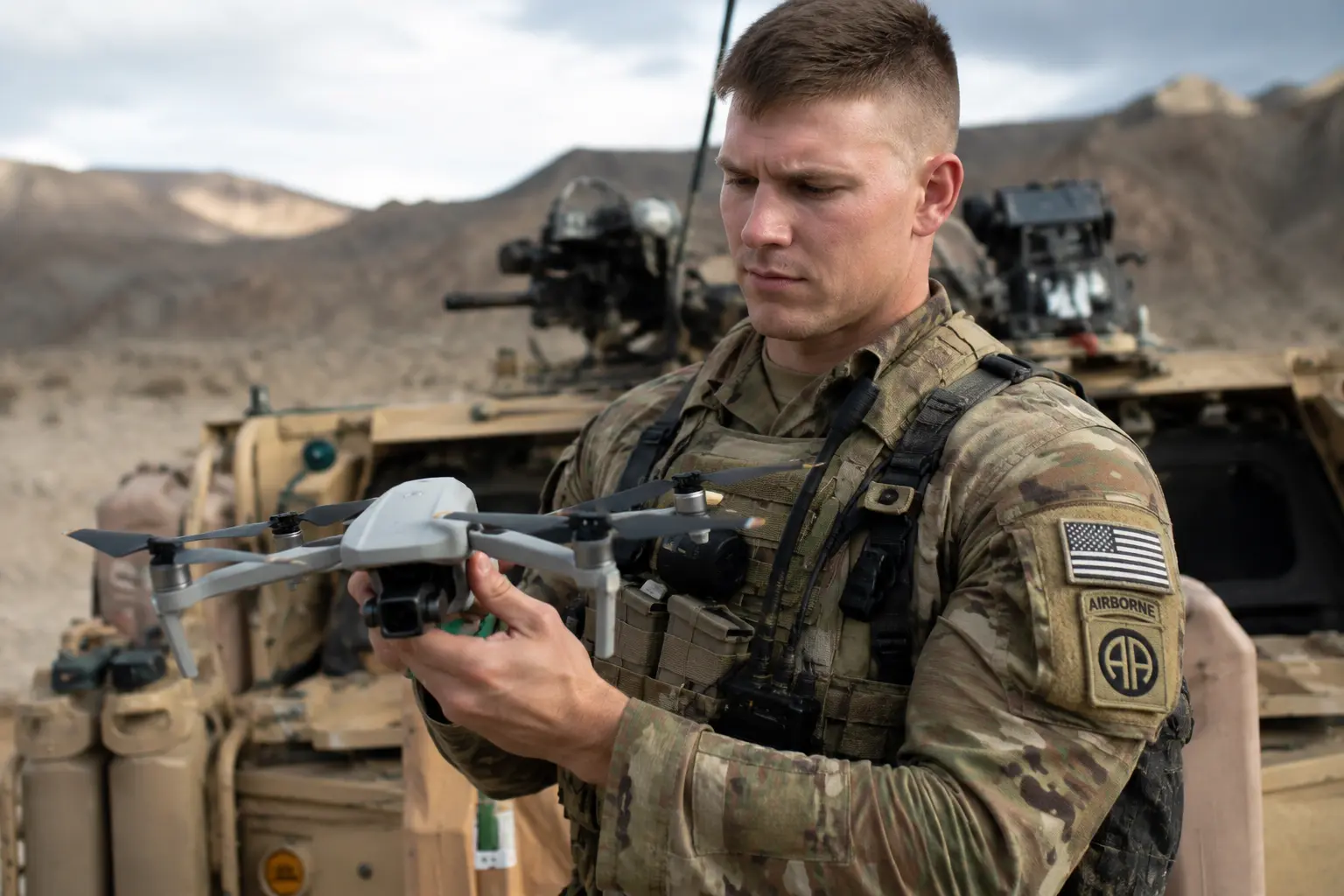
DAWG Budget, NDAA Batteries, Unusual Machines: Drone Dominance in Numbers
Trump's $53.6B Autonomous Warfare Group budget is reshaping domestic drone supply chains. Here's how four companies are responding.
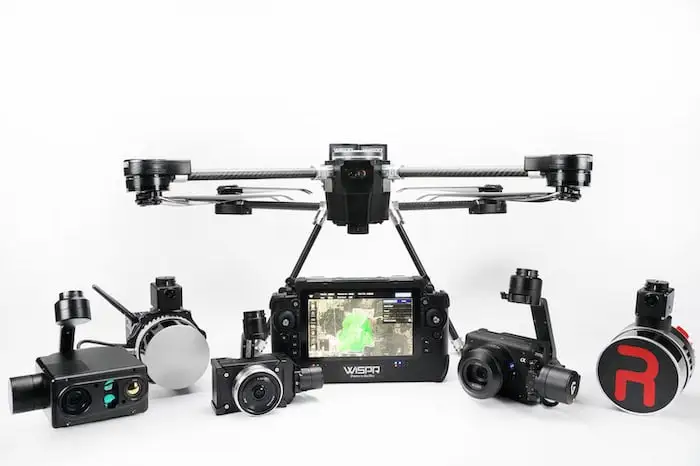
WISPR SkyScout 2+ Added to Blue UAS Cleared List
WISPR Systems' SkyScout 2+ earns Blue UAS Cleared List approval, clearing it for federal procurement without NDAA limits.
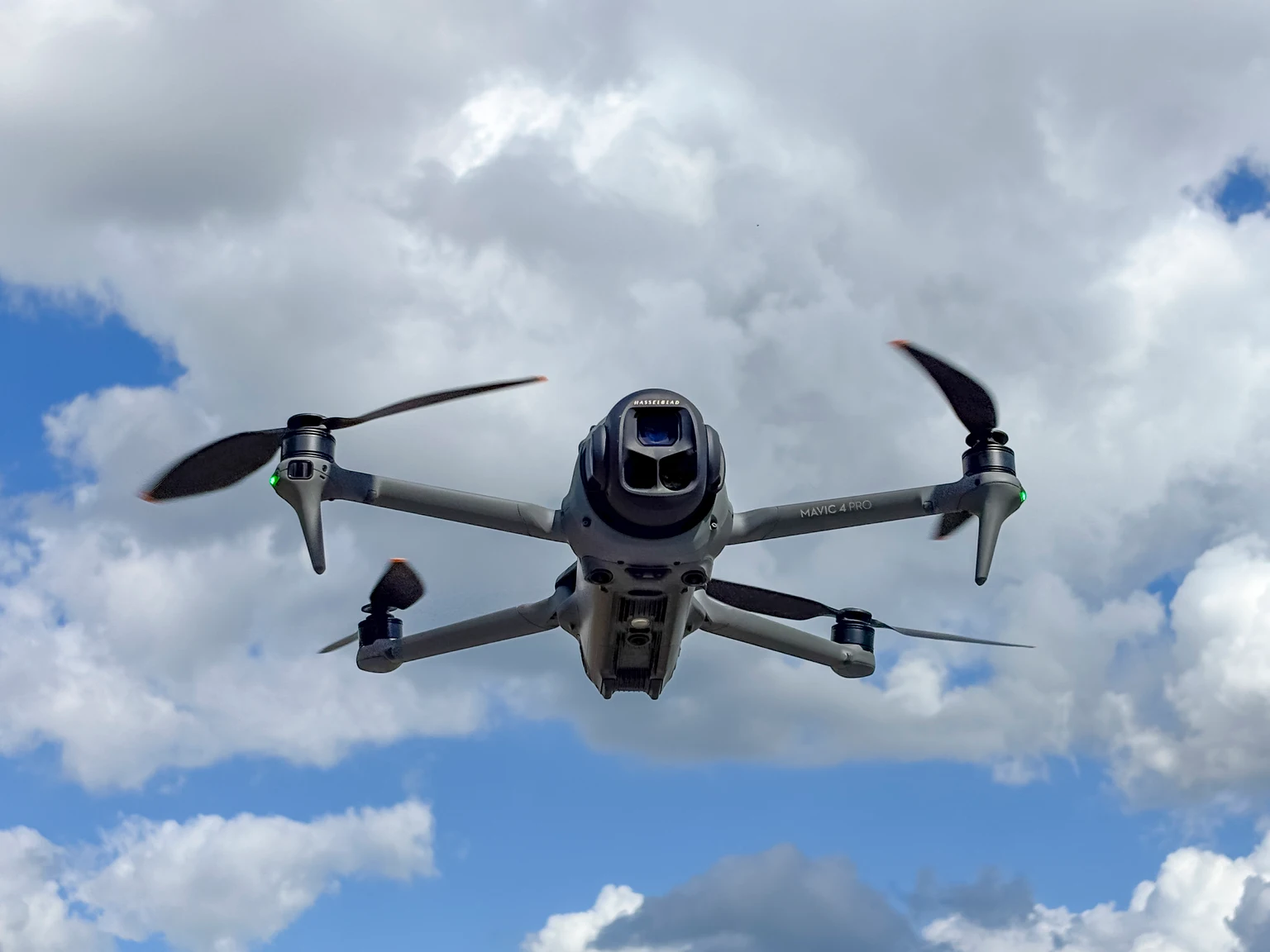
Unusual Machines Wins $5M Counter-UAS Contract with Powerus
Unusual Machines secured a $5M+ contract to supply NDAA-compliant components for Powerus counter-UAS interceptor systems.
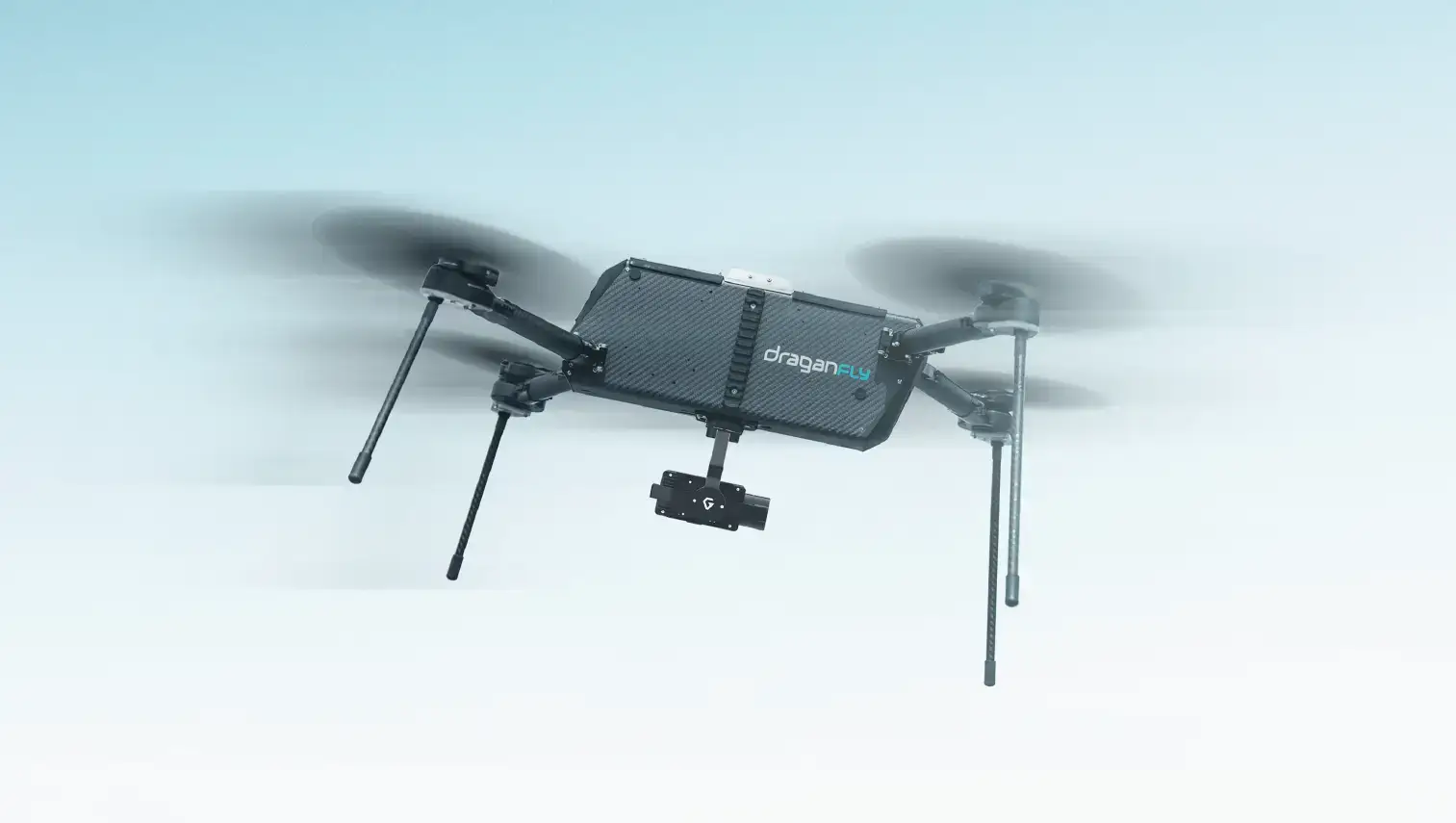
Draganfly Lands AFSOC Deal for Flex FPV Drones and Training
Draganfly secured a partnership with Air Force Special Operations Command to deliver Flex FPV drones and operator training.
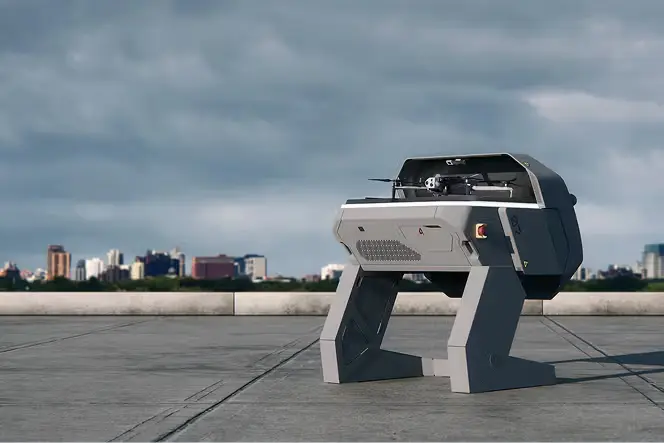
Skydio Wins $9M USAFCENT Contract for X10 Base Security
U.S. Air Forces Central ordered Skydio Dock and X10 systems to secure American airbases across the Middle East amid active Iranian drone attacks.

XTI Aerospace Posts $121.6M Revenue, Targets $160M in 2026
XTI Aerospace reports $121.6M pro forma 2025 revenue after Drone Nerds acquisition and targets $160M for 2026.
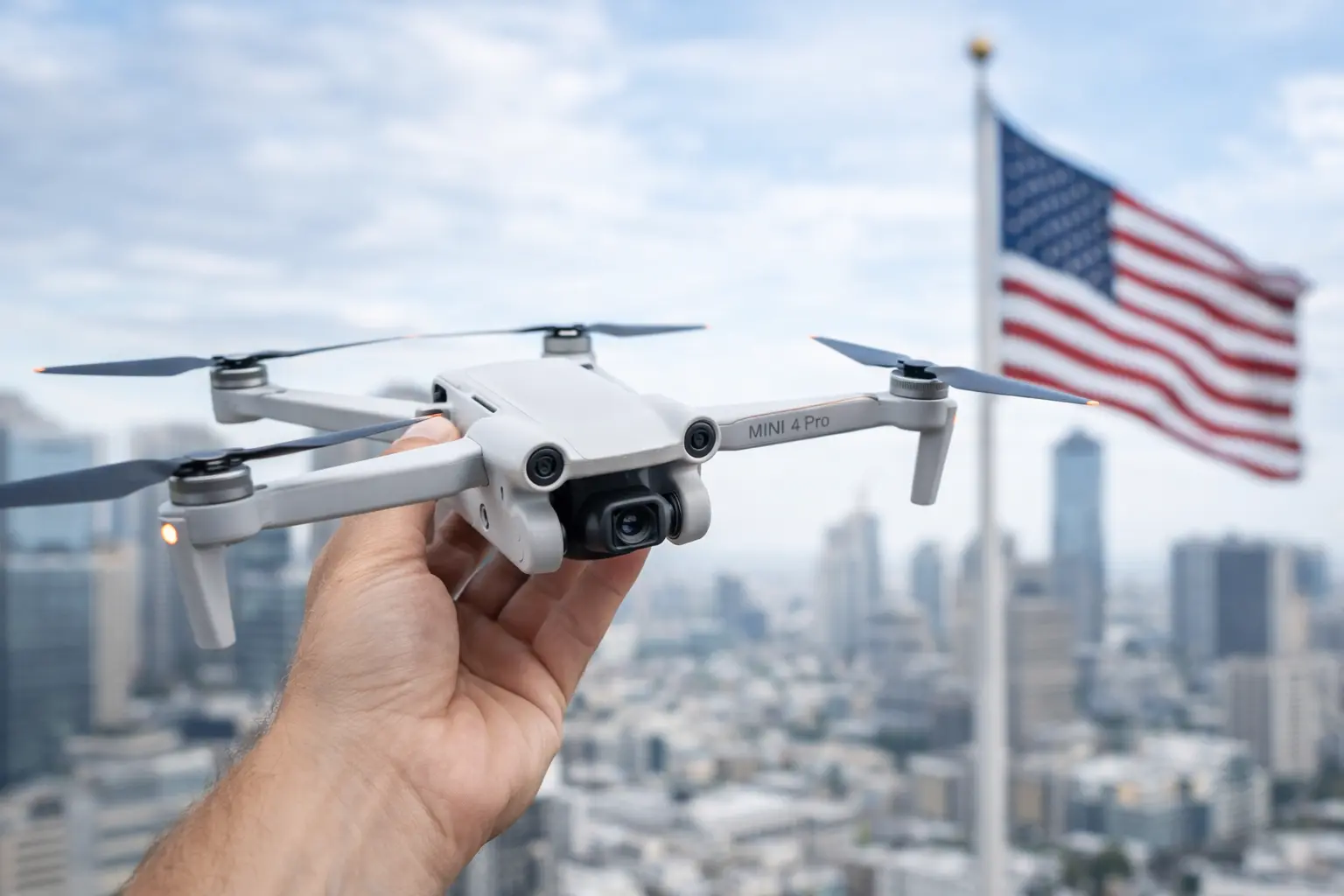
No One Is Replacing DJI in the US Consumer Market
The DJI ban has left a gap no US dronemaker wants to fill. Defense contracts pay better, and nobody is competing for the 90% of the market DJI dominated.
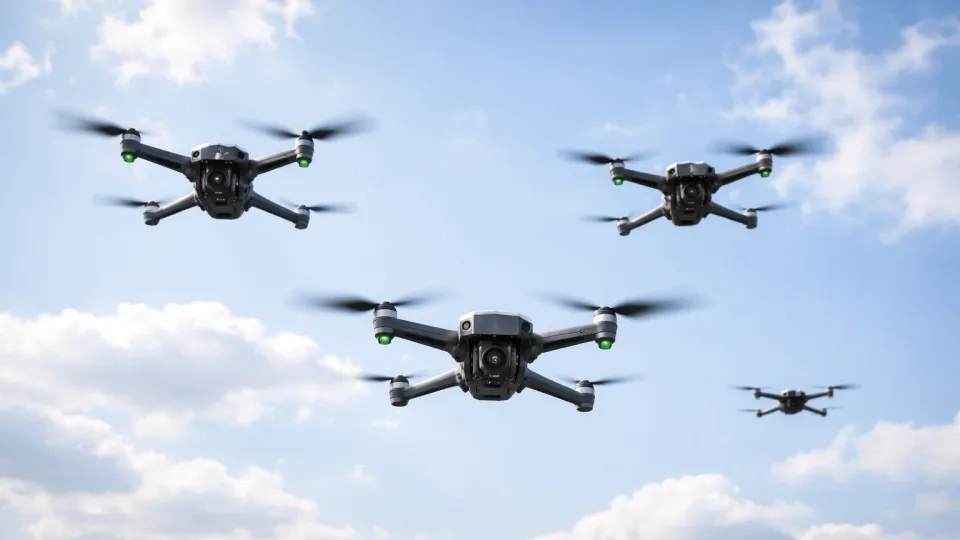
Unusual Machines Bets on Defense Drone Manufacturing
Unusual Machines is positioning as a domestic NDAA-compliant drone component supplier as US procurement rules tighten.
Companies
Unusual Machines
US drone manufacturer and components distributor building NDAA-compliant drones and supplying parts to reduce American dependence on Chinese drone supply chains.
United States
Skydio
US drone manufacturer building AI-powered autonomous aircraft, supplying NDAA-compliant enterprise and defense drones to government agencies and commercial operators.
United States
Red Cat Holdings
US defense drone company supplying NDAA-compliant small unmanned systems for military reconnaissance through its Teal Drones subsidiary.
United States
WISPR Systems
Mississippi drone manufacturer building NDAA-compliant SkyScout quadcopters for mapping, inspection and public safety, cleared to the Blue UAS list in 2026.
United States
6K Energy
US battery materials company producing domestic cathode active materials for energy storage, mobility, and defense supply chains.
United States
Autel Robotics
Chinese drone manufacturer producing consumer and commercial UAVs, including the EVO and Dragonfish series, with a growing presence in defense-adjacent markets.
China
CRG Defense
Ohio-based defense research and manufacturing company, formerly Cornerstone Research Group, making battery cells and packs, drone payloads, electric motors and advanced materials for US defense programmes.
United States
DJI
Chinese private manufacturer of consumer, enterprise and agricultural drones, cameras and imaging systems.
China
Products
Skydio X10
Skydio
A serious U.S.-made enterprise platform built around autonomy, sensors, and government-grade deployment rather than mass-market volume.
Black Widow
Red Cat / Teal Drones
The US Army's chosen short-range reconnaissance drone, built for rucksack portability and GPS-denied flight — its position rests on winning the SRR program of record rather than on any single specification.
DJI Matrice 350 RTK
DJI
The benchmark enterprise inspection platform — IP55-rated, dual-operator capable, and compatible with the broadest payload ecosystem available, but off-limits for US federal government use under NDAA restrictions.
Recent Contracts
defense
Acquisition Technology & Logistics Agency, Red Cat Holdings
Delivery of 173 Black Widow sUAS systems to the Japan Ground Self-Defense Force for tactical ISR...
defense
Powerus (Autonomous Power Corporation), Unusual Machines
Supply contract for US-manufactured components for counter-UAS interceptor systems and 10-inch...
defense
U.S. Air Forces Central, Skydio
Order for Skydio Dock and X10 autonomous drone systems to provide perimeter security at USAFCENT...