U.S. Air Forces Central has awarded Skydio a contract exceeding $9 million for Skydio Dock and X10 systems to secure American airbases across the Middle East — one of the largest autonomous drone infrastructure deployments ever ordered by the U.S. Air Force for international base security.
The contract was awarded against a specific operational backdrop. U.S. bases across Kuwait, Qatar, Bahrain, Saudi Arabia, the UAE, Iraq, and Jordan have been under sustained attack since U.S.-Israel strikes on Iran on February 28, 2026. On March 1, six soldiers were killed and more than 30 injured in an Iranian drone attack on Camp Arifjan in Kuwait. On March 13, five KC-135 Stratotankers were damaged at Prince Sultan Air Base in Saudi Arabia. On March 27, an E-3 Sentry AWACS was struck at the same facility. A THAAD radar at Muwaffaq Salti Air Base in Jordan was apparently destroyed in the opening days of the conflict.
What USAFCENT is actually deploying
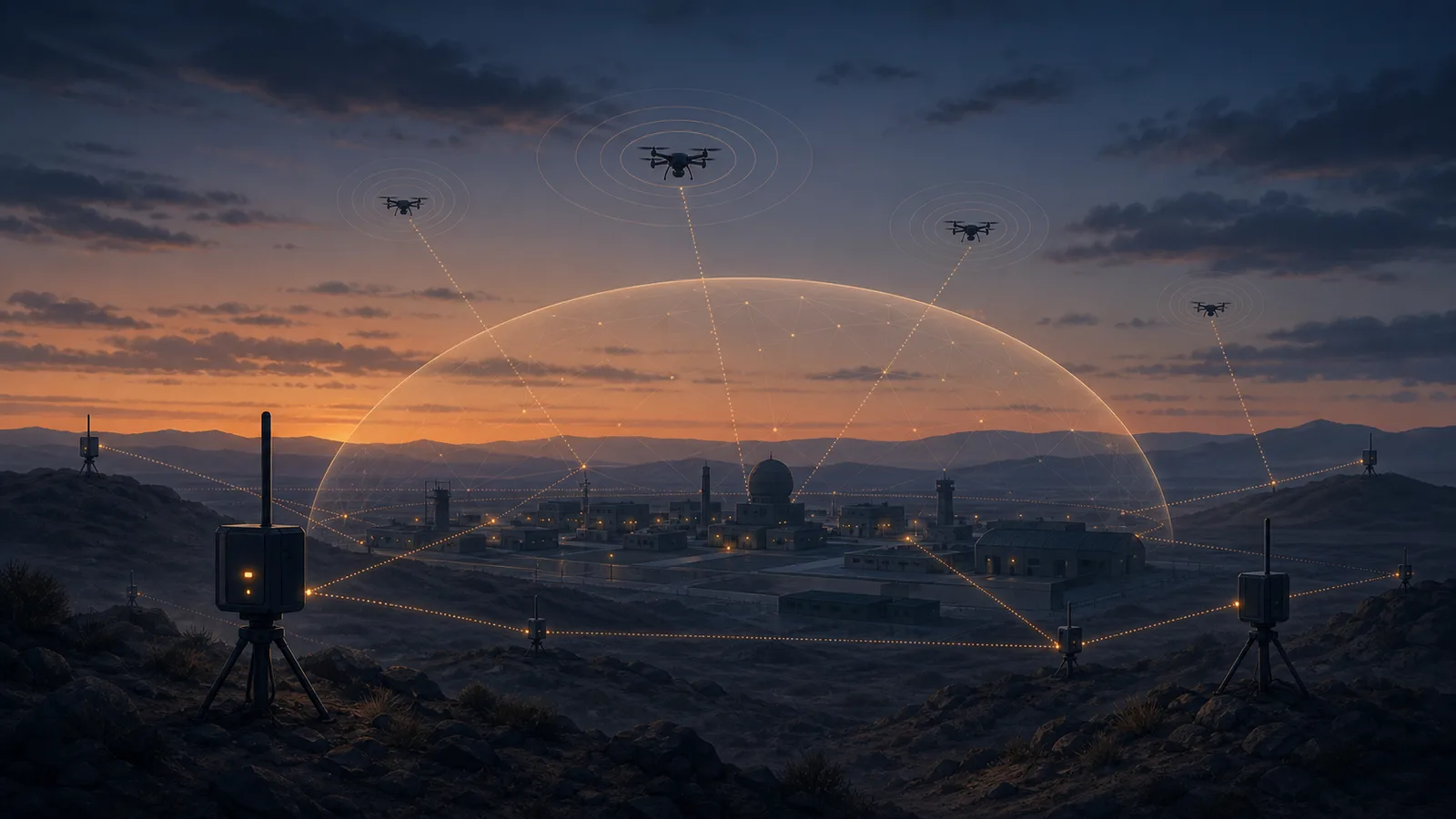
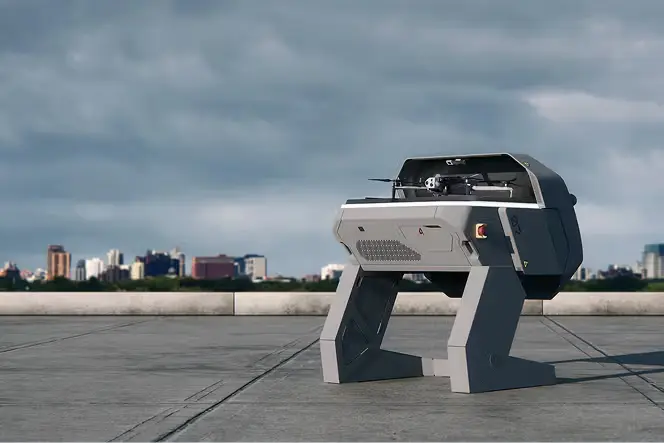
The Skydio Dock is a drone-in-a-box system that launches an X10 in under 20 seconds in response to sensor alerts, streaming high-definition and thermal video directly to the Base Defense Operations Center without requiring an operator at the launch site. A single operator can manage multiple systems simultaneously across an entire installation.
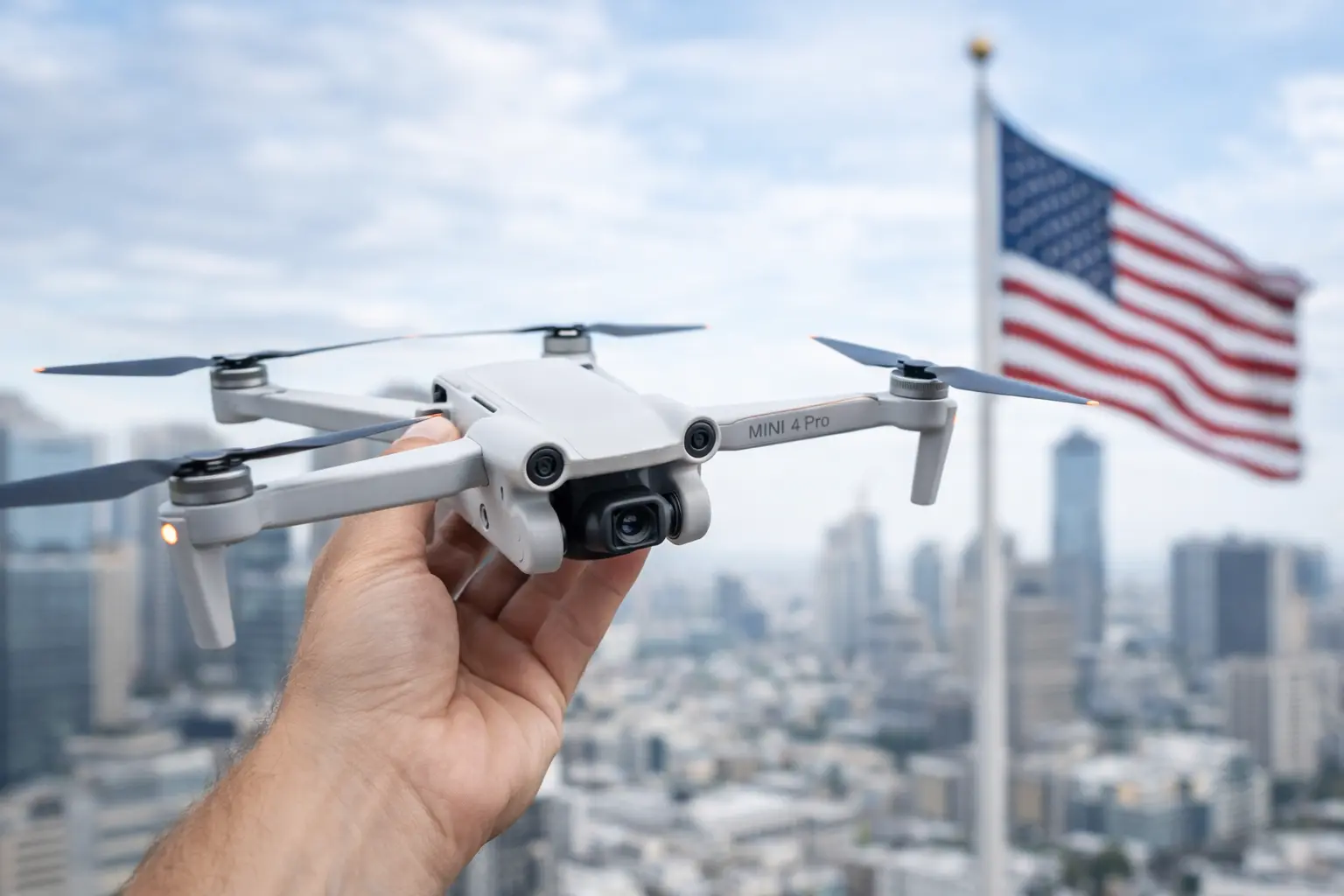
The X10 carries modular sensor payloads including a 64-megapixel narrow camera, a 48-megapixel telephoto capable of reading a license plate from 800 feet, and a Teledyne FLIR Boson+ thermal sensor that can detect a person from two miles away in complete darkness. Maximum flight time is approximately 40 minutes, top speed 45 mph, with an operating temperature range of -4 to 113 degrees Fahrenheit.
The militarized X10D variant — already the most widely deployed Group 1 UAS for USAF Security Forces — adds a multi-band radio for contested RF environments and RAS-A compliance for government flight software. All hardware in the order was manufactured at Skydio’s Hayward, California facility.
Why NDAA compliance is the operative requirement
For a force protection mission at active CENTCOM bases during a shooting war with a country that has a sophisticated drone program, supply chain origin is not a secondary consideration. Chinese-manufactured hardware cannot be deployed on the perimeter of bases under active Iranian drone attack — not as a matter of policy preference, but as a matter of operational security.
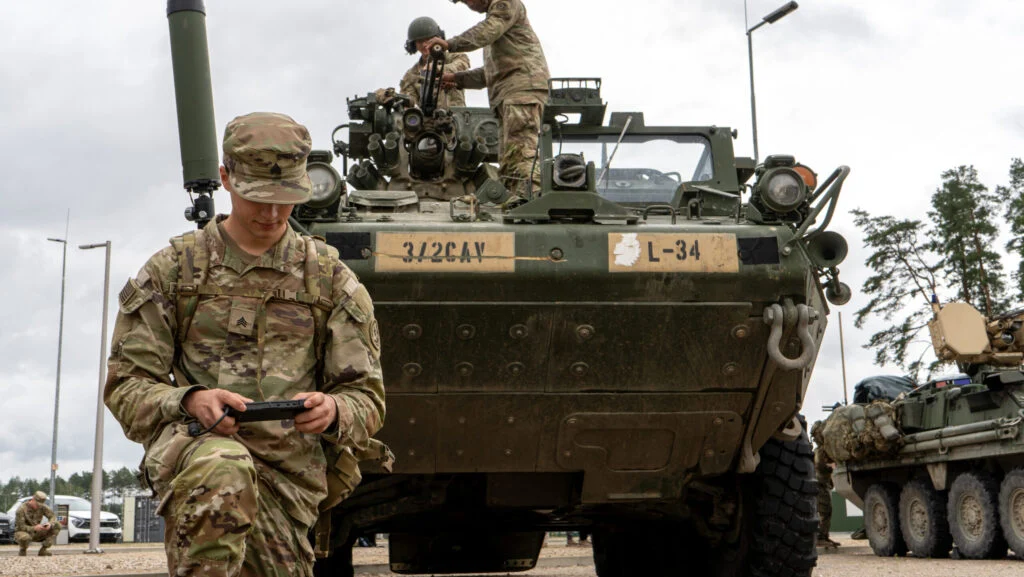
Skydio’s position in this procurement was reinforced by its existing military footprint. The X10D had previously been selected for Air Combat Command Tactical Air Control Party Specialists, PACAF Security Forces, and USAF Explosive Ordnance Disposal. The company describes itself as the largest American drone manufacturer and counts 29 allied nations among its military customers.
The Dock architecture also gives Skydio an operational data advantage that defense-focused startups lack. Years of Drone as First Responder deployments across U.S. state and local agencies produced the software maturity and reliability data that underwrites a deployment at this scale.
A template for overseas base defense
The USAFCENT award fits a pattern in Pentagon drone procurement: persistent autonomous infrastructure over individual tactical platforms. Fixed-perimeter bases with repeatable patrol routes and centralized operations centers are the ideal environment for drone-in-a-box architecture, and the same operational logic that makes DFR programs work for police departments transfers directly to overseas force protection.
At approximately 40,000 troops deployed across the region and CENTCOM actively dispersing personnel away from primary installations to reduce vulnerability, the demand for faster aerial detection is not theoretical. A 20-second autonomous launch time is an operational requirement in an environment where the difference between early detection and a successful strike is measured in seconds.
The $9 million figure covers the initial deployment. With Iran demonstrating the ability to hit high-value aircraft on flight lines and the Pentagon committed to NDAA-compliant autonomous systems for sensitive operations, follow-on orders are the more relevant number to watch.