
STARK
Berlin-based defense company building loitering munitions, uncrewed surface vessels and command software, and supplying the Bundeswehr under a 2026 framework agreement.
1 article
What It Is
STARK is a German defense company founded in 2024 and headquartered in Berlin. It builds one-way attack drones and the command software that directs them, and sells to the Bundeswehr and other NATO states. Uwe Horstmann, a co-founder and previously an investor at Project A, took over as chief executive in April 2026.
The company says it operates across Germany, Ukraine, the United Kingdom, Sweden and Greece, with roughly 18,500 square metres of production space; its manufacturing sites include Munich and a facility in Swindon, England.
Products
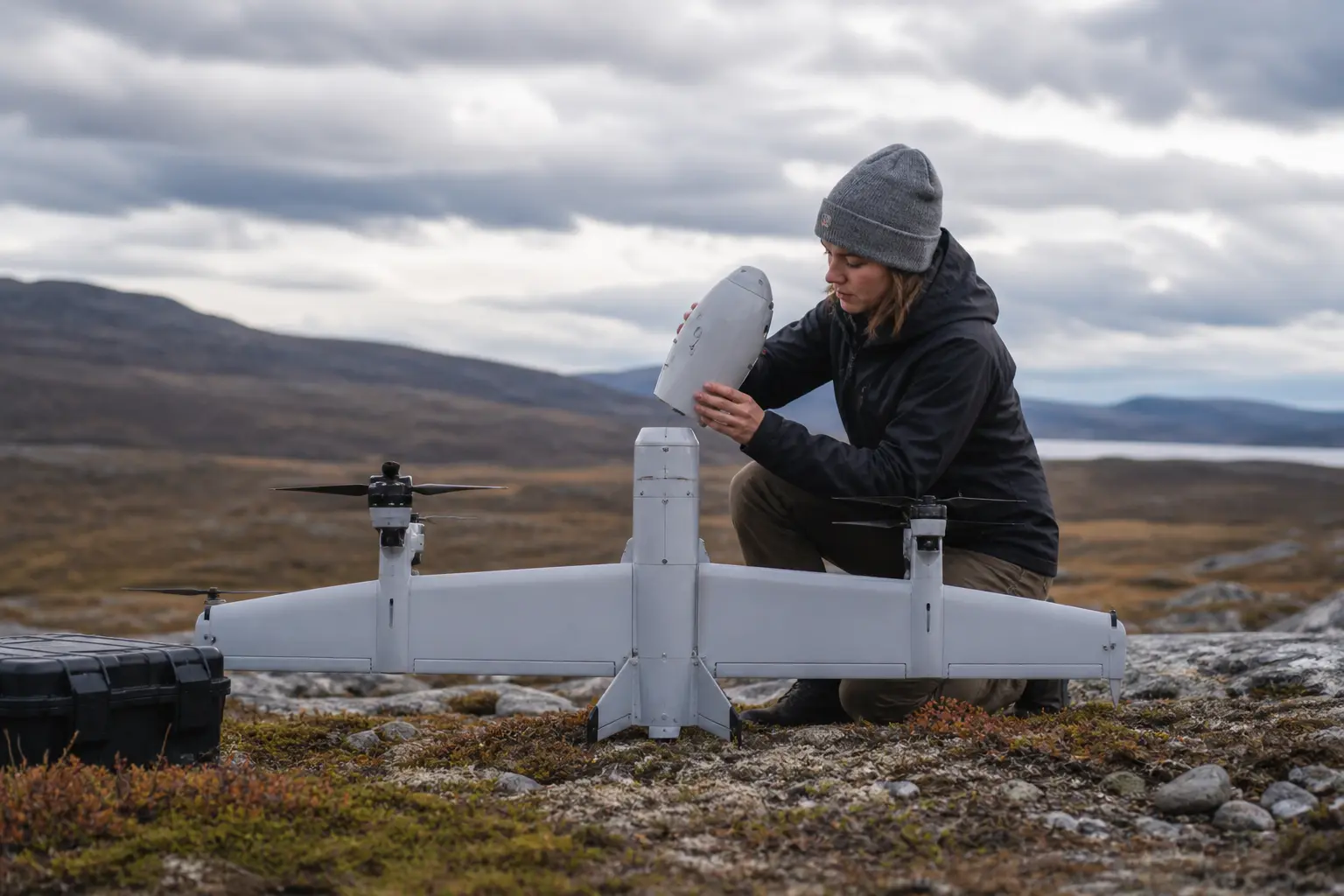
Virtus (designated OWE-V) is the flagship: a vertical take-off loitering munition that the company says has a range of more than 130 kilometres, endurance of up to 90 minutes and a five-kilogram warhead.
Minerva is command-and-control software for linking reconnaissance and strike across domains.
Gambit and Cascade, unveiled in June 2026, are a man-portable short-range loitering munition and a tube-launched effector for salvo launch.
Vanta is a family of uncrewed surface vessels, extending the company beyond the air domain.
Funding and Contracts
STARK raised a $62 million round led by Sequoia Capital in August 2025 at a reported valuation near $500 million. On 23 June 2026 it closed a €500 million round co-led by Sequoia and Founders Fund, with the NATO Innovation Fund, Döpfner Capital and Project A also participating, at a valuation above €3.5 billion and total funding reported at more than €660 million. The company says over 80 percent of the new capital goes to manufacturing and research.
On 25 February 2026 the Bundestag budget committee approved initial loitering munition contracts of roughly €268 million each to STARK and Helsing, with options that could add up to about €1 billion per supplier. The systems are intended for Germany’s armoured brigade in Lithuania from 2027. Lawmakers attached reporting requirements and cancellation clauses allowing withdrawal if a manufacturer fails qualification testing.
Why It Matters
STARK is the clearest case of European defense capital moving faster than demonstrated capability. The Financial Times reported in October 2025 that Virtus failed to hit a target across four attempts in a British Army exercise in Kenya and a Bundeswehr trial in Germany, with one aircraft’s battery catching fire and another crashing into woodland. STARK’s response, in November 2025, was that the trials were experimental, that more than a dozen missions flew successfully in Kenya, and that repeated crashes are how it develops hardware.
Germany bought anyway — with cancellation clauses attached, which is the honest measure of official confidence. The company now has money, political backing, a framework agreement and a product line that grew from two systems to five in a year. What it has not yet demonstrated in public is that Virtus works reliably at range, or that it can manufacture at the volumes the round was raised to fund.