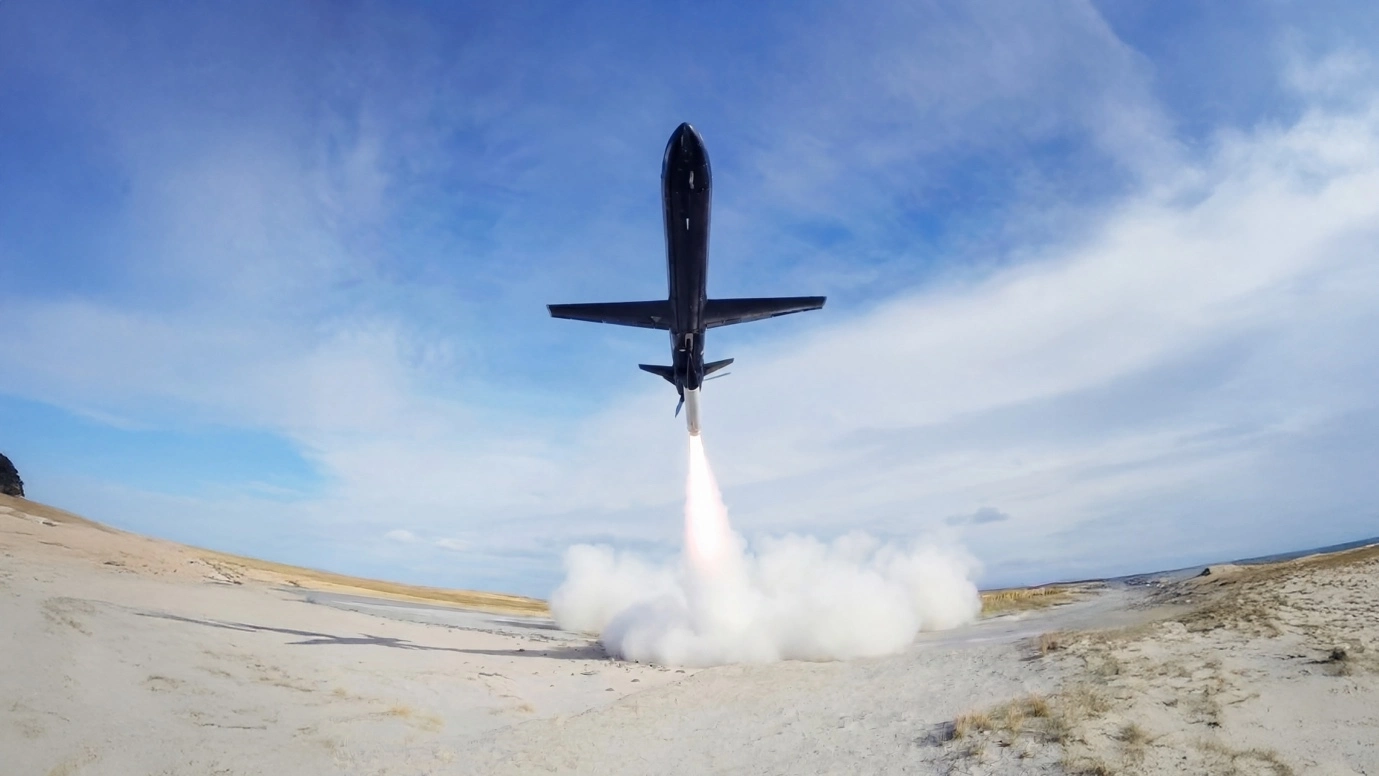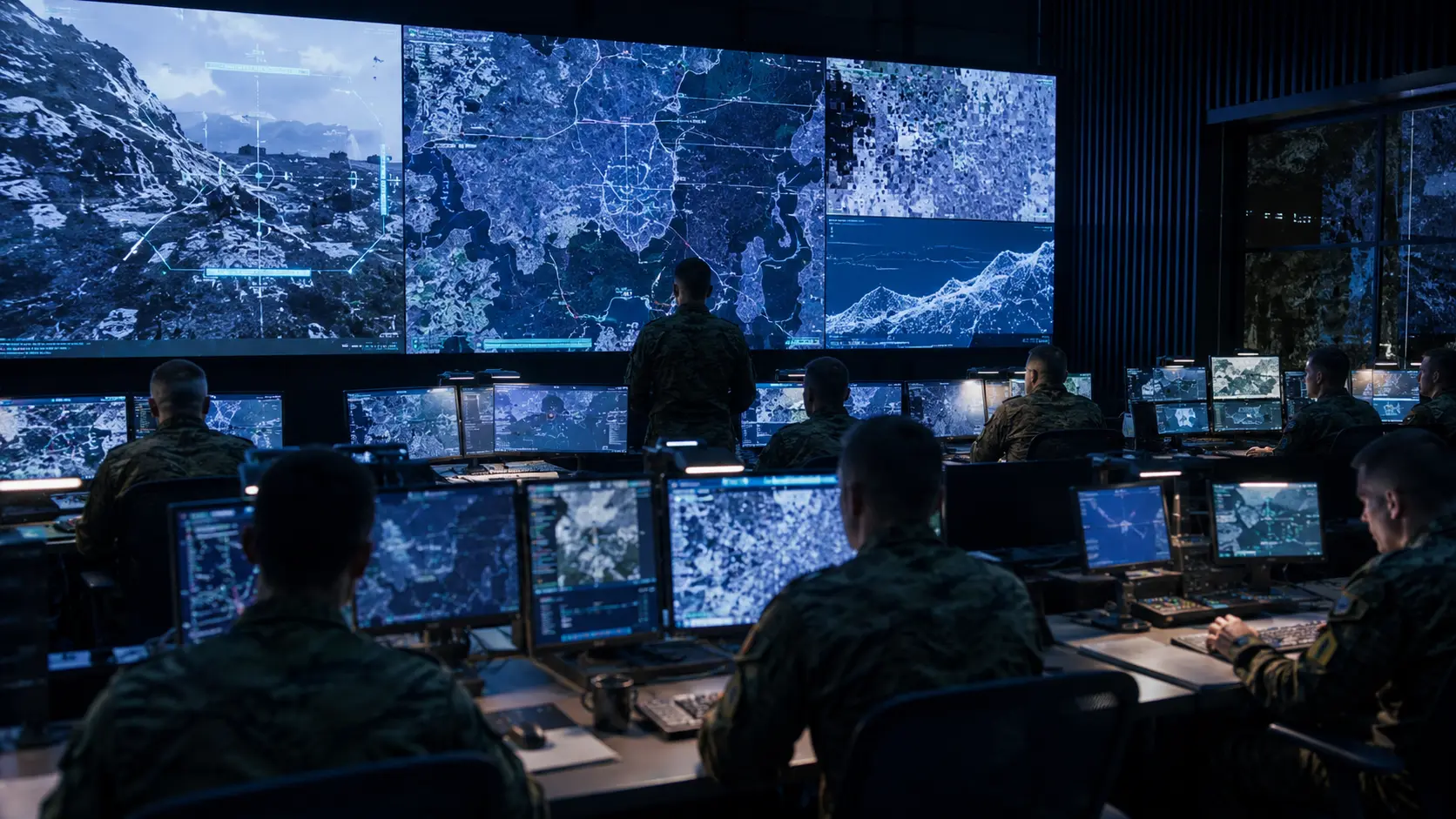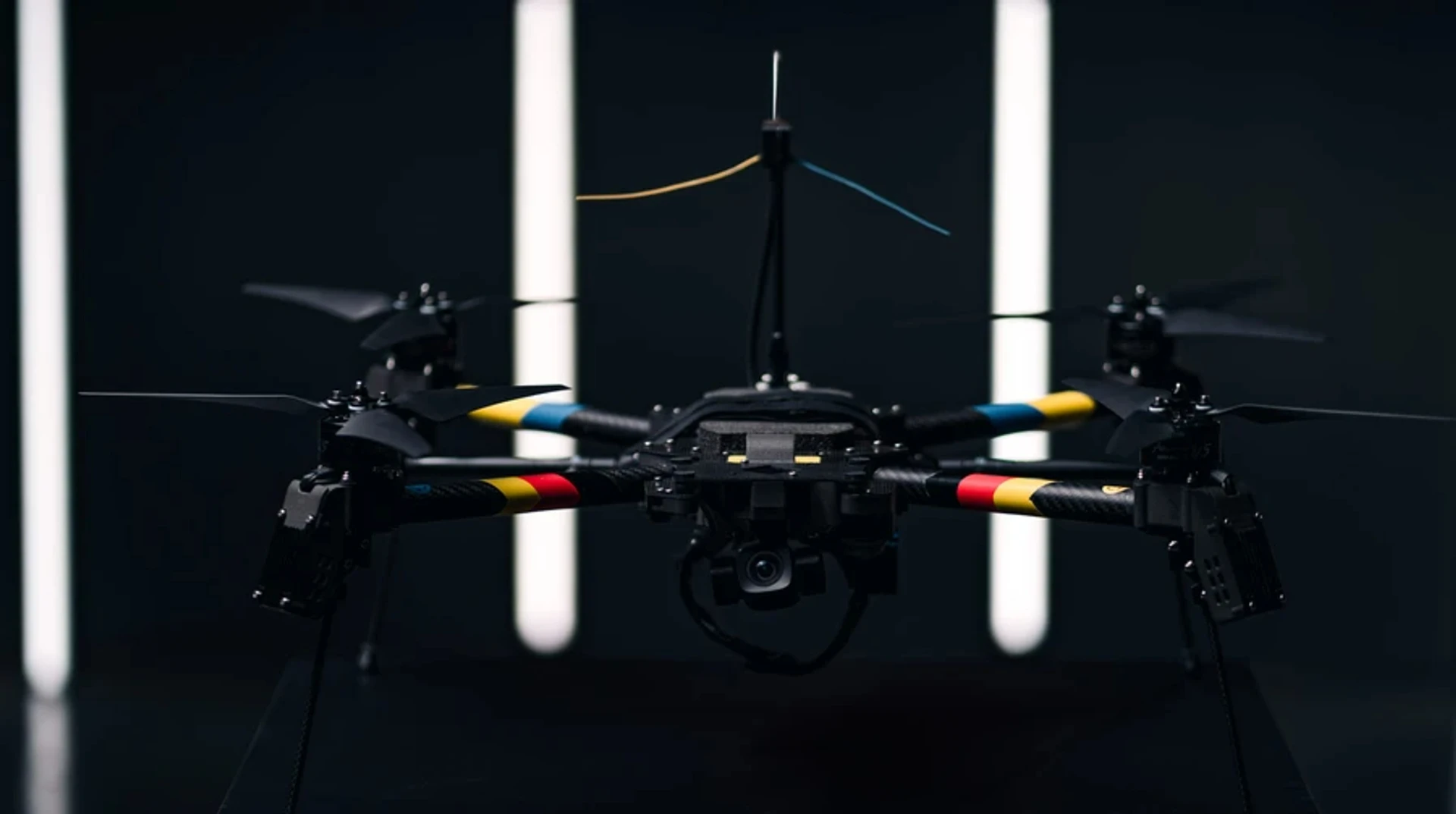

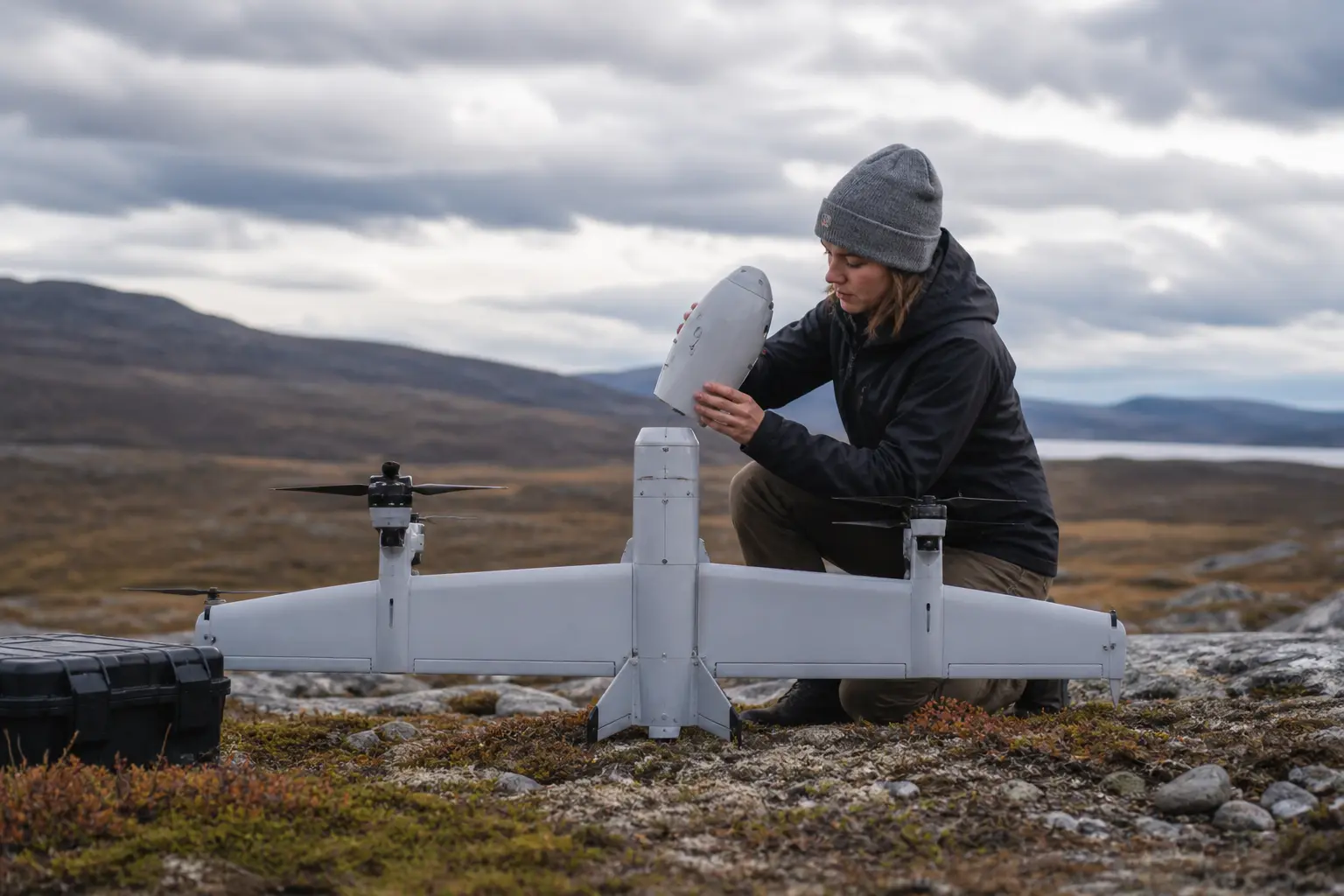
Germany’s Bundeswehr conducted a live AI-enabled drone swarm exercise last week, integrating STARK’s Virtus loitering munition and Minerva command and control software with Quantum Systems’ Vector reconnaissance drone into a single recce-strike sequence. The target was kill chain compression — reducing the interval between detection and engagement from minutes to seconds. The Bundeswehr wants a scalable operational version of this capability by 2027.
The exercise tested something specific: whether an AI software layer connecting a reconnaissance drone’s sensor feed to a loitering munition can reliably authorize and direct a strike without the delays built into conventional command architectures. In a traditional sequence, target identification, reporting, verification, coordination, and authorization can consume minutes to hours. During that window, targets move. A system that collapses that chain to seconds changes the tactical calculus entirely — and that’s exactly what Ukraine has demonstrated at scale with less sophisticated systems.
Why BMS Integration Is the Real Capability Multiplier
Virtus is built around a modular architecture designed to slot into existing Battle Management Systems rather than operate as a parallel capability requiring separate operators and separate data feeds. That integration path is what separates a tactically useful loitering munition from one that creates more command burden than it relieves. A weapon that speaks the same software language as the units already using it becomes an extension of existing command infrastructure. One that doesn’t becomes an island.
Minerva, STARK’s C2 software, is the connective layer. In the exercise it provided the backbone linking Vector’s reconnaissance feed to Virtus strike capability — the software that makes a combined system out of two separate platforms. Josef Kranawetvogl, STARK’s Senior VP, described the ambition plainly: close the gap between reconnaissance and strike by integrating the two into a single networked sequence.
Quantum Systems contributes proven sensing. Vector has an operational track record in tactical reconnaissance environments. Its pairing with Virtus reflects deliberate interoperability design rather than ad hoc integration — the two companies built toward a common software layer, and the Bundeswehr exercise validated that the combination works under field conditions.
Germany’s Drone Acceleration
The Bundeswehr’s pace of unmanned systems testing has accelerated sharply since Chancellor Scholz’s Zeitenwende declaration in February 2022. Years of underinvestment left Germany without the autonomous strike capability that Ukraine’s war has made look essential, and the current testing program with commercial partners like STARK and Quantum Systems is how Germany is closing that gap in the unmanned domain. A 2027 target for scalable operational capability is aggressive — but given what the exercise demonstrated, it’s not implausible.