
Inversion Space
Los Angeles company building reusable reentry vehicles to return payloads from orbit, funded by venture capital and US Space Force development money, with its first full-scale vehicle not yet flown.
1 article
Inversion Space
Inversion Space is a US aerospace company in Los Angeles, founded in 2021 by Justin Fiaschetti and Austin Briggs while they were students at Boston University, and an early Y Combinator company. It builds reentry vehicles — spacecraft that park in orbit and then bring a payload back down through the atmosphere on demand. The commercial framing is space logistics; the money and the near-term customers are defence.
Vehicles
Ray — a small demonstrator capsule, launched on SpaceX’s Transporter-12 rideshare in January 2025 under an FAA reentry licence granted in October 2024. It did not reenter. Inversion said a short circuit stopped the deorbit engine igniting, and framed the mission as validating avionics, power, propulsion and separation rather than reentry itself. The vehicle is the company’s only flight experience to date.
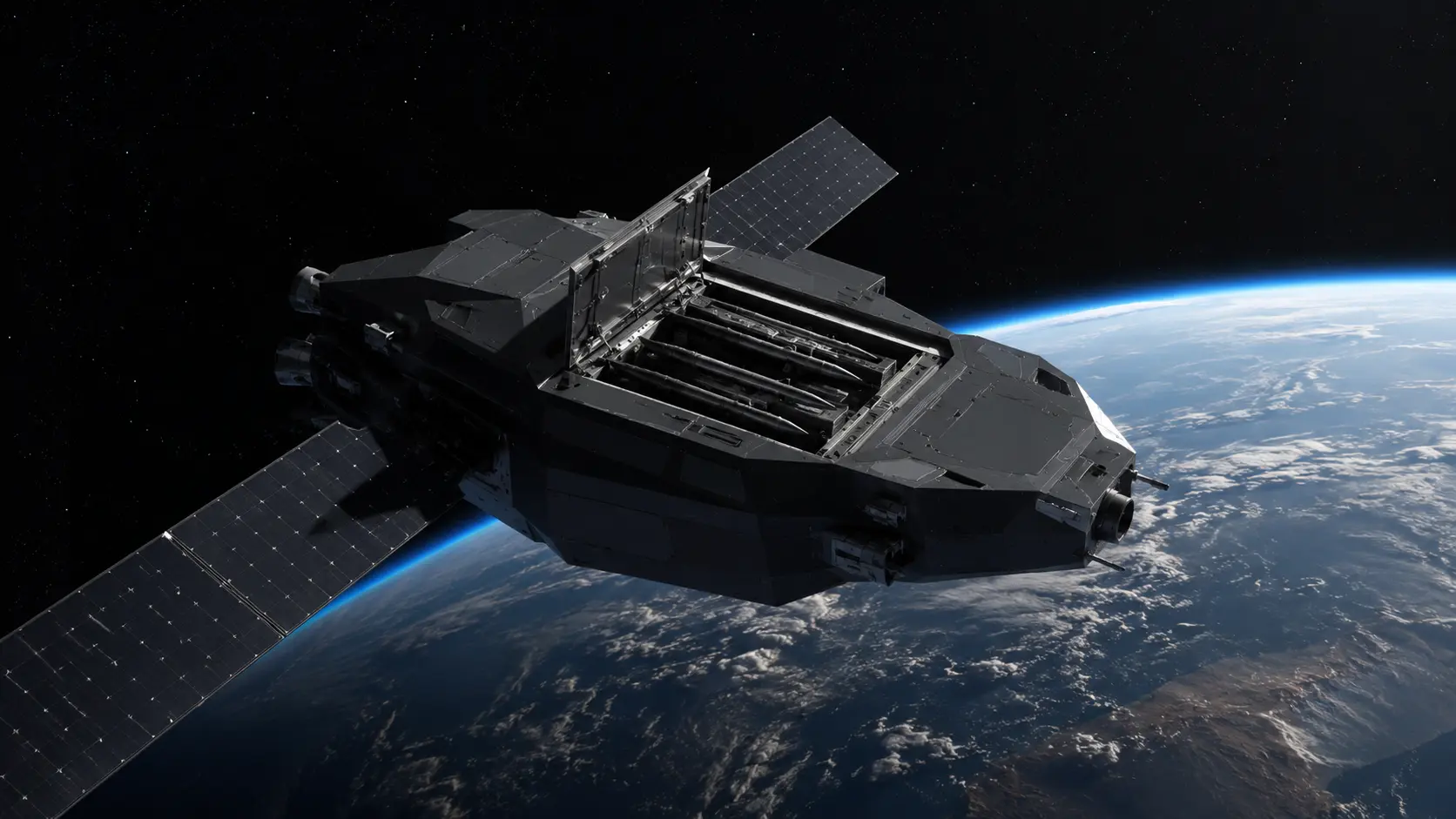
Arc — the full-scale vehicle, unveiled at the company’s Los Angeles facility on 1 October 2025. Inversion says Arc will carry about 500 pounds of cargo, stay on orbit for up to five years, survive reentry above Mach 20, land under parachute and be reusable, delivering to almost any point on Earth in under an hour. At the unveiling the company said it had built a full-scale development unit of the primary structure, run dozens of drop tests, completed aerodynamic modelling, and partnered with NASA on a thermal protection system. It said it was on schedule to fly Arc’s first mission in 2026. That flight has not been announced.
Funding and Programmes
Inversion is private. It raised roughly $10 million in seed funding and a $44 million Series A in November 2024, co-led by Spark Capital and Adjacent with Lockheed Martin Ventures and Kindred Ventures also participating — around $54 million of equity in total. Separately, it won a $71 million SpaceWERX STRATFI award in September 2024, which is contract money rather than investment. In September 2025 Kratos selected Inversion onto the team for MACH-TB 2.0, the Pentagon’s $1.45 billion hypersonic flight test bed. On 5 May 2026 Anduril named Inversion among the partners on its bid for the Space Force’s space-based interceptor work under Golden Dome, alongside Impulse Space, K2 Space, Voyager Technologies and Sandia National Laboratories. Anduril did not break out what Inversion contributes or what it is paid.
Why It Matters
Controlled reentry is one of the harder problems in an orbital defence architecture, and very few companies work on it, which is why a five-year-old startup ends up on a prime’s Golden Dome team. That position is also the whole risk. Inversion’s revenue path runs through government development programmes it does not lead, its one orbital mission failed at the step the company exists to solve, and Arc’s first flight — the milestone the Series A was raised to carry it to — had not happened by early September 2026, with little of the company’s stated 2026 window left.