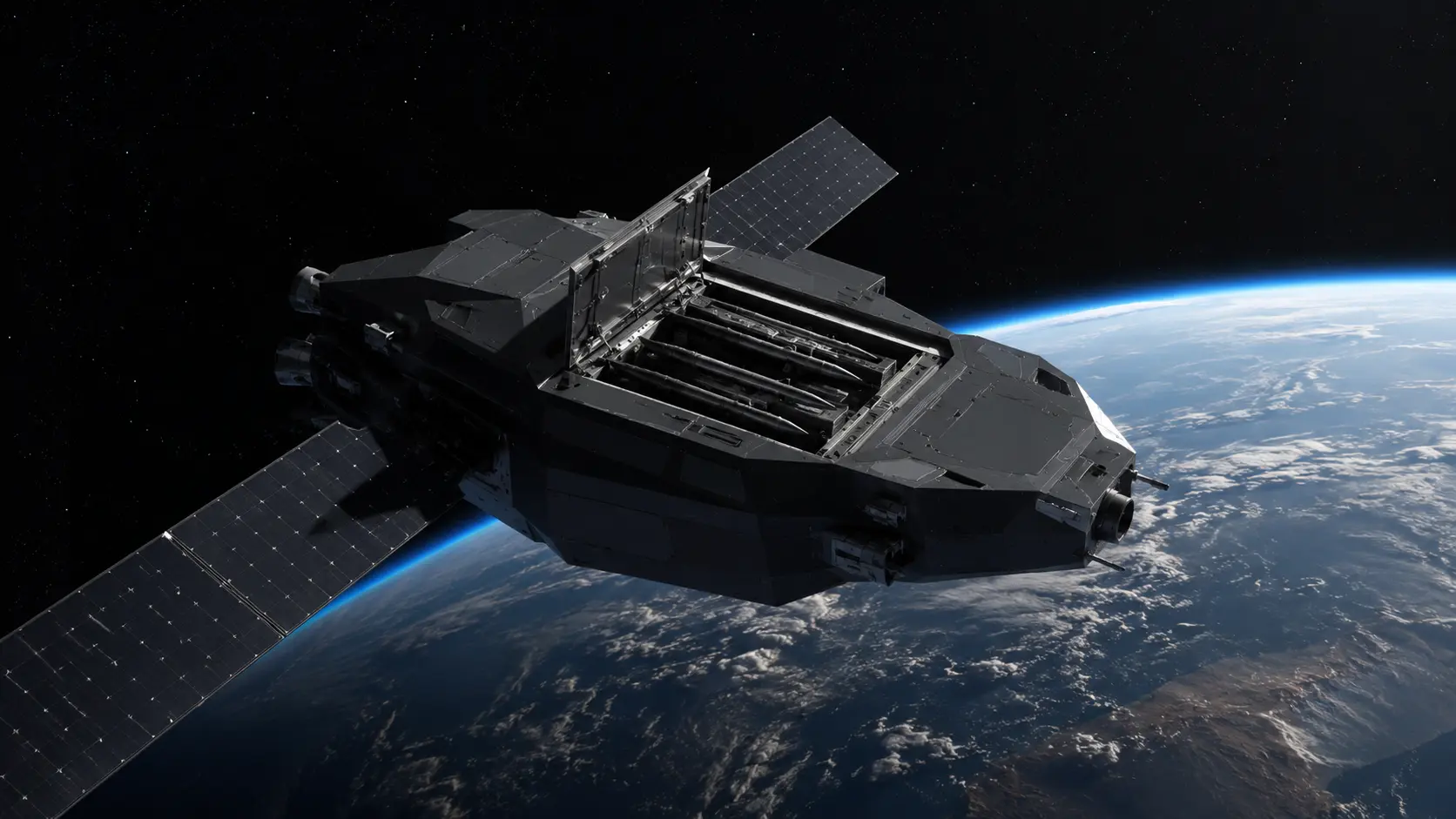

Impulse Space
US in-space mobility company building orbital transfer vehicles and kick stages that move payloads after launch, for commercial rideshare customers and US national security space missions.
1 article
Impulse Space
Impulse Space is a Redondo Beach, California company that builds vehicles to move payloads once they are already in orbit. It was founded in 2021 by Tom Mueller, SpaceX’s first propulsion hire and the designer of the Merlin engine. Its argument, in Mueller’s own framing, is that launch is largely a solved problem and the remaining bottleneck is getting from low Earth orbit to anywhere else.
Vehicles
Mira — a roughly 300-kilogram precision maneuvering spacecraft, flight-proven across several missions. An upgraded variant is aimed at geostationary transfer and GEO operations.
Helios — a high-energy kick stage intended to carry payloads from low Earth orbit to MEO, GEO, lunar and heliocentric destinations. First flight is scheduled for 2027; it has not flown.
Caravan — a rideshare programme selling shared access to higher-energy orbits.
Propulsion — Saiph, Deneb and Rigel engines, plus Electra, an electric propulsion system introduced in July 2026.
Business position
Impulse is private. It raised a $300 million Series C in June 2025 led by Linse Capital, and announced a $500 million Series D on 2 June 2026 co-led by 137 Ventures and BANNER VC, with Founders Fund, Lux Capital and Linse Capital participating. The company put total capital raised at over $1 billion but did not disclose a valuation; Reuters reported the round at $4.26 billion post-money. Impulse says it has secured hundreds of millions of dollars in customer contracts and has more than doubled headcount over the past year. It does not publish revenue.
On the government side, Space Systems Command selected Impulse for a $34.5 million contract supporting the VICTUS SURGO and VICTUS SALO tactically responsive space missions, and in August 2026 awarded a $28 million SBIR Phase III extension covering VICTUS SALO 2 and 3. VICTUS SALO 1 is currently slated to launch in 2027.
Impulse works with Anduril on national security space. Anduril integrates its own payloads onto Mira, and the two companies have announced a high-precision rendezvous and proximity operations demonstration in geosynchronous orbit — targeted for late 2026 on a Falcon 9, flying alongside the Space Force’s VICTUS SURGO mission. That demonstration is planned, not completed. Anduril also named Impulse among its collaborators on space-based interceptor work tied to the Golden Dome architecture.
Why it matters
Military space architectures are shifting from static constellations toward maneuver: getting a sensor or effector to a specific place at a specific time, and doing it responsively. That is exactly the capability Impulse sells, and Mira’s flight record gives it something most in-space mobility startups do not have — hardware that has actually operated in orbit.
The exposure is timing and concentration. The valuation prices a business whose highest-value missions are still ahead of it: Helios is unflown, VICTUS SALO 1 launches in 2027, and the GEO rendezvous demonstration has yet to happen. Much of its national security work also reaches the customer through Anduril rather than directly, which is a fast route in and a dependency at the same time.