
The U.S. Coast Guard has obligated $16 million for shore-based V-BAT drone surveillance services specifically for Puerto Rico, according to procurement records — an expansion of a $229.3 million Shield AI contract that began on Coast Guard cutters and has since spread to land-based deployments across two theater areas.
The delivery order was originally signed on March 2 for nearly $6 million, then modified to $16 million on April 10. The contract description reads “VBAT SHORE BASED SERVICES. TASK ORDER FOR PUERTO RICO” and is classified in federal spending databases under “support — professional intelligence.” The performance window runs from April 27 to June 26, 2026.
What the V-BAT does for the Coast Guard
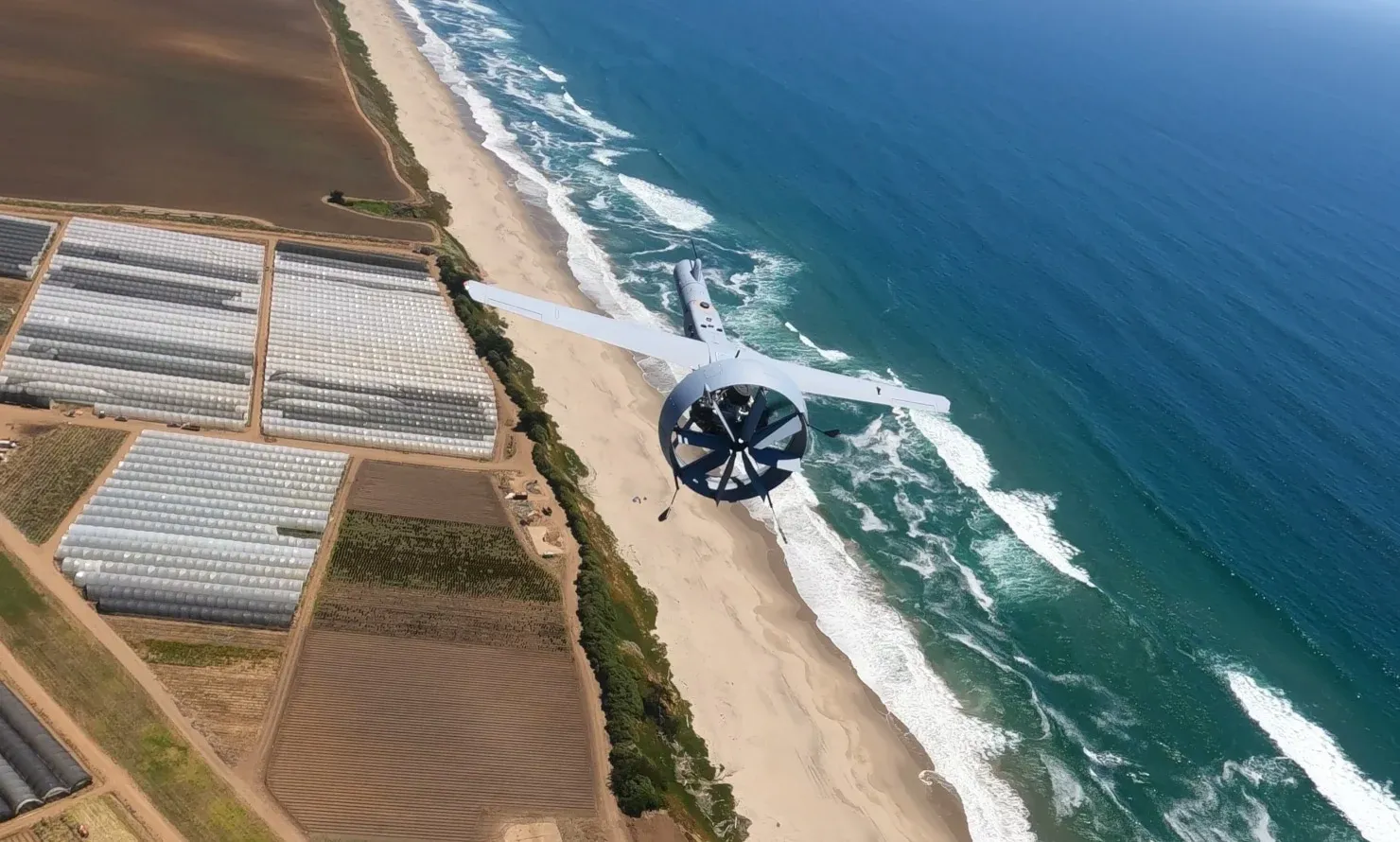
The V-BAT is a tube-launched, vertical takeoff and landing UAV developed by Shield AI under a 2021 U.S. Navy contract. A two-person team can deploy it in under 30 minutes from almost any location — a capability that makes shore-based operations in Puerto Rico’s complex geography significantly more practical than fixed-wing alternatives. The system provides continuous surveillance for a minimum of 12 hours per flight.
The Coast Guard credited V-BAT operations with more than $1 billion in narcotics seizures in 2025, according to the Wall Street Journal. The Caribbean is one of the primary vectors for drug trafficking into the continental US, and Puerto Rico’s position at the eastern edge of the Mona Passage — through which thousands of undocumented migrants and illicit shipments transit annually from the Dominican Republic — makes persistent aerial surveillance operationally valuable in ways that periodic cutter patrols cannot replicate.
How the contract has expanded
The original $229.3 million contract covered contractor-owned, contractor-operated V-BAT services for national security cutters — the largest vessels in the Coast Guard fleet. The scope has since expanded in two directions: land-based deployments along the US-Mexico border beginning in January 2026, and now shore-based operations in Puerto Rico. The Coast Guard is also exploring V-BAT deployment on smaller cutters with limited or no flight decks, which would extend the system’s reach to a much larger portion of the fleet.
Procurement records suggest the Puerto Rico shore-based deployment is at least the third such task order of its type. The original cutter-based contract with Boeing’s ScanEagle system ends in June 2026, clearing the field for V-BAT to consolidate the Coast Guard’s fixed-wing surveillance work.
Shield AI’s V-BAT has demonstrated GPS-denied and electronic warfare-resistant operations in Ukraine — over 200 missions in 2025 — and has been purchased by Japan, India, and the Netherlands for security force use. The Navy recently selected Shield AI to compete for a separate $800 million surveillance contract, and the company announced a partnership in January to explore mounting six-pound guided missiles on the platform. The Coast Guard deployment, by contrast, remains focused on ISR.