

The US Navy has selected Shield AI to compete for up to $800 million in intelligence, surveillance, and reconnaissance task orders using the V-BAT VTOL drone, the company announced April 20. Shield AI joins other industry partners in a contractor-owned, contractor-operated pool, meaning the Navy pays for ISR services rather than buying hardware, and Shield AI owns and operates the aircraft itself.
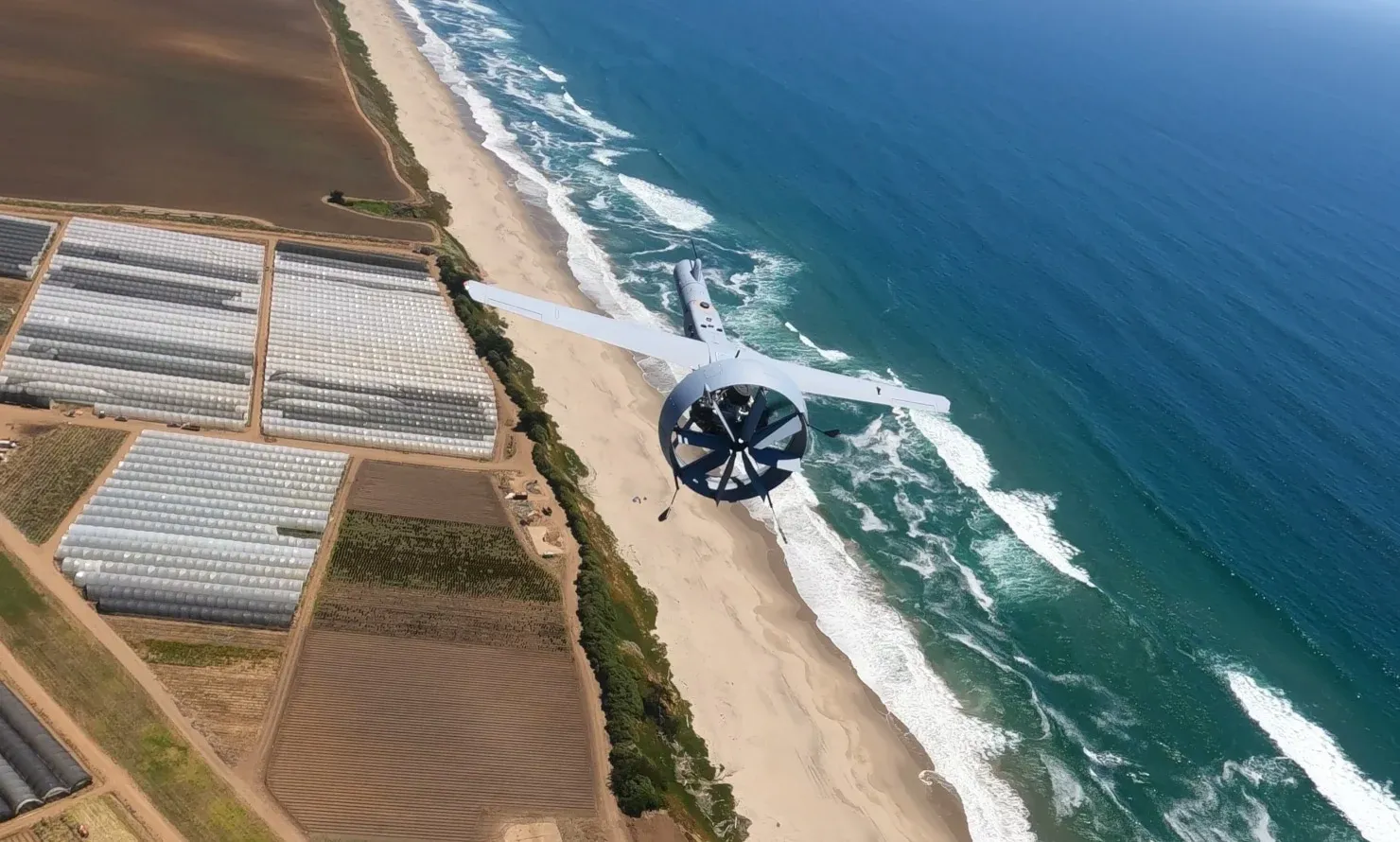
The V-BAT is a Group 3 UAS with a ducted-fan design, more than 12 hours of endurance, and a heavy-fuel engine. It is already operating with the US Coast Guard and Marine Corps, including ship-deck deployments from Navy vessels. That operational baseline matters for this contract: the Navy is expanding an existing capability rather than accepting program risk on an unproven platform.
What V-BAT Has Already Done
Shield AI co-founder Brandon Tseng cited three operational areas in the announcement. V-BAT has been used to interdict over 100,000 pounds of narcotics in the Caribbean and Pacific, a Coast Guard and joint maritime enforcement mission that requires the long endurance and ship-deck compatibility the ducted-fan design provides. In Ukraine, it has executed hundreds of targeting operations in environments where GPS and communications are jammed on every mission, demonstrating the contested EW resilience that makes it relevant for high-end naval operations. Shield AI also cited unspecified operations in the Middle East and with allied partners.
The GPS-denied performance in Ukraine is the most operationally significant detail. Group 3 UAS that can maintain mission effectiveness through jamming environments, without relying on datalink or GNSS, represent a meaningful capability step over platforms that degrade or fail under EW pressure. That performance record is what differentiates V-BAT from competitors bidding for the same task orders.
The COCO Model and What It Means for Shield AI
The contractor-owned, contractor-operated structure gives Shield AI recurring revenue tied to operational tempo rather than a one-time hardware sale. It also places operational risk on Shield AI, as the company is responsible for aircraft availability, maintenance, and mission outcomes rather than delivering hardware to the Navy and walking away. That model suits a platform with the operational track record V-BAT has accumulated, and it aligns with the Navy’s interest in expanding ISR capacity without the procurement and sustainment overhead of a traditional program of record.
The $800 million ceiling is across multiple vendors in a competitive pool, not a guaranteed Shield AI award. Task orders will be competed among selected partners, meaning Shield AI’s actual revenue depends on win rate within the pool and the Navy’s operational demand. Given V-BAT’s existing ship-deck deployments with the Marine Corps and Coast Guard, Shield AI enters the competition with an established logistics and operational footprint that new entrants would need time to build.
The selection follows a pattern of Shield AI converting operational deployments into formal contract vehicles, the same approach that produced its Ukraine track record and previous Coast Guard work. The Navy ISR pool is the largest contract ceiling the company has publicly announced against V-BAT, and positions the platform for broader joint force adoption beyond its current service relationships.