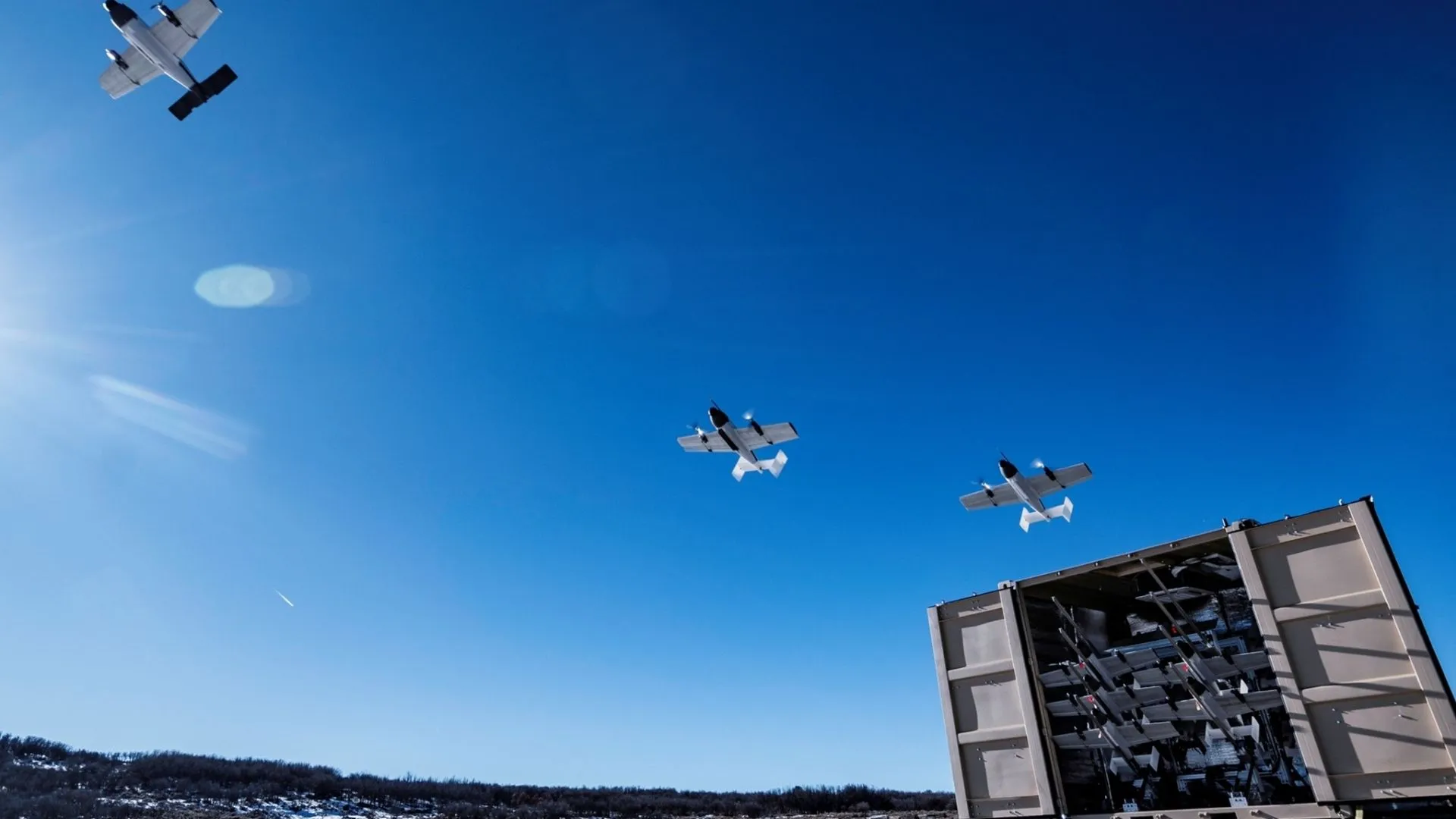

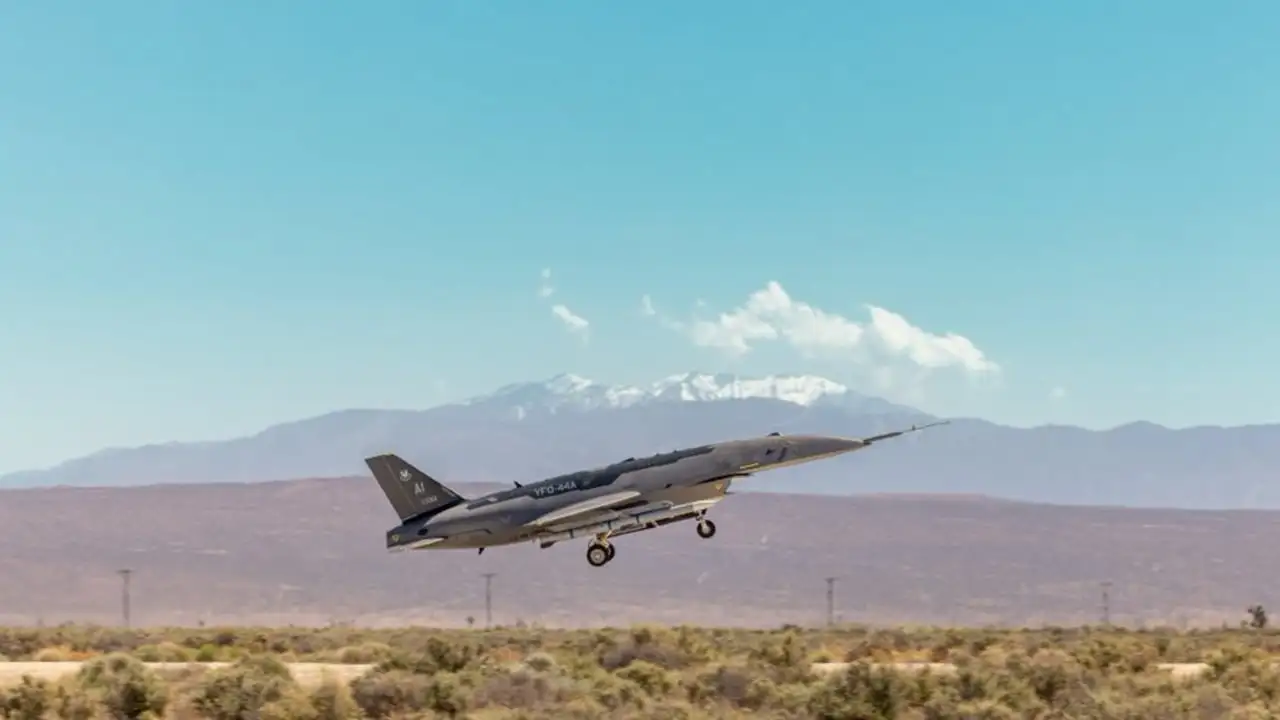
US Air Force airmen, not engineers and not test pilots, flew Anduril’s YFQ-44A Collaborative Combat Aircraft at Edwards Air Force Base during the week of April 5, conducting daily sorties using a ruggedized laptop-based command-and-control system from a simulated forward operating base. The exercise, run by the Air Force’s Experimental Operations Unit under Air Combat Command, marks one of the earliest operator-driven evaluations of a CCA prototype and the clearest signal yet that the service is treating autonomous combat aircraft as an imminent fielding problem rather than a research program.
The YFQ-44A flew from Anduril’s Southern California test site to Edwards, where EOU operators used Anduril’s Menace-T C2 kit to upload mission plans, initiate autonomous taxi and takeoff, task the aircraft in flight, and manage post-flight data. Lt. Col. Matthew Jensen, EOU commander, described the exercise as executed entirely by operational airmen: “Every sortie generated and flown was done with a warfighter… kicking the tires and controlling the prototypes.”
How Fast Anduril Got Here
The Edwards exercise came less than two years after the prototype contract award and six months after first flight, a pace that would have been implausible under traditional Air Force acquisition timelines. Anduril made all taxi and flight tests semi-autonomous from the start, a design decision that slowed early milestones but accelerated operator adoption once the platform reached warfighters.
That tradeoff is now paying off. The seamless handoff between ground operators and the autonomous aircraft during the EOU sorties validated Anduril’s early architectural choices, prioritizing simplicity of operation over maximum engineering control at each phase.
The EOU worked alongside Air Force Materiel Command’s 412th Test Wing to refine tactics, logistics, and deployment procedures for uncrewed aircraft operating in contested conditions. The unit is specifically responsible for developing the tactics, techniques, and procedures that will govern how crewed aircraft team with autonomous systems, work that has to happen before CCAs can be integrated into operational squadrons.
What CCAs Are Actually For
The CCA program is built around a specific problem: the US Air Force cannot afford enough crewed fighters to maintain numerical parity in a high-end conflict, particularly against China. CCAs address that gap by distributing combat power at lower cost and without the human constraints of traditional aircraft. A single F-35 pilot commanding multiple autonomous wingmen extends the reach and lethality of each crewed sortie while keeping human pilots out of the highest-risk positions.
AI-driven autonomy is what makes that concept viable in degraded communications environments, the scenario where conventional remote-piloted aircraft fail. CCAs are designed to continue executing missions when data links are jammed or disrupted, making decisions within pre-authorized parameters without waiting for operator input.
The YFQ-44A and related platforms are expected to support missions across electronic warfare, surveillance, and strike operations depending on battlespace requirements. The program sits inside the USAF’s broader Next Generation Air Dominance architecture, which includes Boeing’s F-47 as the crewed centerpiece designed to replace the F-22.
The next phase involves translating EOU findings into formal TTPs and moving toward operational integration. How quickly the Air Force can field CCAs in meaningful numbers, and whether the Menace-T C2 system scales from experimental exercises to squadron-level operations, will determine whether the program delivers on its end-of-decade timeline.