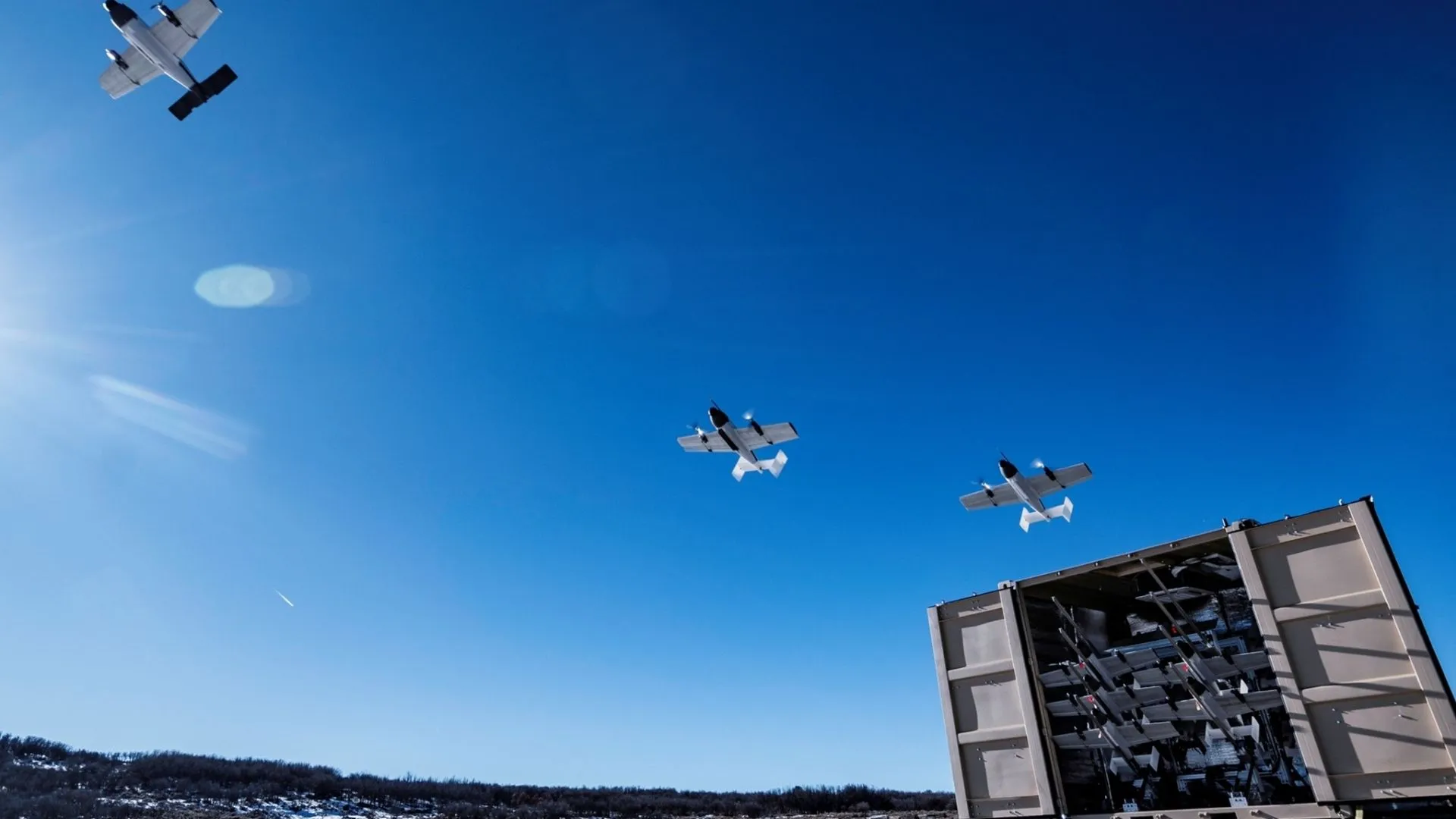

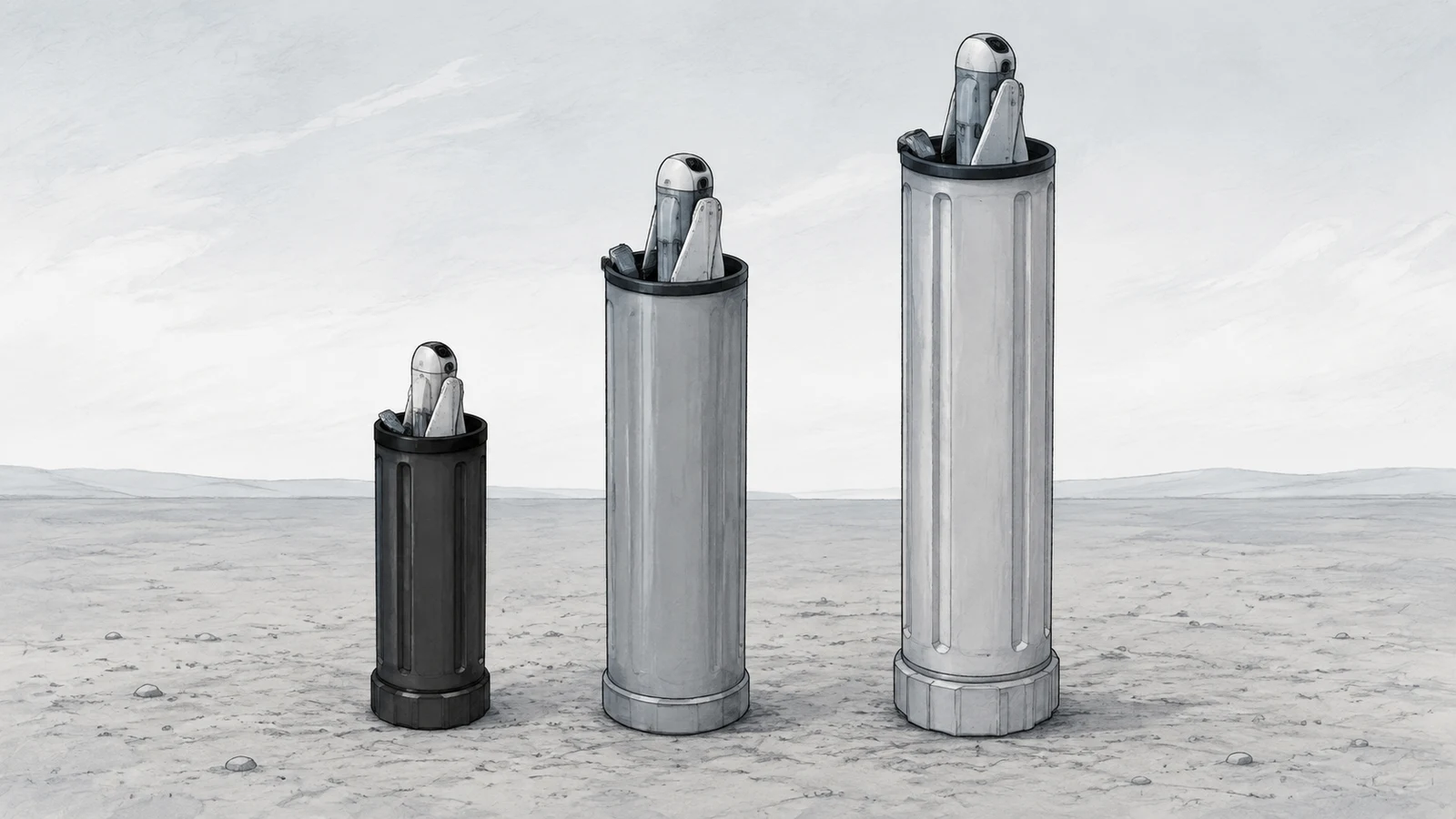
AeroVironment said on August 26 it had received a $51 million US Army order for Switchblade 600 loitering munitions, covering Block 2 systems plus older Block 1 units going to an unnamed ally under a Foreign Military Sale.
Nobody competed for it. The order is a draw against a five-year, $990 million contract the Army set up in August 2024, which is why these keep appearing at intervals — $186 million in February, $51 million now — with no procurement fight in between. AeroVironment says Switchblade 600 has reached more than 20 brigade combat teams since 2025, with hundreds of soldiers trained on it. That is a munition that has stopped being a programme and become inventory.
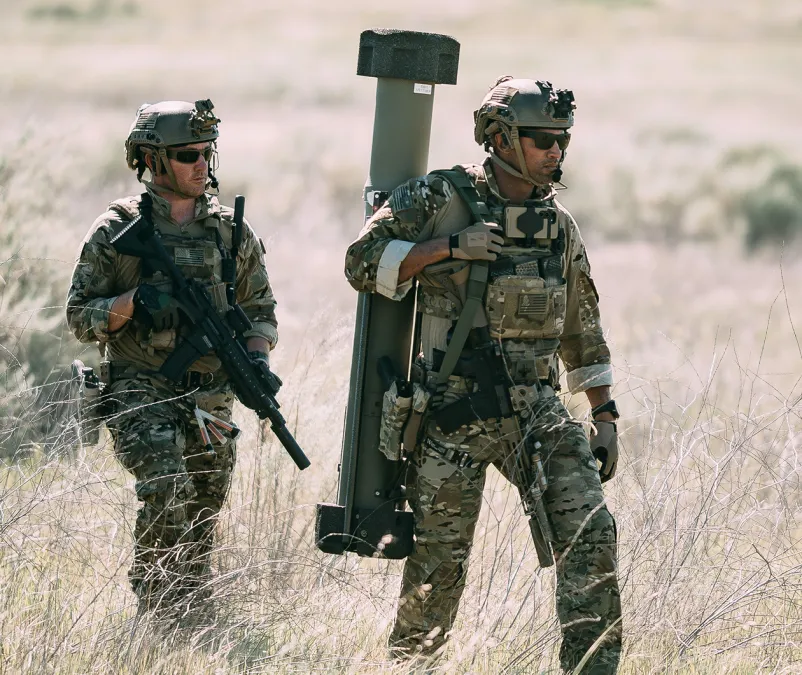
The Army has spent the same seven months buying from everybody else too. In January, Program Executive Office Soldier let the HERO-90 — built by Israel’s UVision with Mistral — into LASSO, the programme to give dismounted infantry a man-portable anti-armour munition that Switchblade had largely to itself. In May the Army picked AeroVironment’s smaller Switchblade 400 for a LASSO prototype agreement. And the Marine Corps went elsewhere entirely, awarding Anduril $23.9 million in January for more than 600 Bolt-M systems after 13 months of testing, with deliveries running to April 2027.
Three suppliers, two services, seven months, and not one of those decisions displaced another.
Block 2 was developed with US Special Operations Command and aims at the two things Ukraine has been hardest on: jamming, and the workload of finding a target through a soda-straw video feed. It adds SPOTR automatic target recognition, Silvus MANET radios for longer handoff ranges, and reworked navigation for GPS-denied conditions. Automatic target recognition is a capability most of the sector claims and few have demonstrated under contested conditions.
The export element is the quieter signal. Bundling a Foreign Military Sale into a domestic order is routine paperwork, but it means older Block 1 stock has a buyer while the US Army moves to Block 2 — allies taking the previous generation, a model Israel has run for years. With European states standing up one-way attack drone programmes, there is likely to be more of it.
For AeroVironment, the munitions line is the part that has kept working. The company lost roughly $1.5 billion of unfunded backlog when the Space Force terminated its SCAR antenna agreement in March, took a $240.7 million goodwill impairment, and closed fiscal 2026 with a $265.1 million net loss. The shares are down about 65% from their high. Against that, orders keep arriving, and on September 2 the Army awarded it $464.8 million for LOCUST X3 laser weapons — the first US production contract for a high-energy laser. AeroVironment reports quarterly results on September 9.