
Firestorm Labs
US defense startup building 3D-printed modular drones and containerised field factories that print them at the point of need.
1 article
Firestorm Labs
Firestorm Labs is a San Diego defense company that sells two things at once: cheap additively manufactured drones, and the containerised factory that prints them. Its argument is that the binding constraint on attritable UAS is not the airframe but the supply line behind it, and that a unit able to make and repair aircraft where it is fighting does not need one. Its customers are US military organisations, across every service branch. It was founded in 2022 and is led by CEO Dan Magy, co-founder Chad McCoy, and CTO Ian Muceus.
Products
xCell is the core product: an expeditionary manufacturing unit inside a shipping container, printing high-strength polymer parts on HP Multi Jet Fusion equipment under a five-year exclusive global agreement with HP. It carries its own HVAC and runs on commercially available feedstock. Firestorm says an xCell can turn out drone systems within 24 hours, and the Army has used one to make parts for Bradley Fighting Vehicles — repair parts, not just aircraft, are a large share of the pitch.
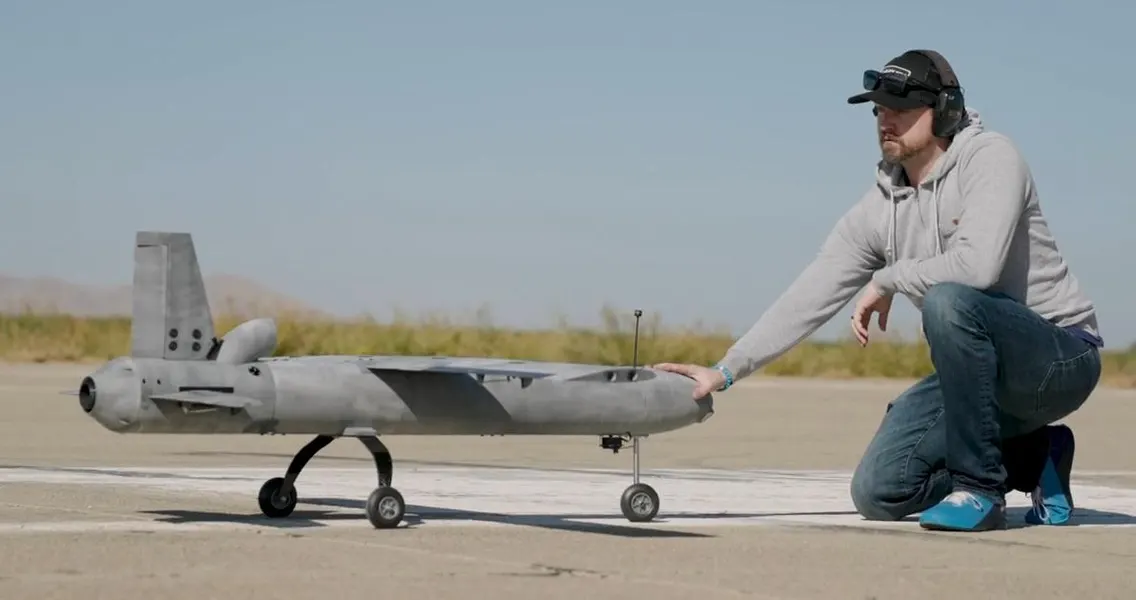
Tempest is the modular UAS designed to be produced by xCell, supporting ISR, electronic warfare and kinetic payloads. Squall is an additively manufactured FPV platform in the same production line. Both are company-designed to be printed rather than assembled from a supply chain.
Business and Contracts
Firestorm is private. It raised an $82 million Series B announced on 29 April 2026, led by Washington Harbour Partners with NEA, Ondas, In-Q-Tel, Lockheed Martin Ventures, Booz Allen Ventures, Geodesic and Motley Fool Ventures participating, bringing total funding to $153 million by the company’s own count. Headcount was over 160 at that point, from around 40 a year earlier.
It holds a US Air Force contract with a $100 million ceiling, of which roughly $27 million had been obligated as of April 2026, with work tied to the Air Force Research Laboratory at Rome, New York, and Air Force Special Operations Command in Florida. In May 2026 it was reported to have won a $30 million APFIT award, extendable to $50 million, covering five xCell units, more than 200 Tempest drones and operator training for an undisclosed Indo-Pacific customer. Magy has said he wants xCell at full operational deployment across the Indo-Pacific within about two years — a stated goal, not a programme of record.
Several claims carried in the previous version of this profile — a specific xCell output rate, an $18 million development contract, Ukrainian use of Tempest, and a Tracxn funding total of $112 million — could not be verified and have been cut. Total disclosed funding is higher than the $59.5 million previously listed.
Why It Matters
Firestorm competes on logistics rather than aircraft performance, which is a genuinely different position in a crowded small-UAS market and explains why both Lockheed Martin Ventures and In-Q-Tel are on the cap table. If forward units can print and replace drones without resupply, the economics of attritable systems change.
The unresolved question is whether printing works outside a demonstration. Field exercises are controlled; a contested theatre with heat, dust, power constraints and no HP technician is not. Firestorm has funding and a $100 million ceiling to work against, but only about a quarter of that ceiling has been obligated, and the company still has to show that an xCell in the first island chain produces flyable aircraft at the rate its pitch assumes.