
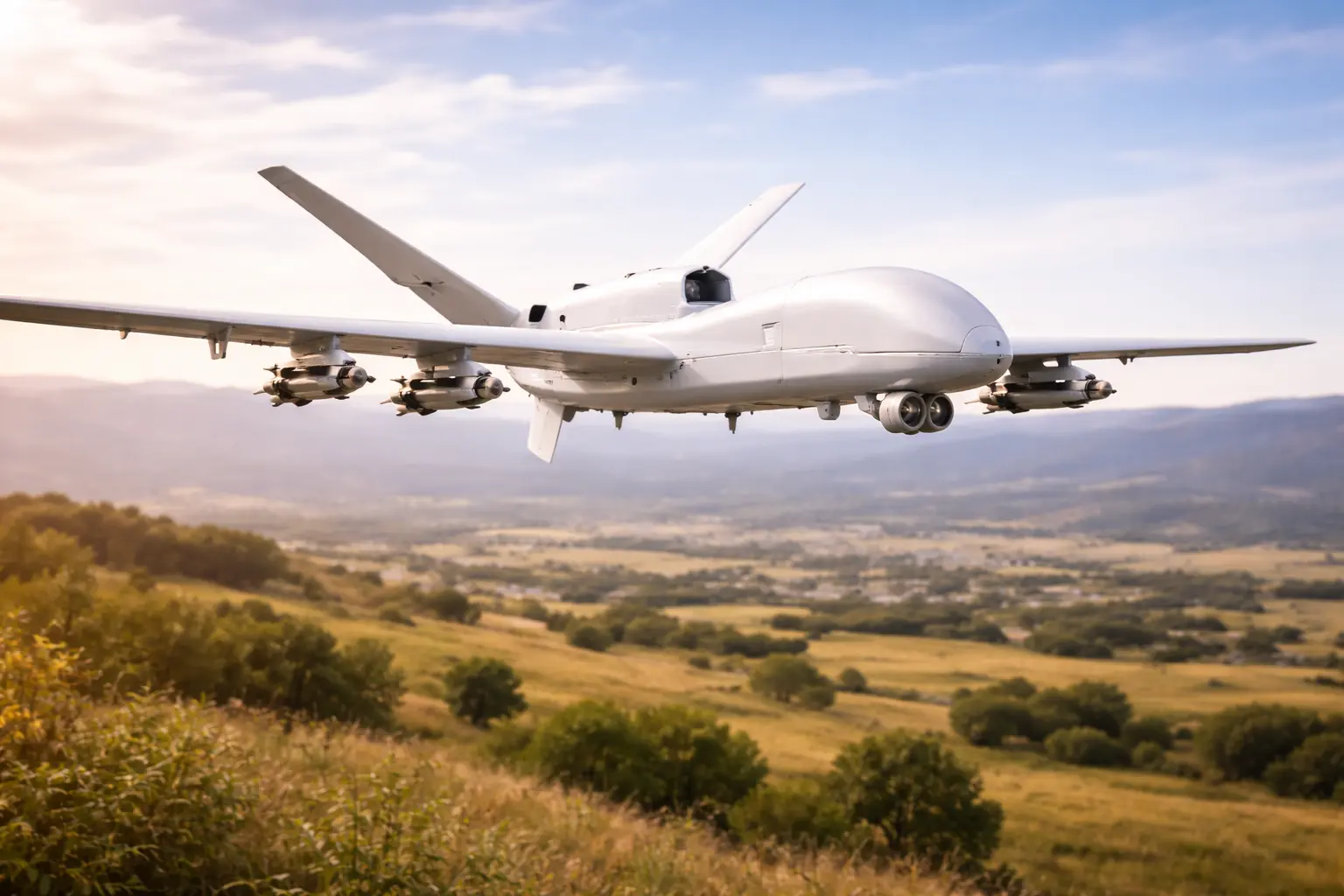
Serbia will jointly manufacture combat drones with Israel through a new production facility operated by state arms producer Yugoimport SDPR and Elbit Systems, with the Israeli defense company holding a 51% stake in the venture.
President Aleksandar Vucic announced the deal on Tuesday, saying the drones would be “highly efficient in destroying armored vehicles.” He offered no timeline, production volume, or platform specifications. Elbit has not publicly confirmed the arrangement.
What Serbia is actually getting
The structure is a technology transfer deal as much as a production agreement. Vucic said Serbia will “get innovation” and develop domestic engineers capable of building drones independently in the future — the plant is as much about capability building as near-term output. Elbit’s majority stake gives it operational control of the facility, a common arrangement when Israeli defense firms export sensitive manufacturing know-how.
Elbit Systems is one of Israel’s largest defense exporters and makes a broad range of UAS platforms, from the Hermes 900 medium-altitude long-endurance system used by multiple NATO and non-NATO militaries to smaller tactical systems. Which platform the joint venture would produce hasn’t been specified.
Serbia’s balancing act
The deal sits inside a foreign policy posture that Belgrade has refined over the past decade: formal EU candidacy and French Rafale jets on one side, Chinese equipment and Russian ties on the other, Israeli defense cooperation threaded through the middle. Serbia ordered 12 Rafales in 2024. It has also acquired Chinese CH-92A armed drones and maintains defense relationships with Moscow despite EU sanctions pressure.
An Elbit-majority joint venture on Serbian soil is unlikely to resolve those tensions — EU membership requires alignment on arms exports and defense industrial policy that a 51%-Israeli-owned combat drone plant complicates.
The plant announcement gives Serbia a path toward domestic drone production capacity it currently lacks entirely. Whether that capacity materializes depends on a production agreement that, for now, has no disclosed terms.