
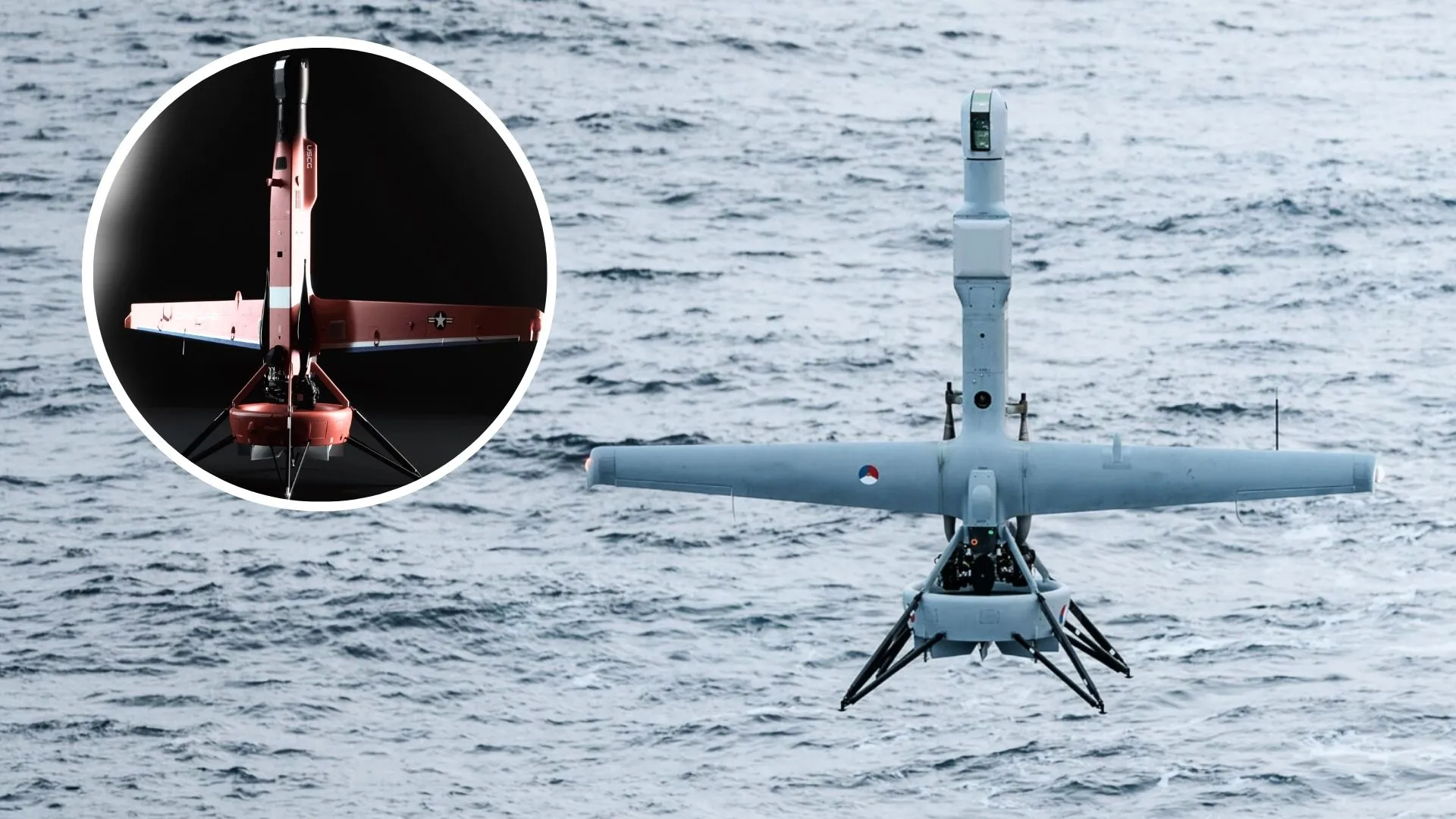
The Royal Netherlands Navy has declared Shield AI’s V-BAT operational following testing aboard the HNLMS Johan de Witt off northern Norway, making the Netherlands the latest NATO member to field the ducted-fan ISR drone in active service. Twelve V-BATs have been acquired, with eight RNLN vessels equipped to support operations.
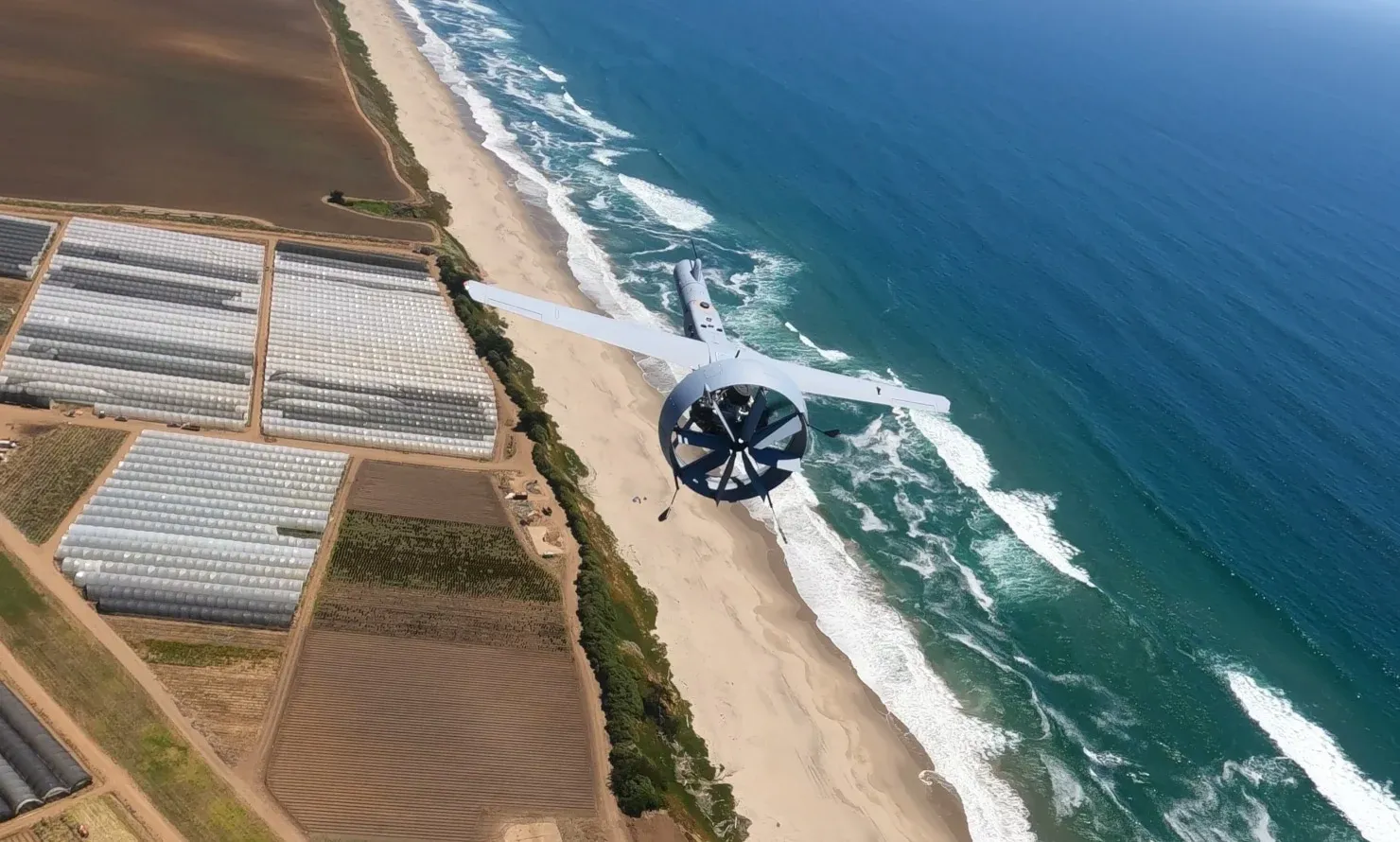
The V-BAT uses a ducted fan to take off and land vertically, then transitions to fixed-wing forward flight — eliminating the need for a runway, catapult, or recovery net. That makes it viable from ship decks, rooftops, and confined clearings where conventional fixed-wing UAS can’t operate. During the Johan de Witt testing, the drone flew in high winds, sub-zero temperatures, and polar geophysical conditions, transmitting real-time video back to the ship for maritime domain awareness.
Why GPS and comms denial matters for naval ISR
The V-BAT’s primary operational differentiator is its ability to function in GNSS-denied and communications-jammed environments — conditions increasingly common in contested maritime zones. Shield AI co-founder Brandon Tseng positions it as the only Group 3-through-5 drone with documented operational experience across both GPS-denied and comms-denied environments. That claim matters in a Baltic and Arctic context where Russian electronic warfare has been a persistent factor in NATO exercises and real-world incidents.
The drone doesn’t carry weapons. Its role is ISR and targeting support — feeding data to other systems rather than striking directly. It can also operate in coordinated groups, with a single operator managing multiple aircraft simultaneously.
The RNLN’s operational range runs from the high Arctic to the Caribbean, and the Johan de Witt — an amphibious transport vessel — reflects exactly the kind of expeditionary, away-from-base environment where runway independence is operationally essential.
V-BAT is already in service with the U.S. Navy and Coast Guard. The Netherlands fielding adds another NATO operator to that list as European navies accelerate unmanned integration across surface fleets.