
In April 2026, Russia launched 6,583 Shahed-type drones at Ukraine. Each one cost somewhere between $35,000 and $50,000 to build. Each Patriot PAC-3 missile fired to intercept one cost approximately $4 million. That is an 80-to-1 cost exchange — and it is not a bug in the attacker’s strategy. It is the strategy.
The central military problem of this decade is not that drones are precise, autonomous, or hard to detect. It is that they are cheap enough to be expendable at industrial scale, and the systems built to stop them are not. Iran demonstrated this against US and allied bases across the Middle East in early 2026, firing more than 1,000 drones alongside hundreds of missiles in waves designed not primarily to penetrate defenses but to exhaust them. Ukraine has been living with the same calculus since 2022. The rest of the world is watching and drawing conclusions.
Drone warfare did not begin this way. It arrived as a tool of precision and patience — and became something else entirely.
From Predator strikes to saturation attacks: how we got here
The modern military drone era traces to October 7, 2001, when a CIA-operated MQ-1 Predator fired a Hellfire missile at a target in Kandahar, Afghanistan — the first lethal drone strike by US forces. The premise was the opposite of today’s mass-attack model: a single expensive platform, persistent surveillance, surgical strike. The Predator and its successor, the MQ-9 Reaper, were exquisite systems operated by trained crews from bases thousands of miles from the target. They were effective because they were scarce and precise, not because they were cheap.
That model dominated Western thinking for two decades. Meanwhile, Israel was pioneering something different — smaller, more expendable drones used in contested airspace over Lebanon and Gaza, where survivability mattered more than loiter time. Turkey’s Bayraktar TB2 brought that logic to a wider audience when it destroyed Russian-supplied armored columns in Libya and, dramatically, in Nagorno-Karabakh in 2020. The TB2 cost roughly $5 million per aircraft — still expensive, but orders of magnitude cheaper than an F-35 — and it operated in environments where air defense was present but not dense.
Ukraine changed the scale entirely. When Russia launched its full-scale invasion in February 2022, neither side had anticipated what the war would become. Russia’s indigenous drone capabilities were limited to small numbers of Orion and Forpost-R platforms. Ukraine had almost nothing. Within months, both sides were racing to industrialize UAV production, and the race has not stopped since.
The Shahed economy
Iran’s contribution to this transformation is the Shahed-136 — a delta-wing, propeller-driven one-way attack drone with a range of roughly 700 to 1,000 kilometers and a warhead capable of destroying a power transformer, a command post, or a parked aircraft. It is not a loitering munition in the strict sense: it does not orbit, hunt, and strike. It flies a programmed course to a programmed target, making it functionally closer to a slow cruise missile than a traditional UAV. Iran began supplying them to Russia in the summer of 2022 under a reported $1.75 billion deal for 6,000 units.
Russia’s Alabuga production facility in Tatarstan eventually took over domestic assembly, reaching an output of approximately 444 Shahed-type drones per month by mid-2024 — up from about 256 per month the year before. By September 2025, Ukrainian military intelligence estimated Russian production capacity at up to 2,700 Shahed-type drones per month. The April 2026 launch figure of 6,583 — averaging 219 per day — suggests stockpiling and surge capacity beyond the monthly production estimate, or that the estimates themselves were conservative.
The unit cost is contested. The Institute for the Study of International Security has used $35,000 as its working figure, reflecting Russian domestic production economics. British component-analysis estimates run closer to $80,000. Forbes Ukraine commonly uses $50,000. For strategic analysis, the range matters less than the order of magnitude: a Shahed costs tens of thousands of dollars, not millions.
A Patriot PAC-3 interceptor costs approximately $3.7 to $4 million. A THAAD interceptor costs $12.8 to $15.5 million. At CSIS’s $35,000 Shahed estimate, a single Patriot shot represents a 114-to-1 cost exchange against the attacker. At $50,000, it is still 80-to-1.
The critical nuance — and CSIS has made this point explicitly — is that a $4 million interceptor can be entirely rational if it protects a $100 million radar installation, a power plant supplying a city, or an airbase holding dozens of aircraft. The problem is not any individual intercept. The problem is sustainability under mass attack. Patriot PAC-3 production runs at approximately 600 missiles per year, with plans to ramp toward 2,000 annually under a multi-year contract. Russia is launching more Shaheds in a month than the US produces Patriot interceptors in a year.
The FPV revolution and what it did to the battlefield
While the Shahed represents the strategic-level saturation problem, Ukraine’s FPV drone war represents what cheap autonomous systems have done at the tactical level — and it is arguably the more profound transformation.
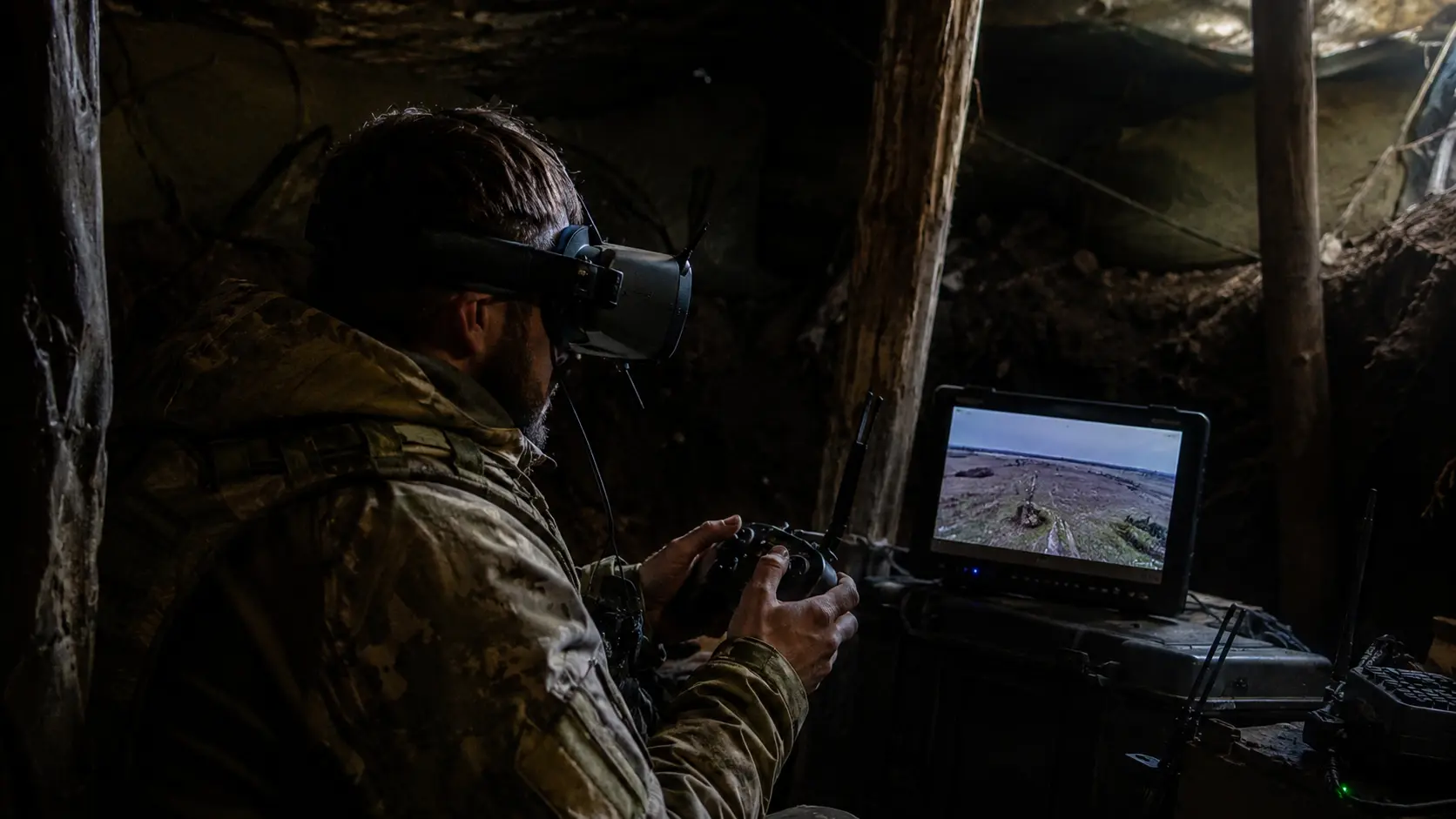
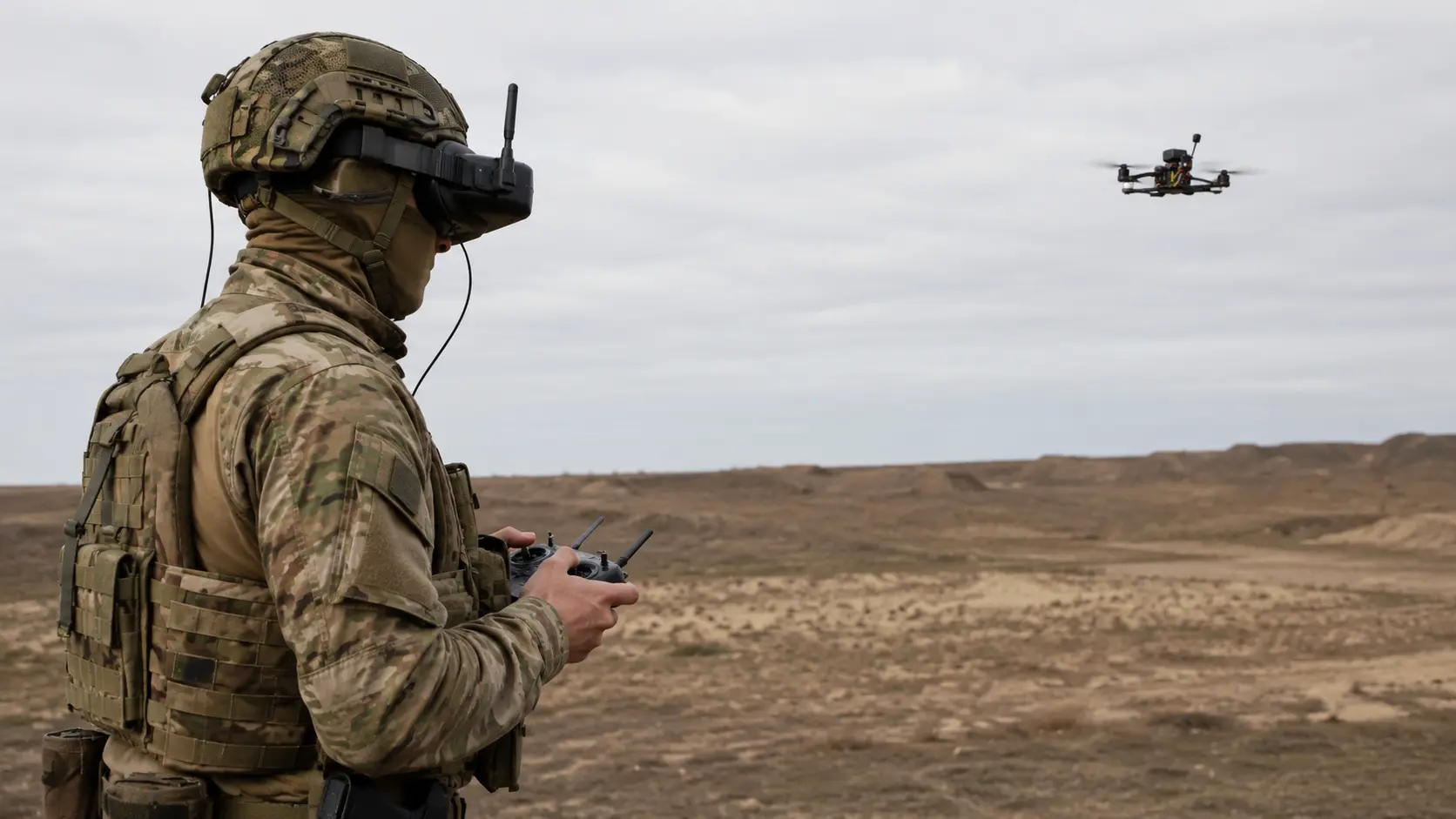
FPV drones — first-person view racing quadcopters adapted for combat with shaped charges or anti-tank warheads — now cost $500 to $2,000 per unit in the Ukrainian production ecosystem. Ukraine planned to procure approximately 4.5 million of them in 2025 alone, a program worth roughly $2.6 billion and sourced almost entirely from domestic manufacturers. By January 2026, Ukrainian government figures claimed domestic capacity to produce more than 8 million FPV drones per year across 160-plus companies.
The battlefield effect has been documented in Ukrainian strike data, though with the caveat that video-confirmed hit databases are biased toward footage units choose to upload. Ukraine’s National Security and Defense Council reported 819,737 video-confirmed drone hits in 2025, including nearly 240,000 strikes on personnel, 62,000 on light vehicles, 29,000 on heavy vehicles, and 32,000 on other UAVs. The French Institute of International Relations estimated that drone-inflicted casualties in Ukraine rose from less than 10 percent of total casualties in 2022 to up to 80 percent in 2025. Ukraine’s own military claims drones now account for more than 80 percent of enemy targets destroyed.
The consequence for armored warfare has been severe enough to alter doctrine. Tanks — the decisive weapon of 20th-century land warfare — have been pushed into static artillery roles in many sectors because movement inside drone-covered zones has become operationally suicidal. A $500 FPV carrying a shaped charge can disable a $4 million tank. The economics run in one direction only.
The most significant recent technical development in this space is the fiber-optic FPV: a drone that guides itself via a thin cable of optical fiber rather than a radio link, making it immune to electronic jamming entirely. Both sides in Ukraine are deploying these. There is no electronic counter to a drone that does not use radio.
The Iran-US conflict and the cost-exhaustion strategy
The 2026 Iran-US conflict stripped away any remaining ambiguity about how drone saturation is used as a deliberate strategic instrument. Following US and Israeli strikes beginning in late February 2026, Iran launched more than 1,000 drones alongside hundreds of ballistic and cruise missiles at US and allied positions across the Middle East and Gulf. By early April, US General Dan Caine reported that American and partner forces had intercepted 1,700 ballistic missiles and one-way attack drones combined. Israeli intercept rates against missiles fired toward Israel ran around 90 percent.
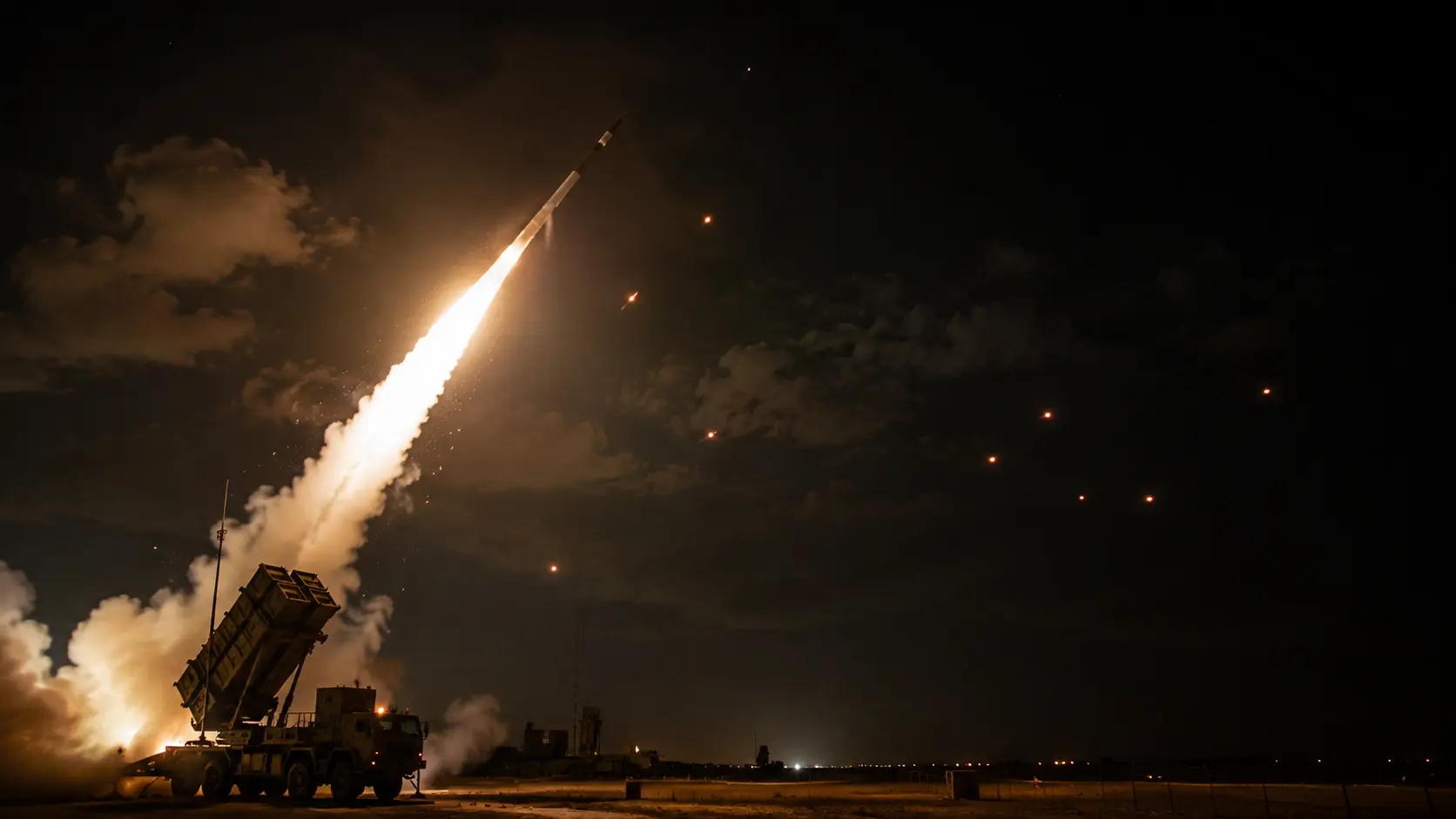
Ninety percent sounds like success. It is not, at this scale. Sixty-five drones entered the UAE. Strikes hit Amazon data centers, Dubai International Airport, a Fairmont hotel, Bahrain infrastructure, a US naval base, and a hotel tower. At least one US service member was killed. The US subsequently deployed Ukrainian Sky Map counter-drone command-and-control software at Prince Sultan Air Base after attacks destroyed aircraft and buildings — a significant operational acknowledgment that existing systems were insufficient.
Iran’s estimated drone production capacity of approximately 10,000 units per month means it can sustain this campaign far longer than Western air defense magazine depths can absorb it. If Gulf and US forces fired even 500 Patriot-class interceptors, missile rounds alone cost roughly $2 billion. That excludes THAAD shots, radar operations, aircraft sorties, logistics, and damage repair. The attacker spent tens of thousands per drone. The defender spent millions per shot.
Is there an answer?
The honest answer is: not yet, not at scale.
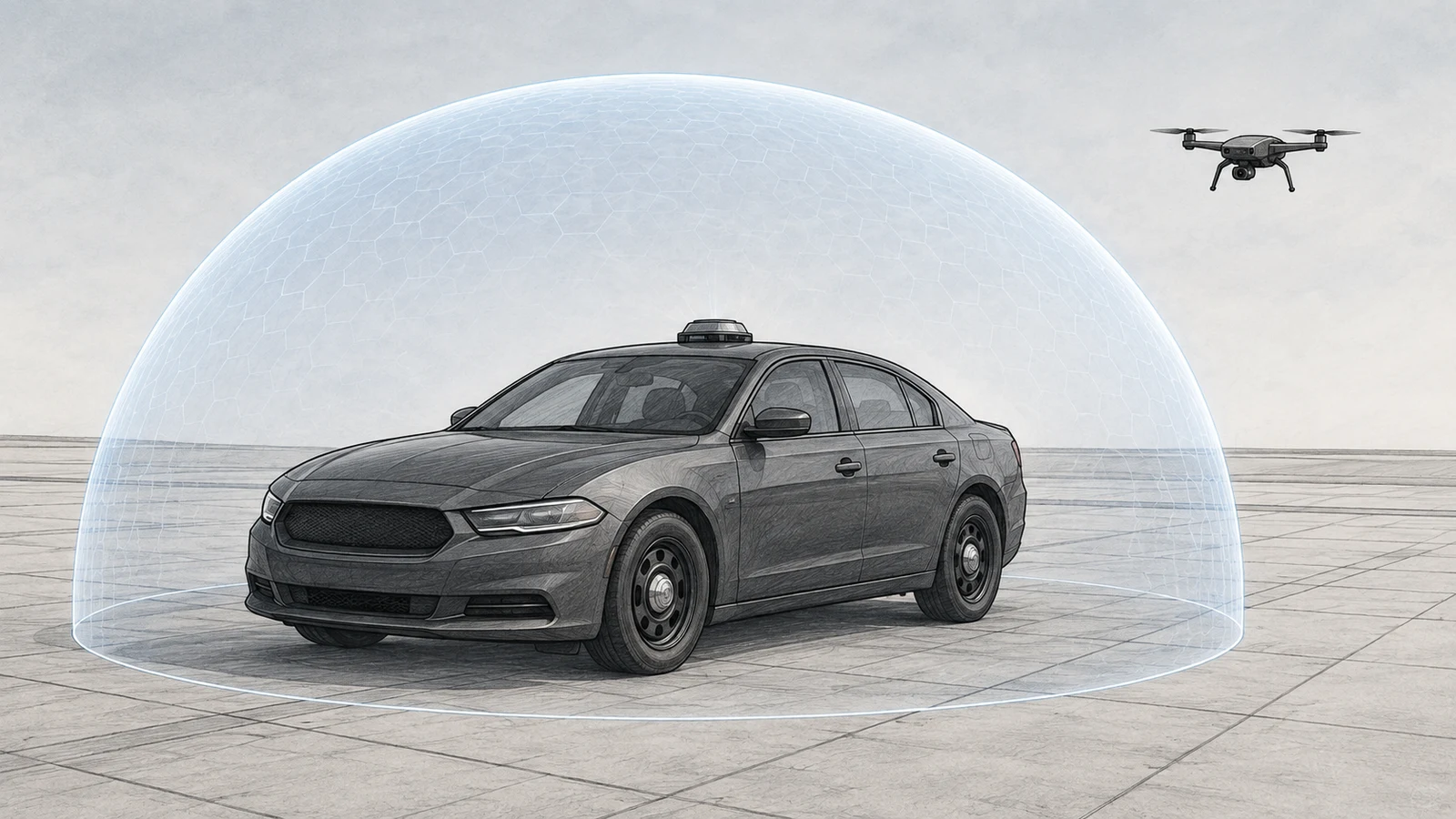
The strategic logic points toward layered defense with cheaper effectors — using expensive missiles only against expensive threats, and routing cheap drones to cheaper defeat mechanisms. The stack being assembled across Western militaries includes interceptor drones in the $1,000 to $3,000 range, kinetic effectors like the Coyote at roughly $120,000 per shot, electronic warfare systems that jam radio-guided threats, and directed-energy weapons that could eventually provide magazine-unlimited defeat capability at near-zero marginal cost per shot.
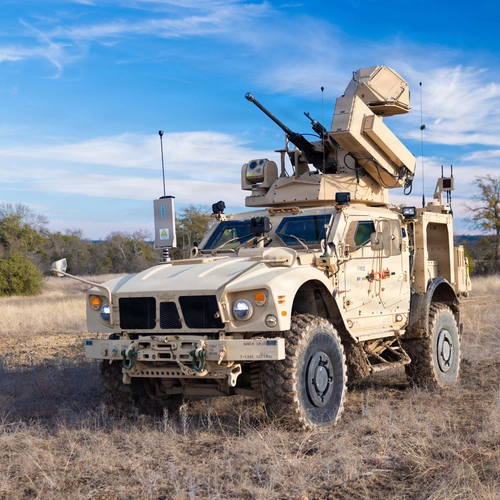
The US Department of Defense announced five directed-energy counter-drone installation pilots in FY2026 — Fort Huachuca, Fort Bliss, Naval Base Kitsap, Grand Forks Air Force Base, and Whiteman Air Force Base — covering both high-energy lasers and high-power microwave systems. DoD officials were careful to note there is “no silver bullet.” That language is accurate. Directed energy works against small, slow drones in favorable atmospheric conditions. It does not yet work at the scale or reliability needed to replace missile defense.
In April 2026, Leidos won a $617 million US Army contract for additional Indirect Fire Protection Capability Increment 2 launchers — a ground-based system designed to defeat drones, rockets, artillery, and cruise missiles. Including that award, Leidos reported nearly $1.2 billion in IFPC orders with more than 100 launchers committed. That is meaningful capacity growth, but it addresses the symptom rather than the underlying economics.
Golden Dome — the administration’s proposed space-based missile defense architecture, with up to $3.2 billion in contracts awarded to 12 companies for prototype development — is a solution to a different problem. It may eventually intercept ballistic missiles in boost phase. It does not make a $50,000 Shahed cheaper to defeat.
Ukraine’s interceptor drone programs represent perhaps the most field-validated near-term approach. Ukrainian companies have developed sub-$3,000 interceptor drones specifically designed to destroy incoming Shaheds — a drone-kills-drone model that brings the cost exchange from 80-to-1 down to close to parity or even favorable. The US and Qatar were reported in March 2026 to be discussing acquiring Ukrainian interceptor drones for Gulf air defense, a striking reversal of the typical technology transfer direction.
The proliferation problem
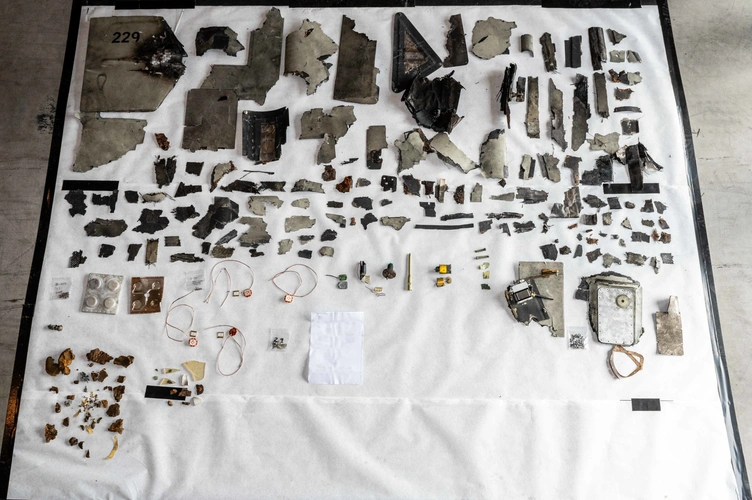
The Shahed-136 is no longer an Iranian weapon. It is a template. Russia produces it domestically. Non-state actors have studied its construction from recovered wreckage. ACLED recorded 469 non-state armed groups using drones in attacks at least once over the past five years, with 58 groups using them for the first time in 2025 — in 17 countries including Myanmar, Mexico, Colombia, and Syria.
France became the latest NATO member to order long-range loitering munitions in January 2026, contracting with MBDA and Aviation Design for an undisclosed quantity of systems with first delivery targeted for mid-2027. Loitering munitions are now produced or fielded by the US, Israel, Iran, Russia, Ukraine, Turkey, China, South Korea, India, Pakistan, Poland, and multiple Gulf defense programs. The list will be longer by the time this article is a year old.
The diffusion is not slowing. The economics guarantee it will not. A weapon system that costs tens of thousands of dollars, can be built by a mid-size industrial firm, and forces defenders to spend millions per intercept will continue to spread as long as that cost asymmetry persists. The states and non-state actors that understand this most clearly are the ones investing in mass production capacity — not in making each drone more capable, but in making each one cheap enough to be irreplaceable in quantity.
The question Western defense establishments have not yet answered is whether the existing procurement model — expensive, exquisite, slow to produce — can be adapted fast enough to match an adversary who has already answered it differently.