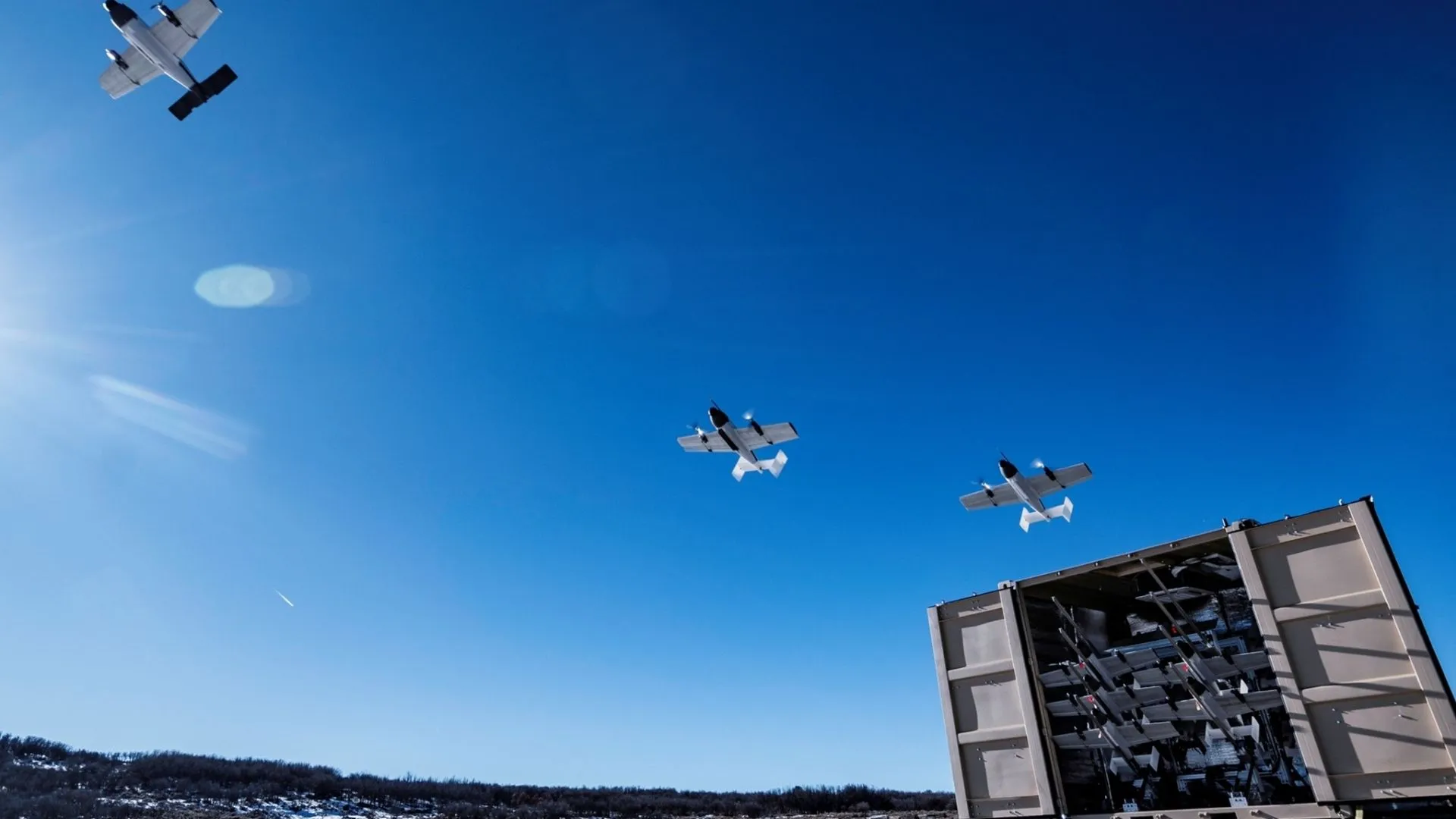

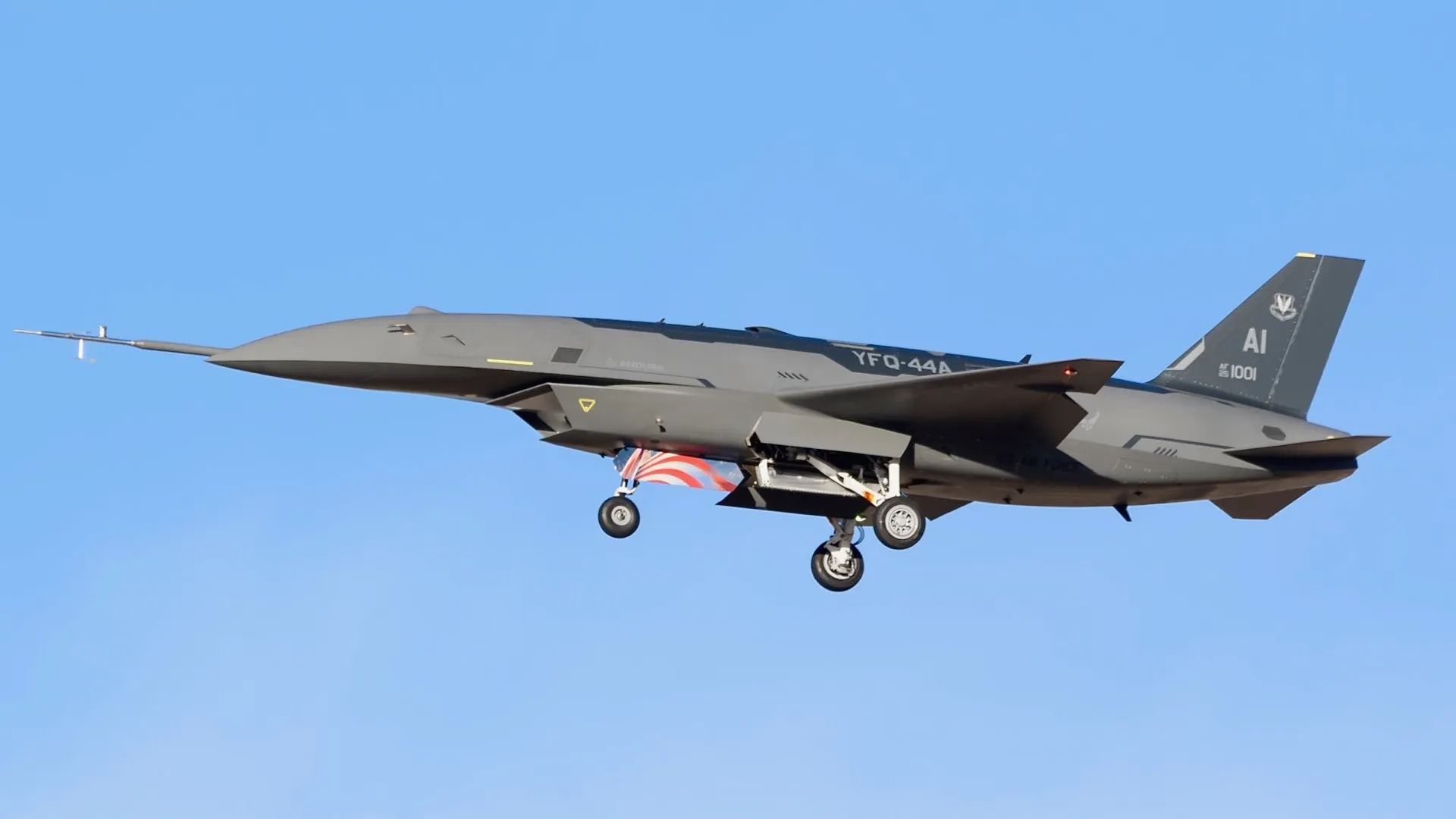
U.S. Air Force personnel have operated Anduril’s YFQ-44A Fury without company support for the first time, running full end-to-end flight operations at Edwards Air Force Base in California — a significant milestone in the service’s Collaborative Combat Aircraft program.
During the exercise last week, Air Force crews handled launch, recovery, pre- and post-flight checks, weapons loading and unloading, and direct tasking of the aircraft during taxi and flight. No Anduril employees led operations. That handoff matters: a combat aircraft that requires its manufacturer present to function is not a deployable system. One that Air Force personnel can operate independently is.
The YFQ-44A is Anduril’s entry in the CCA competition, which pairs semi-autonomous unmanned aircraft with crewed fighters to extend range, increase mass, and absorb attrition in high-end conflicts. Anduril is competing against General Atomics, whose YFQ-42A is the other finalist. The Air Force has said it intends to select at least one vendor for low-rate initial production, with a decision expected later this year.
Edwards AFB is the Air Force’s primary flight test center, and conducting operator-led testing there positions the YFQ-44A for the next phase of evaluation. The ability to turn the aircraft daily — launching, recovering, and reconfiguring without contractor support — is the operational baseline the program requires before any production decision.
The CCA program is one of the Pentagon’s highest-priority uncrewed aviation efforts. The Air Force has stated a requirement for more than 1,000 CCAs, and the scale of that potential contract means the competition between Anduril and General Atomics is among the most consequential drone procurements currently underway.