
Airbound has raised a $37 million Series A led by Greenoaks, with DoorDash, Lachy Groom, Lightspeed and Humba Ventures participating. The Bengaluru company is chasing a target most delivery drone operators have avoided stating out loud: matching the cost of a truck.
The round brings Airbound to roughly $50 million raised to date, following an $8.65 million seed announced in October 2025 — less than a year earlier. DoorDash’s presence on the cap table is the detail worth noting — a delivery platform investing directly in airframe design rather than contracting for flights.
The design argument
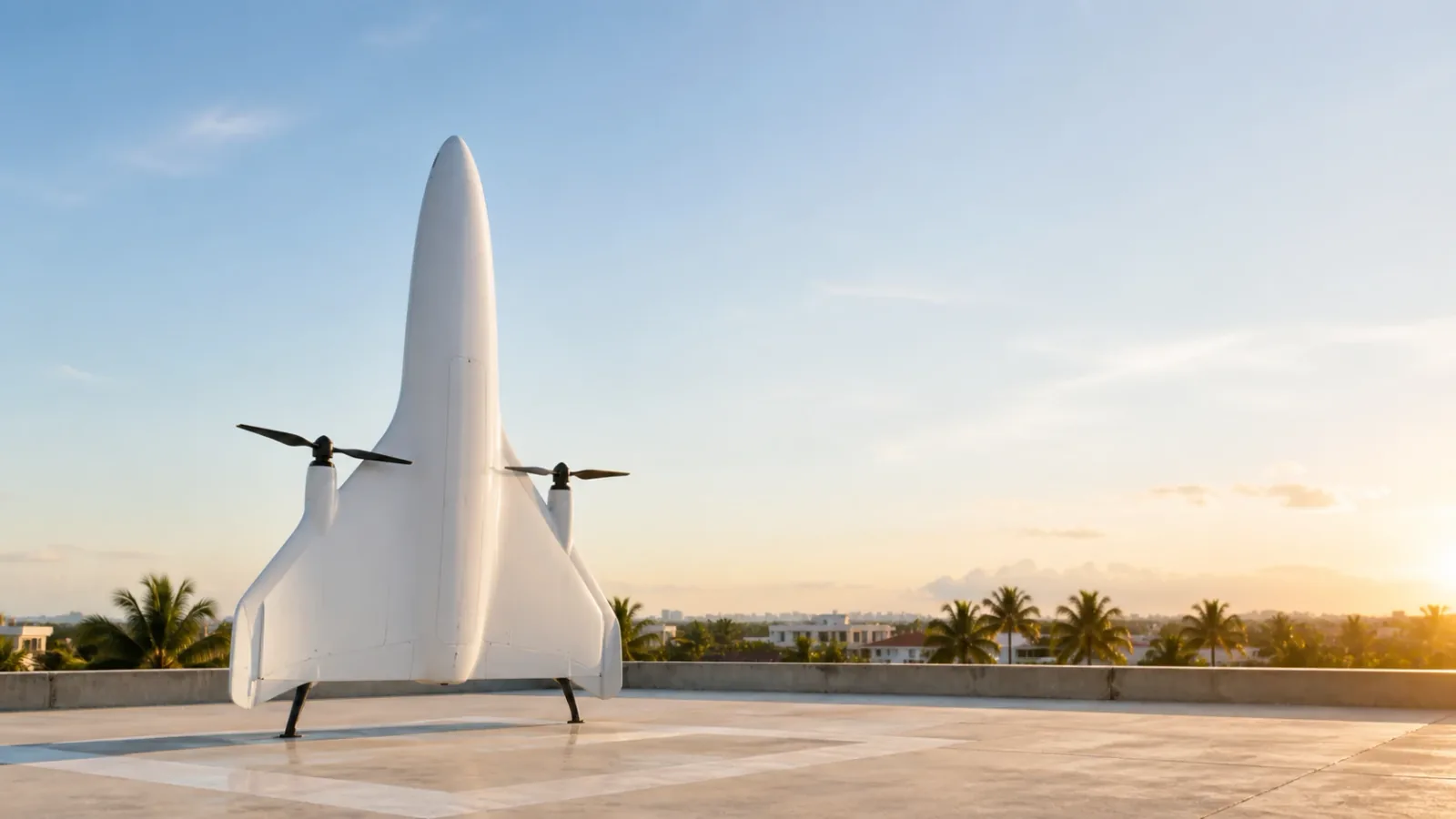
Airbound builds a blended-wing-body tail-sitter: the aircraft stands on its tail, lifts off vertically, then pitches over to cruise on fixed wings. Vertical takeoff removes the runway; wing-borne cruise removes the energy penalty of holding a multirotor in the air for the whole trip.
The company’s argument is about mass ratio. Its current aircraft, the TRT, weighs about 1.5 kilograms and carries roughly 1 kilogram of payload over a stated 40 kilometre range — a ratio Airbound says runs roughly three times better than a common industry figure of four kilograms of aircraft per kilogram of cargo. A next-generation aircraft in development is intended to weigh 3 kilograms and carry up to 5 kilograms.
That ratio is the whole economic case. Delivery drone unit costs are dominated by the energy and airframe needed to carry the aircraft itself, so a vehicle that is mostly payload changes the arithmetic more than incremental improvements in range or speed.
What is actually flying
Airbound reports more than 13,000 autonomous flights. Its first commercial corridor runs about four kilometres in Bengaluru, linking Narayana Health’s Chandapura clinic to Narayana Health City in Electronic City, and has operated since January 2026 carrying diagnostic samples for India’s fourth-largest hospital network. The company also flies in Guntur, and manufactures from a 43,000-square-foot facility in Bengaluru with a team of more than 150.
The stated next step is a three-city network in Andhra Pradesh built toward 10,000 flights a day.
FlightBrief analysis: the gap between 13,000 cumulative flights and 10,000 daily flights is roughly three orders of magnitude, and Airbound is pre-revenue. Medical sample transport is a favourable starting case — light payloads, time-sensitive cargo, a single institutional customer, and a route flown repeatedly. Cost parity with trucking has to be proven on general freight against a road network that, in India, is unusually cheap.
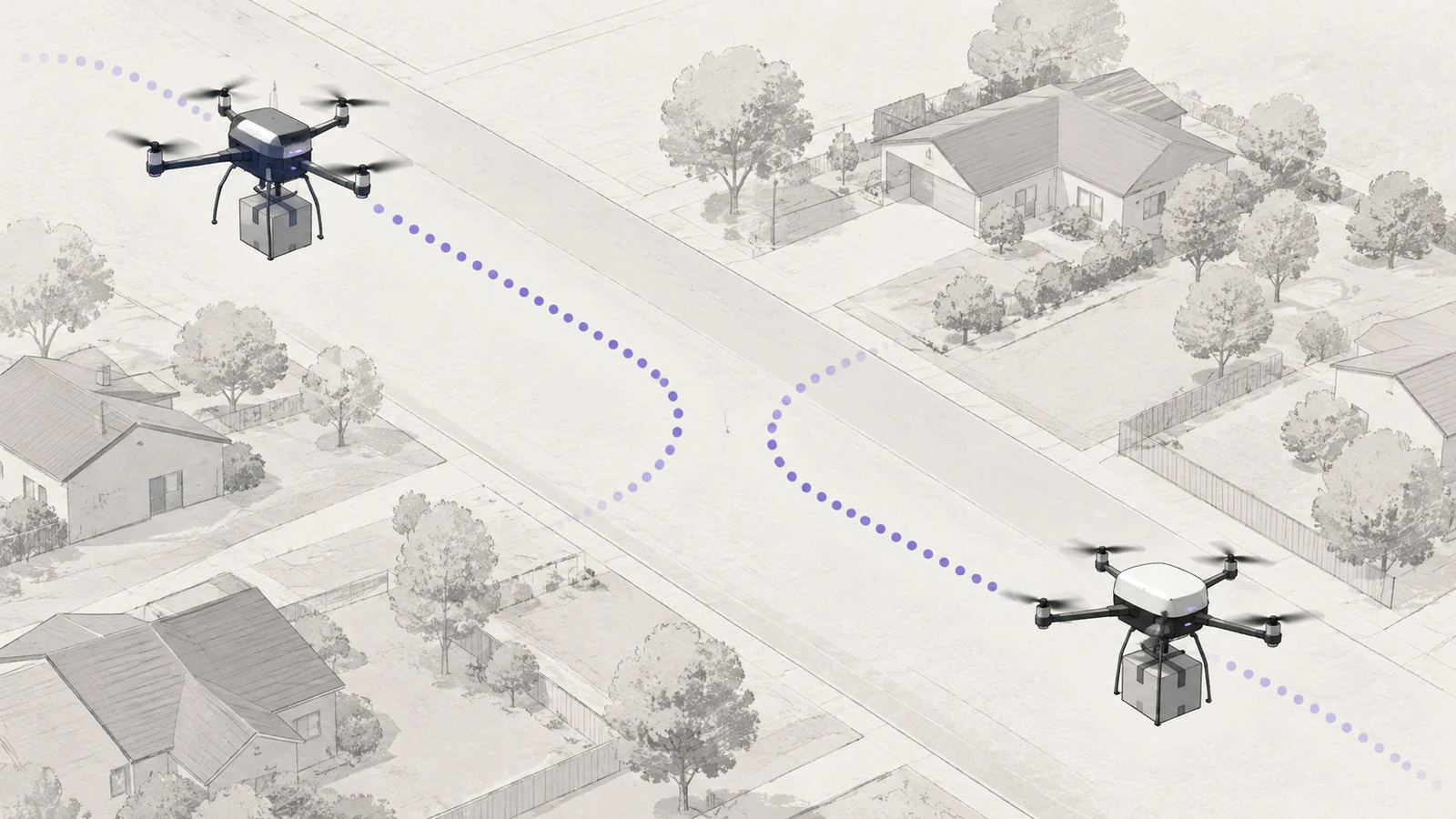
The regulatory path is also unresolved at that scale. Ten thousand flights a day over populated corridors is a beyond-visual-line-of-sight operation at a density no regulator has authorised anywhere, and India’s framework for routine BVLOS traffic is still developing.
Why it matters
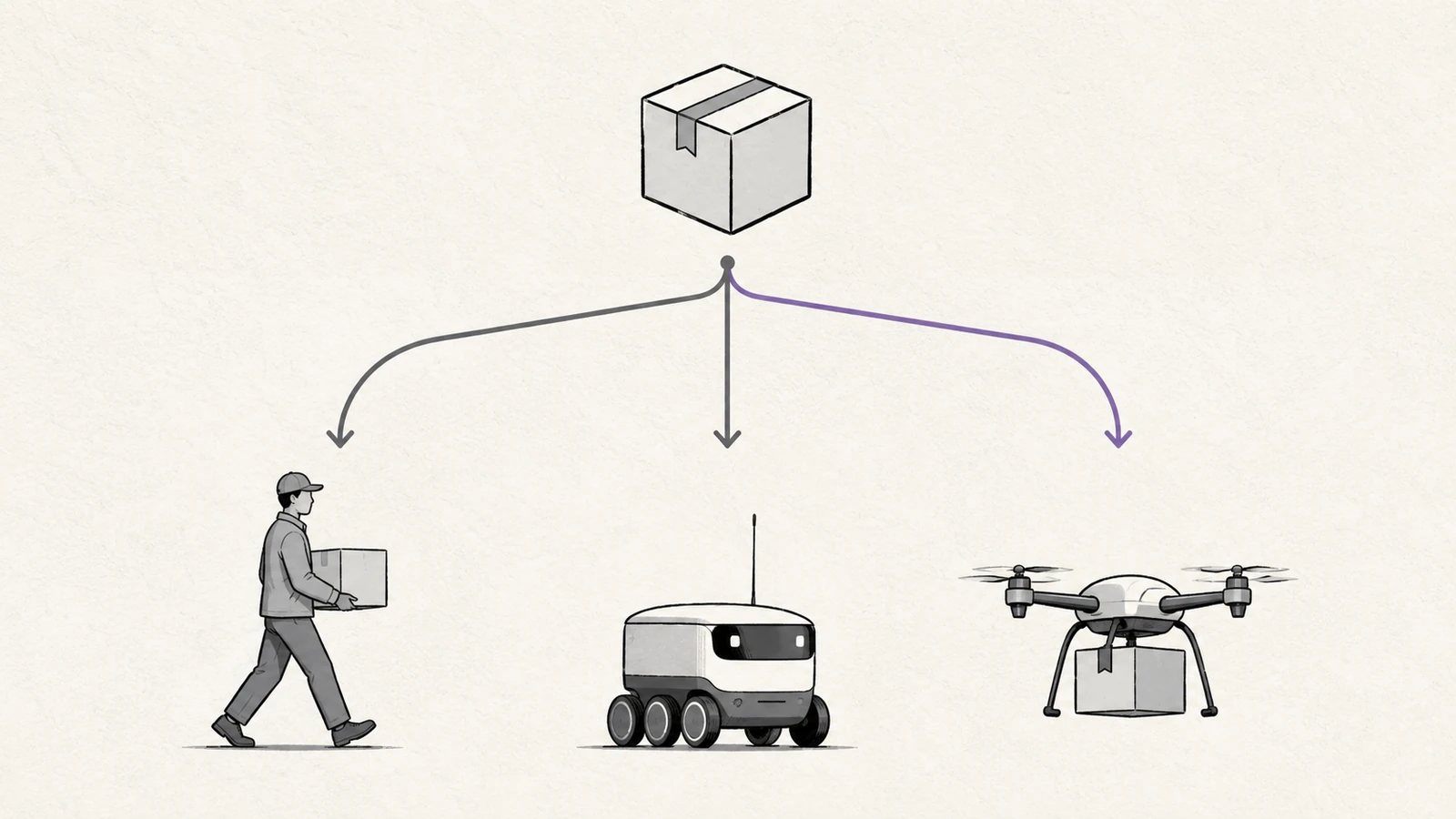
Most Western drone delivery economics have been proven in suburban low-density environments with high labour costs, where the competition is an expensive human in a van. Airbound is attempting the opposite: dense corridors where ground delivery is already cheap. If the mass-ratio argument holds up on cost per delivered kilogram, it travels to markets where drone delivery has so far failed to justify itself.
Watch for a disclosed cost per delivery, first revenue, and whether the Andhra Pradesh corridors receive the regulatory approvals that density requires.