
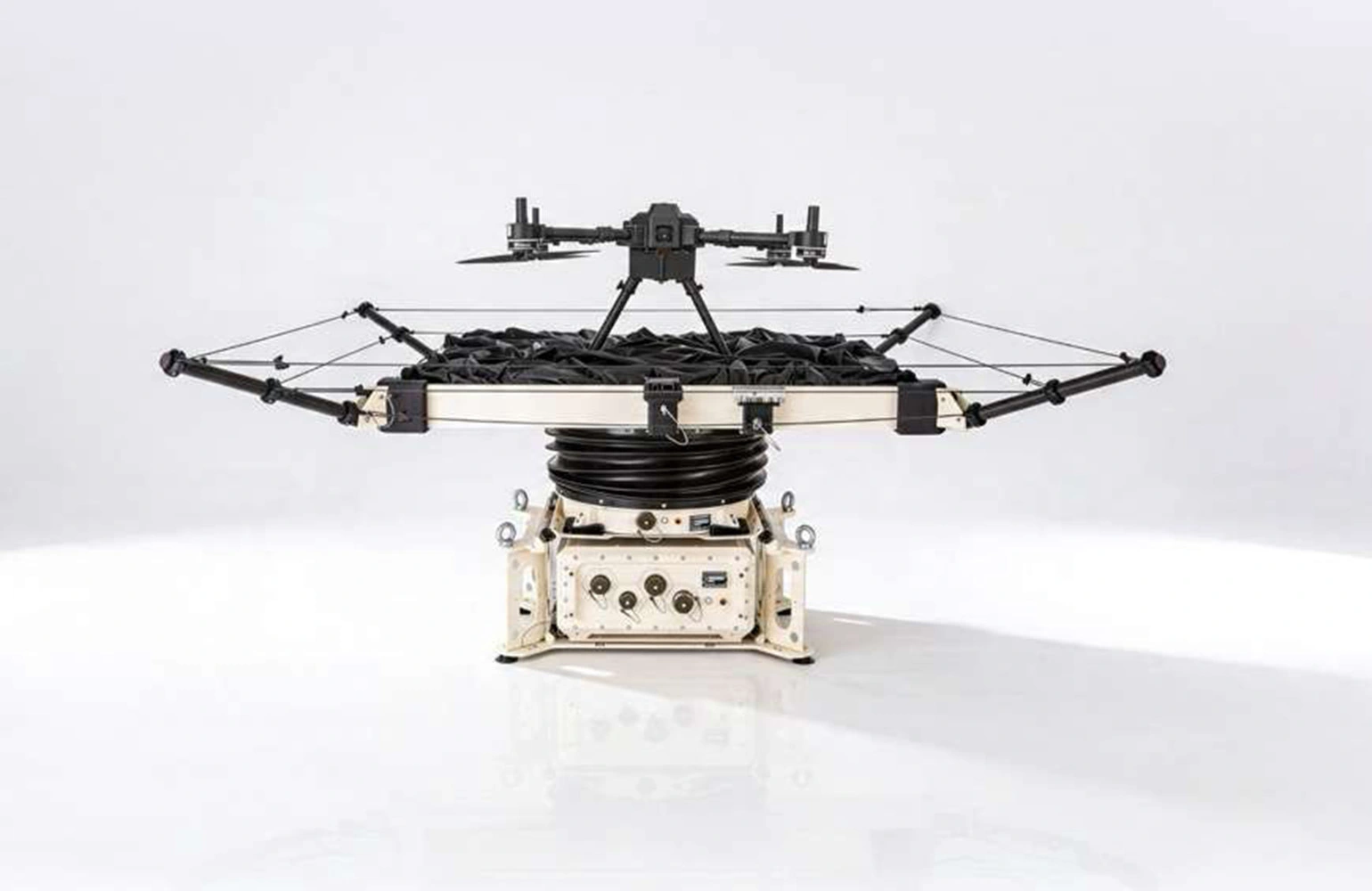
Autonomous drone recovery at sea has been an unsolved problem for offshore operators for years. WaiV Robotics, a London-based startup, launched a gyro-stabilized landing and takeoff platform on May 5 that it claims handles the job on vessels as small as 10 meters in high sea states — and closed a $7.5 million seed round to back the effort.
The core challenge WaiV is addressing is geometric: a vessel deck moves through six degrees of freedom continuously, the surface is slippery with salt spray, and existing solutions have been constrained to calm water or controlled environments. Operators of smaller vessels have largely avoided drone deployment for exactly this reason, limiting maritime UAV use to larger ships with more stable platforms or dedicated recovery equipment.
How the catch-lock-release mechanism works
WaiV’s patent-pending system pairs a gyro-stabilized pad with AI-driven predictive algorithms that effectively take control of the drone during final approach. Rather than requiring the aircraft to execute a precision autonomous landing, the platform guides the drone via remote control input — removing the need for an expert pilot and compensating for vessel motion in real time.
On touchdown, the pad absorbs impact while a locking mechanism secures the UAV’s skids, preventing bounce, slide, or roll-off. The system requires no hardware or software modifications to the drone itself, which is the enabling factor for broad compatibility: WaiV says the platform supports any VTOL configuration — multicopter, fixed-wing, and helicopter — regardless of manufacturer.
The current platform handles UAVs up to 15 kilograms. WaiV plans to scale the product line down to 3 kilograms and up to carrier-class platforms in the 100–300 kilogram range, targeting the full spectrum of offshore fleet configurations.
Who buys this
The addressable market is any offshore operation that currently skips drone deployment because recovery is too risky or too dependent on weather. That includes maritime inspection, offshore energy infrastructure, search and rescue, and naval reconnaissance — sectors where drone utility is well understood but deployment reliability has capped adoption.
The vessel size floor matters. A 10-meter capability opens the platform to rigid inflatable boats, patrol craft, and small survey vessels that make up a significant share of active offshore fleets. Larger ships already have more options; the constraint has always been the smaller end.
WaiV’s seed round gives it runway to develop the scaled variants and pursue the commercial certifications that offshore energy and defense customers typically require before integrating new recovery infrastructure. The company’s next disclosed milestone is bringing the 3-kilogram and heavy-lift variants to market.