
Fewer than 20 Ukrainian drone operators shut down NATO’s largest exercise in northern Europe three times in three days — forcing Swedish organizers to repeatedly reset the simulation after Ukrainian FPV teams destroyed too many vehicles and troops for training to continue.
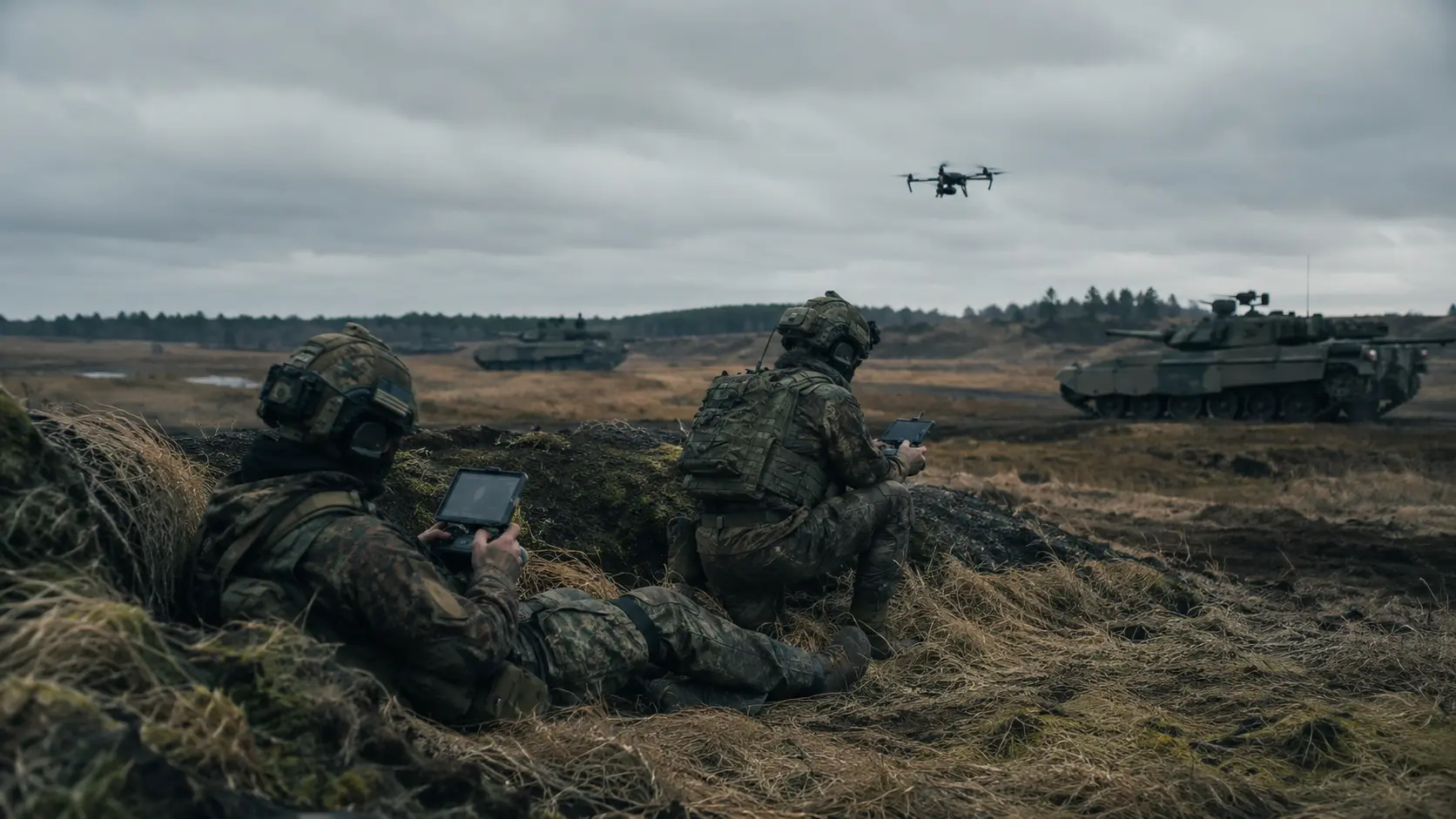
The exercise was Aurora 2026, a Swedish-led NATO event running from April 27 to May 13 that mobilized 18,000 troops from 13 countries across southern Sweden and the Baltic Sea. The scenario centered on defending Gotland Island against a simulated Russian hybrid attack. Two Ukrainian drone teams from the 1st National Guard Brigade “Buravei” and the 20th National Guard Brigade “Lyubart” — both line units, not special forces — were assigned to play the Russian adversary.
The results were not close.
What the Ukrainians did in three days
In one mechanized assault scenario, Ukrainian crews working alongside Swedish pilots destroyed 28 of approximately 32 pieces of major equipment. In another, a Ukrainian FPV swarm overran a defended military airfield in under 20 minutes, hitting every target with no drones lost. A Ukrainian pilot identified by the AP as “Tarik” confirmed the attacks forced three full training resets — the Swedish organizers had to notionally resurrect destroyed units before exercises could continue.
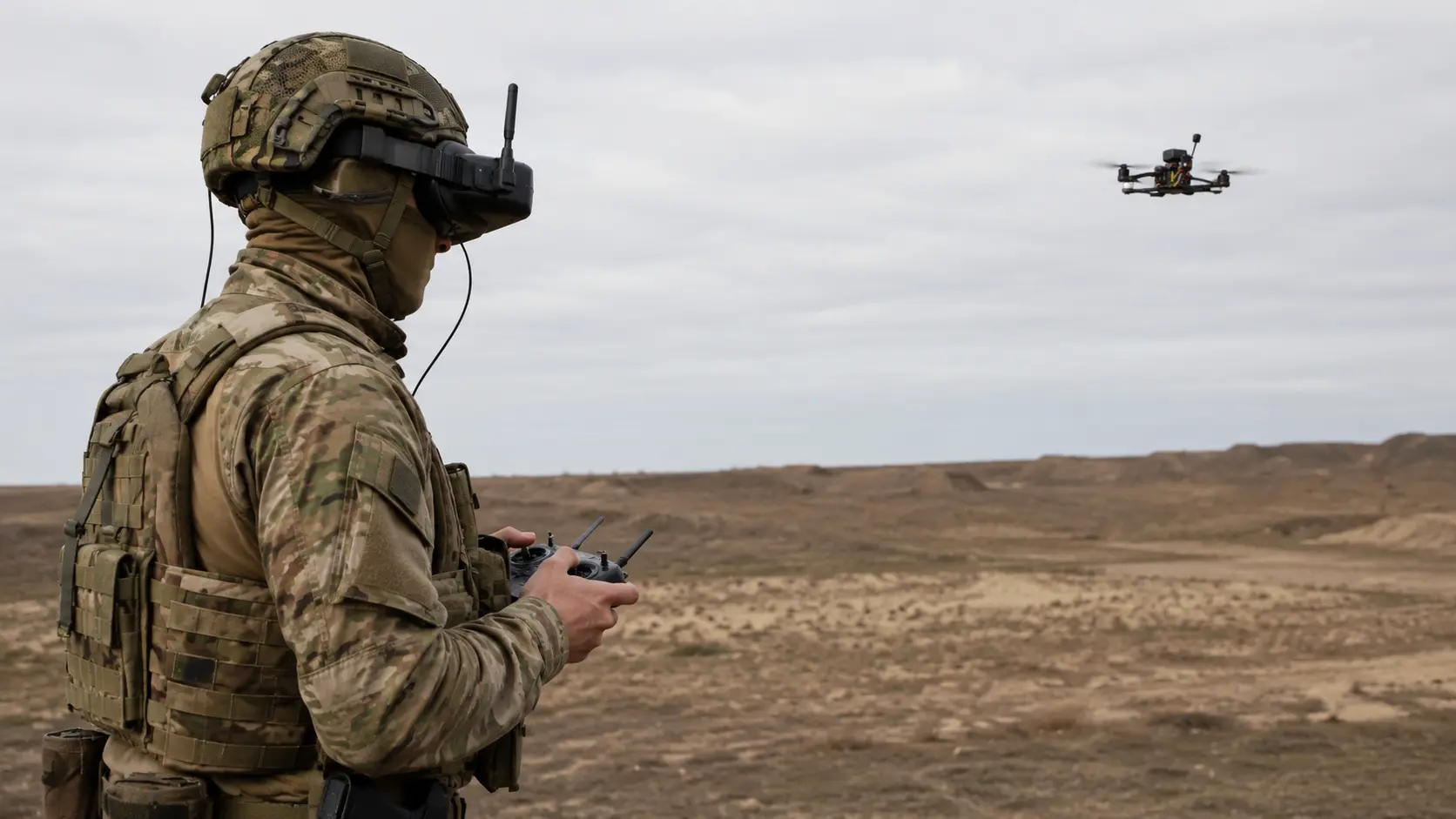
The Ukrainian equipment was standard front-line AFU kit: commercial tablets, Game Boy-style controllers, off-the-shelf FPV goggles, and domestically manufactured drones fitted with directional antennas and extended-life batteries. No experimental systems, no classified technology. The same hardware that has been destroying Russian armor in Zaporizhzhia and Kherson oblasts for the past two years.
Participation was eventually curtailed. “Due to the effectiveness of the FPV pilots, their participation in certain stages was even curtailed so that other units could complete the exercises without completely ‘losing’ their equipment to Ukrainian drones,” Ukraine’s 1st Army Corps said in its post-exercise statement.
The same result, the second time
Aurora 2026 was not an anomaly. In May 2025, ten operators from Ukraine’s 412th Unmanned Systems Forces Brigade — the unit known as Nemesis — flew as opposing force in Estonia’s Hedgehog 2025 exercise against British infantry from 1st Battalion, the Mercian Regiment, and Estonian regular and home guard troops. The outcome was identical: Nemesis shut down training repeatedly by inflicting unacceptable simulated casualties, including effectively wiping out two NATO motorized infantry battalions attempting to attack through woodland.
Nemesis commander Anatoliy Merkotun, one of the pioneers of bomber drone technology in the AFU, said after Hedgehog that NATO tactics keeping vehicles and troops in compact groups “seemed nearly suicidal” — and that Russian and Ukrainian forces had abandoned that way of fighting years ago.
This is now the second consecutive year Ukrainian drone operators have demonstrated the same result against NATO units in NATO-run exercises. The pattern is consistent enough that it functions as a controlled experiment rather than an outlier.
What NATO commanders said about it
“They are miles ahead of us when it comes to drone warfare, so we really appreciate them coming here to share their experience with us, and we have a lot to learn from them,” said Andreas Gustafsson, commander of the Sweden-led brigade combat team that was on the receiving end of the Ukrainian attacks in the Gotland scenario.
Beyond the direct engagements, Ukrainian operators conducted briefings for Swedish, French, British, and Dutch service members on UAV coordination and operating under active electronic warfare. A Ukrainian operator identified as “Karat” told the AP that NATO forces “have potential” but need significant improvements in drones, tactics, and — critically — drone warfare understanding at the commander level.