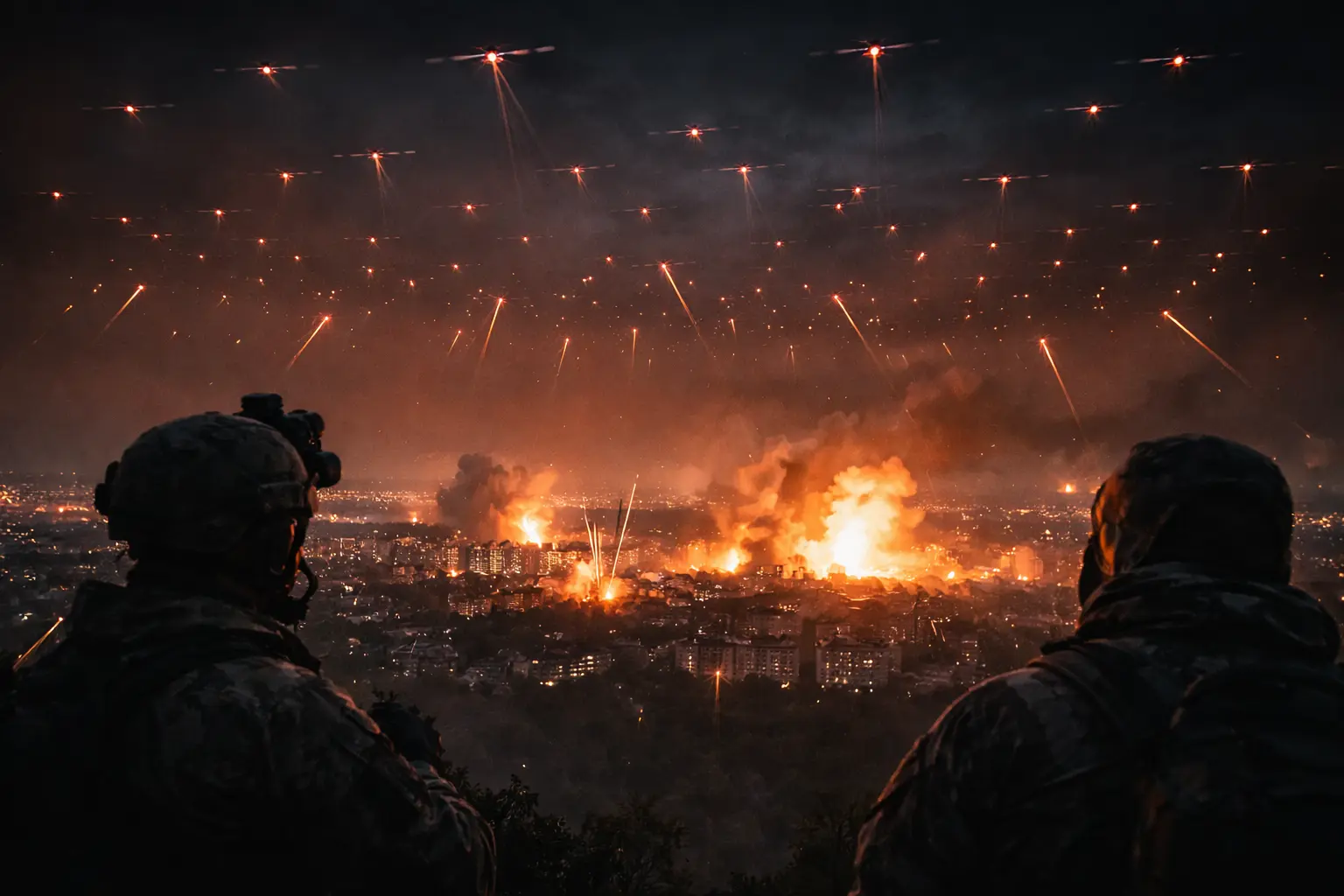

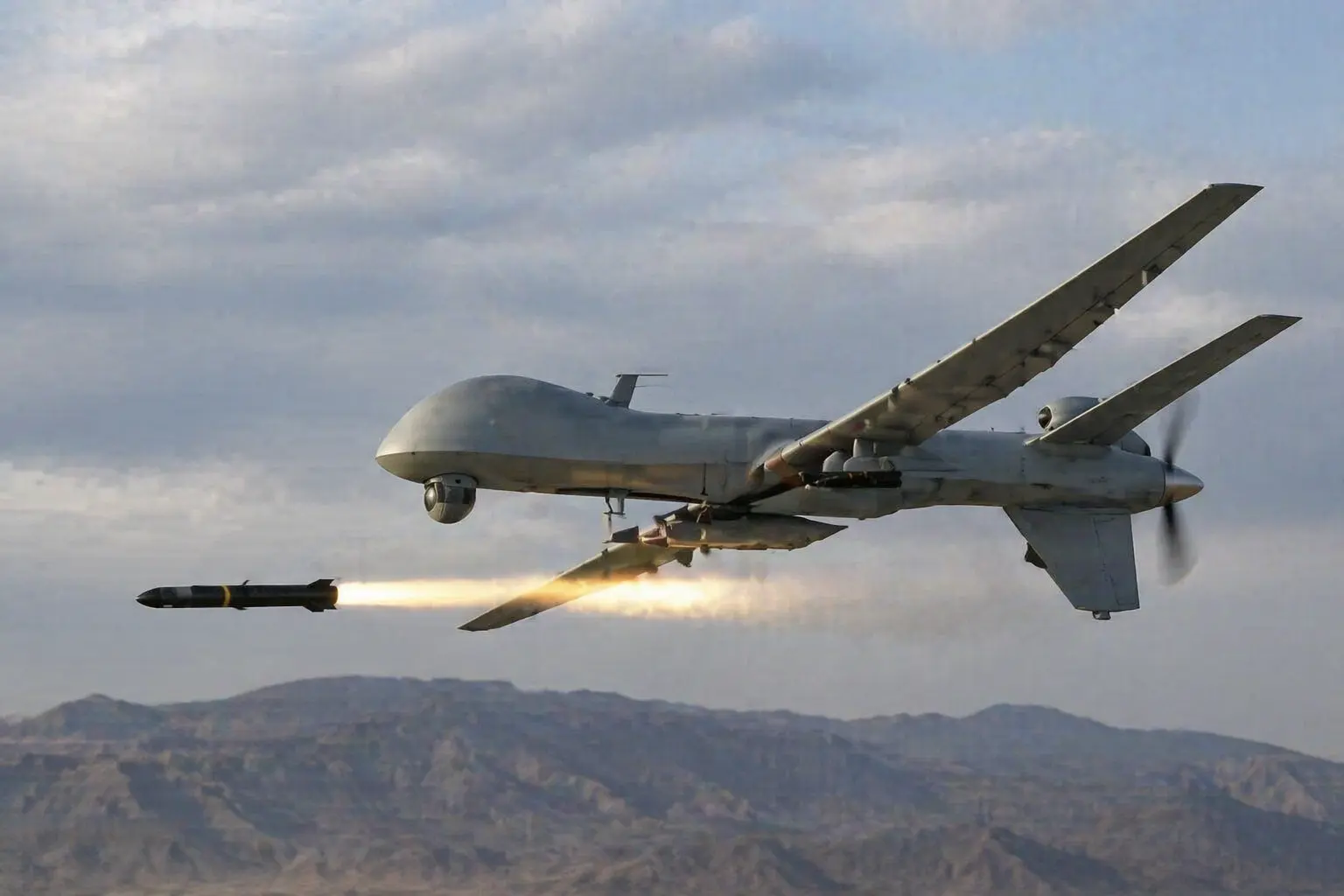
Ukraine intercepted or suppressed 5,833 of 6,462 Russian attack drones in March 2026 - a 90% success rate, by Kyiv’s own figures. Russia’s response was to launch 50% more drones in the first quarter of 2026 than it did in early 2025, with swarm attacks now mixing Shahed variants, ballistic missiles, and decoys designed to exhaust defences faster than they can be replenished. The drone war hasn’t reached a plateau. It’s accelerating into a new phase.
Analysts tracking the conflict describe five distinct generations of drone warfare since 2022, with a sixth now emerging. Each generation has been defined by a new capability that forced the other side to adapt. What’s coming next - AI-integrated command networks, autonomous intercept, directed energy - will reshape not just the war in Ukraine but the doctrine every military on the planet is currently rewriting.
How Five Generations of Drone Warfare Unfolded
The first stage was Ukraine’s early success with the Bayraktar TB2 and improvised commercial drones - small quadcopters dropping mortar bombs with enough precision to destroy armoured vehicles. Russia adapted with Stage Two: mass Shahed 136 swarm attacks on cities and infrastructure, overwhelming point defences with volume.
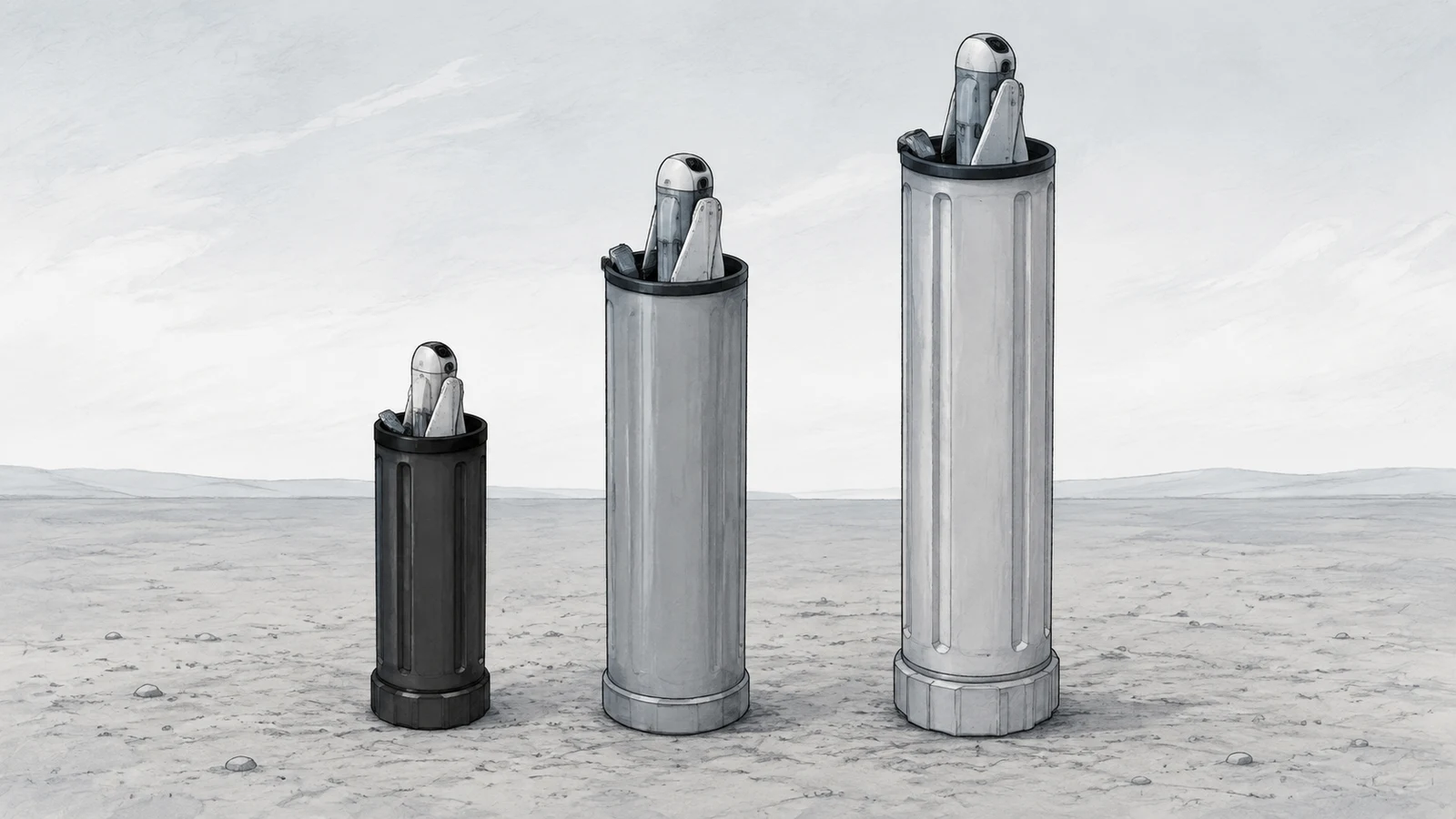
Stage Three saw both sides flood the battlefield with commercial drones for reconnaissance, targeting, and light strike. Stage Four brought FPV drones and loitering munitions into widespread use - cheap, precise, and disposable enough to sustain continuous pressure. Stage Five, where the conflict sits now, is defined by the interceptor drone: low-cost unmanned systems launched specifically to destroy incoming Shaheds before they reach their targets.
Interceptor drones now account for 68% to 70% of Ukraine’s drone kill rate, with electronic warfare adding 10% to 25% and mobile gun teams taking the remainder. Over 30 new interceptor types were introduced in the first quarter of 2026 alone, with some reaching ranges of 50 kilometres and speeds matching the latest Shahed variants.
The Shahed Has Not Stood Still
Russia’s attack drones have evolved in parallel. The original Shahed 136 - range up to 2,500 kilometres, speed 185 km/h, piston engine - was effective primarily because of its low cost and production volume. Successive variants have traded range for speed and navigational resilience.
The Geran-3 introduced a turbojet engine and speeds of 330 to 500 km/h. The Geran-4 pushed that to 500 km/h at shorter range. The current Geran-5 reaches 600 km/h with a 90 kg warhead on a turbojet platform. Cambridge Aerospace’s Skyhammer interceptor, developed specifically to counter these variants, claims 700 km/h - marginally faster than the threat it’s designed to defeat.
Beyond speed, the more capable Shahed variants have incorporated 16-element CRPA antennas that resist Ukrainian electronic warfare jamming, and online cameras with modems that allow real-time trajectory adjustment mid-flight. A January 2026 paper from the Institute for Science and International Security tracked the impact: the percentage of Shahed strikes that actually hit targets increased from 2-3% in early 2025 to between 19.5% and 32.3% for strike variants by late 2025. Ukraine’s new interceptor fleet has since pushed that figure back down, but the trajectory of Russian capability improvements is clear.
What Sixth-Generation C-UAS Actually Means
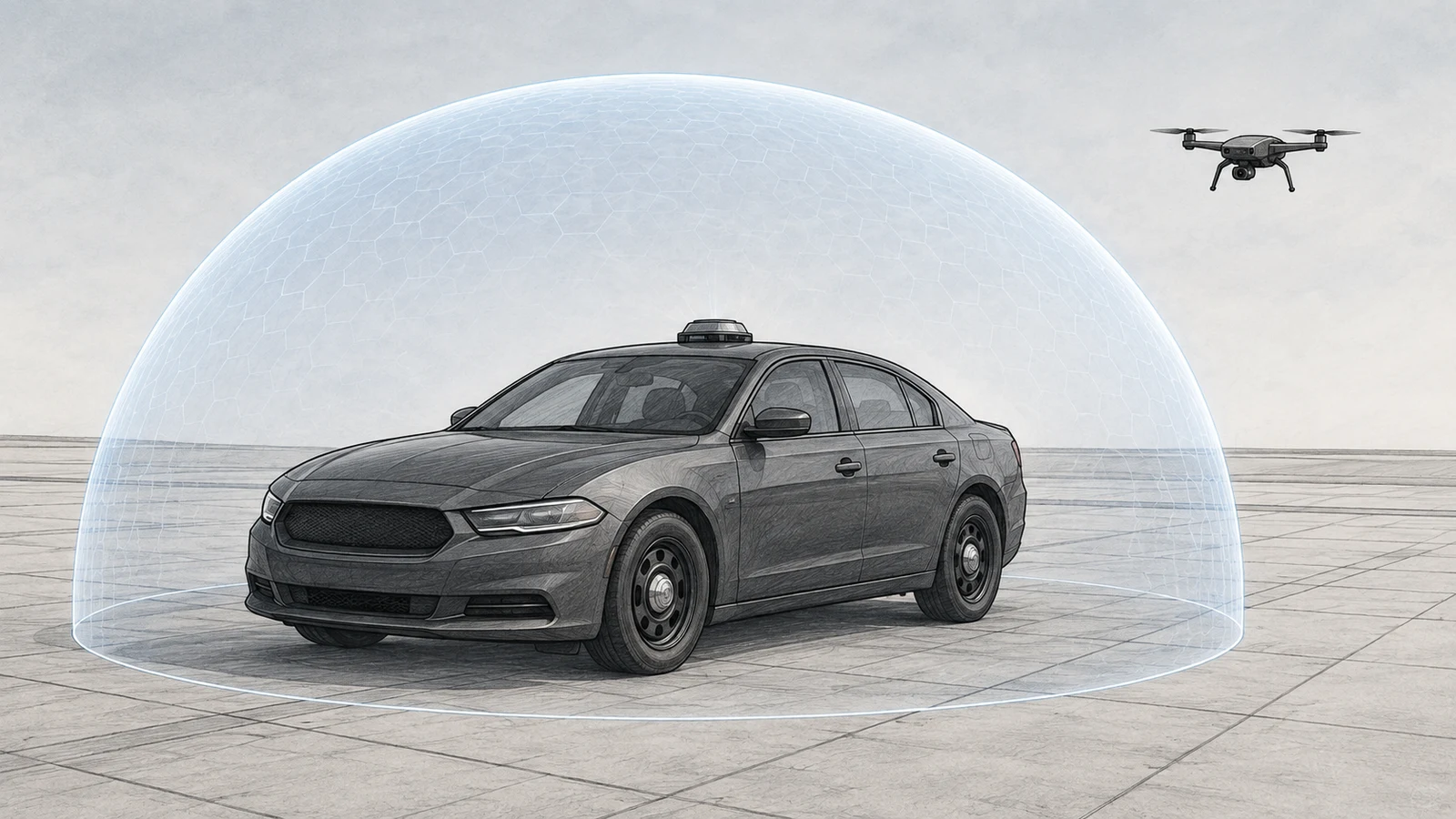
Stage Six is defined not by a new weapon type but by integration. The capability that matters isn’t a faster interceptor or a better sensor - it’s the command-and-control network that connects sensors, interceptors, electronic warfare systems, and human decision-makers into a single coherent system that can respond to complex, multi-vector attacks faster than any human operator could manage alone.
In March 2026, the US Army awarded Anduril Industries a $20 billion, ten-year contract to build exactly this kind of system at scale. The Lattice for Command & Control platform - an AI-powered battle management layer built on Anduril’s open-architecture Lattice suite - is designed to accelerate kill chains by integrating sensor data, threat classification, and intercept coordination across multiple simultaneous engagements. The contract consolidates current and future commercial C-UAS solutions into a unified capability for the Army’s evolving needs.
Airbus has demonstrated a parallel approach at the platform level. Its Bird of Prey interceptor drone completed its first autonomous demonstration flight, independently searching for, detecting, classifying, and engaging a medium-sized one-way attack drone using a Mark I air-to-air missile developed with Frankenburg Technologies. The significance isn’t the missile - it’s that a human wasn’t in the loop for target identification and engagement.
Ukraine’s Drone Line as the First Real Sixth-Generation System
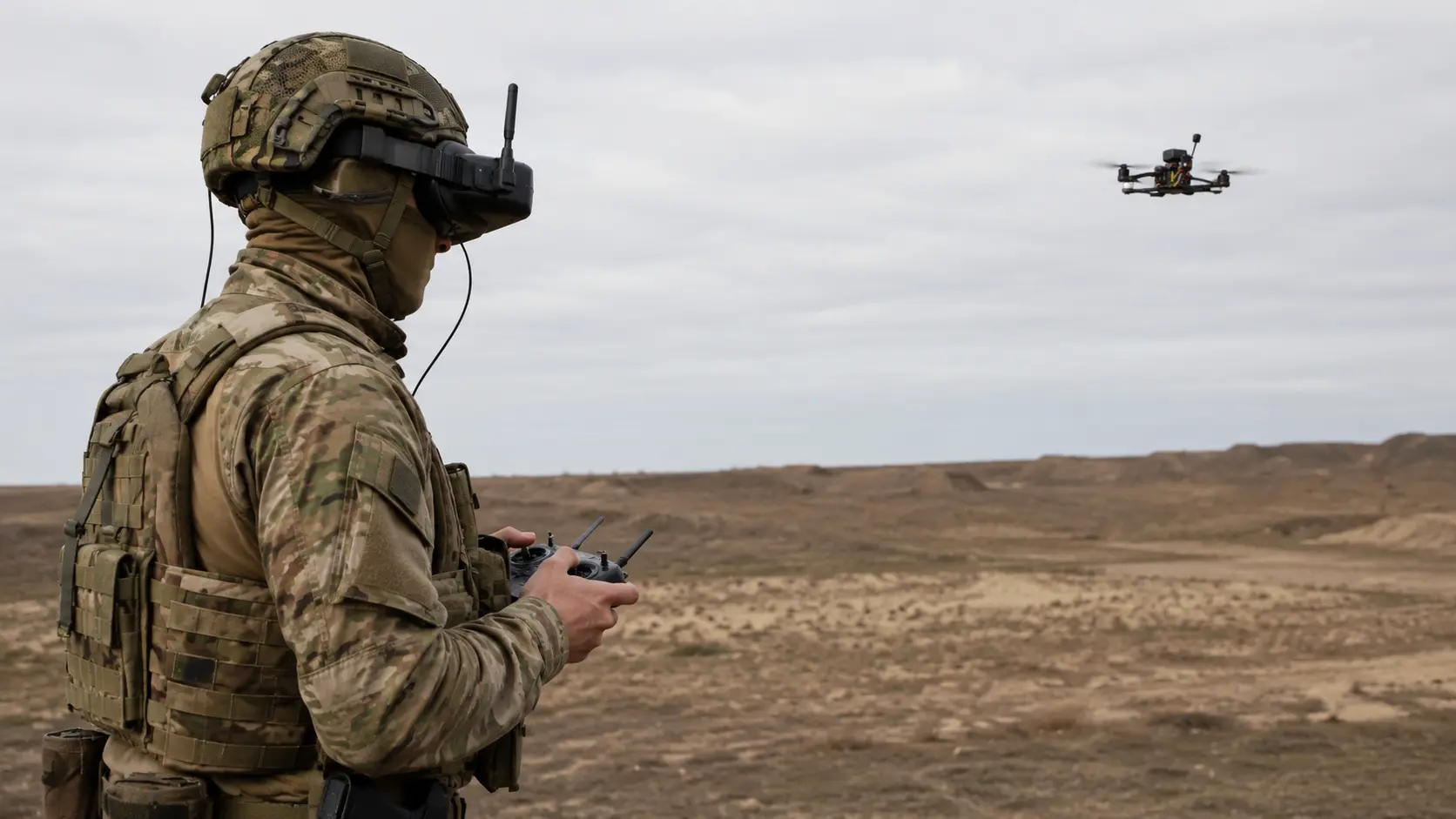
The practical version of sixth-generation C-UAS is already operating in Ukraine under the name Drone Line. The concept, described in Ukrainian Ministry of Defence briefing documents, establishes a unified unmanned system along the front that provides continuous aerial support to infantry and engages targets at a depth of 10 to 15 kilometres - a kill zone that enemy forces cannot cross without incurring predictable losses.
Drone Line launched roughly a year ago and by current accounts, units within or supported by it neutralise one in four battlefield targets. It isn’t fully autonomous and it isn’t AI-driven in the way the next generation will be - but it’s the first operational implementation of the integrated, networked approach that sixth-generation systems are building toward.
Speaking at Xponential Europe 2026, Colonel Matthias Puschnig, co-chair of the German-Ukrainian Joint Working Group on Defence Industry Cooperation, described the direction: armed forces are integrating space and AI assets into existing IT layers to create a digital twin of the entire battlefield, with the goal of eventually allowing AI to autonomously manage both attack and defence operations. The key research challenge is an open standard for integration that preserves security while enabling the speed of data exchange the concept requires.
Who Wins the Sixth-Generation Race
The outcome of the drone war will be determined by whichever side fields sixth-generation C-UAS capability at operational scale first. That race is defined by three variables: technical development, money, and industrial production.
Russia’s advantage is volume. Its drone production has scaled dramatically - over 15,800 attack drones launched in the first quarter of 2026, up 50% year-on-year. But volume is a Stage Two and Three advantage. Swarms of faster, smarter interceptors integrated into AI kill chains change the mathematics of mass attack.
Ukraine’s path to winning requires accessing US and European AI-enabled network capabilities and deploying them before Russia fields the next generation of attack platforms - faster, stealthier, AI-guided, with larger warheads. If that deployment happens first, Russia’s industrial scale becomes a liability rather than an asset: producing more drones that get shot down more efficiently is a losing equation.
The race is close. The next six months of development contracts, battlefield deployments, and intercept data will indicate which side is pulling ahead.