
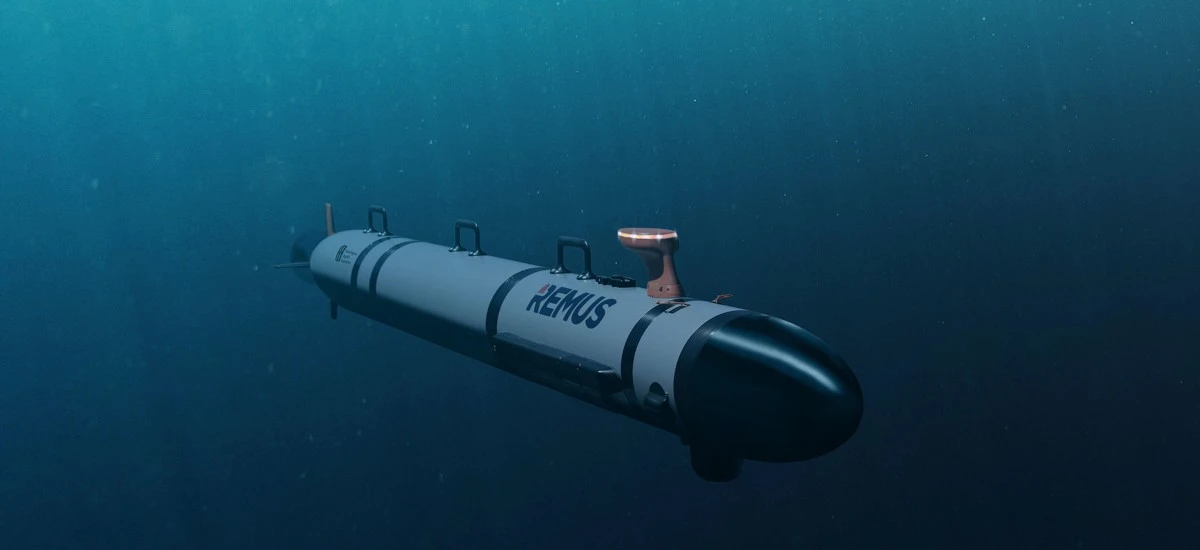
The U.S. Navy has exercised a $36.9 million option on its Lionfish underwater drone contract with Huntington Ingalls Industries, keeping production of the Small Unmanned Undersea Vehicle running through May 2027.
Naval Sea Systems Command awarded the modification to HII’s Unmanned Systems division against existing contract N00024-23-C-6308, funded through fiscal year 2025 other procurement Navy funds. The money covers Lionfish vehicle production alongside support equipment and ancillary infrastructure — the logistics and maintenance stack that converts a fielded vehicle into a sustained operational capability rather than a depot asset. Ninety-nine percent of the work stays at HII’s dedicated uncrewed systems facility in Pocasset, Massachusetts, where Lionfish production has been concentrated since the original contract was awarded in 2023.
What the Lionfish does
The Lionfish is a small UUV built for the Navy’s most hazardous undersea mission sets. Mine countermeasures is the most operationally immediate — mapping and helping neutralize naval mines without putting sailors or crewed submarines into minefields. The system also supports ISR, anti-submarine warfare, and electronic warfare, covering both the detection and disruption sides of undersea competition.
That mission portfolio matters because the undersea domain has become one of the most actively contested spaces in great power competition. China and Russia have both invested heavily in submarine fleets, undersea sensors, and supporting infrastructure. The Navy’s response has been a push toward uncrewed and autonomous undersea systems capable of operating in contested environments at lower cost and lower risk than crewed platforms — and producible at a pace that crewed submarines cannot match.
HII’s unmanned systems bet
HII is best known for building nuclear-powered aircraft carriers and submarines at Newport News and Pascagoula. The Pocasset facility represents a deliberate expansion into uncrewed systems as a separate growth business, purpose-built and operationally distinct from the company’s legacy shipbuilding infrastructure. The original 2023 Lionfish contract established the facility’s viability; a nearly $37 million follow-on option two years later confirms it.
The fiscal year 2025 funding structure — using other procurement Navy funds that do not expire at the end of the current fiscal year — gives the program financial continuity that smaller defense contracts often lack, reducing the risk of production gaps between appropriations cycles. Delivery is scheduled to complete by May 2027.