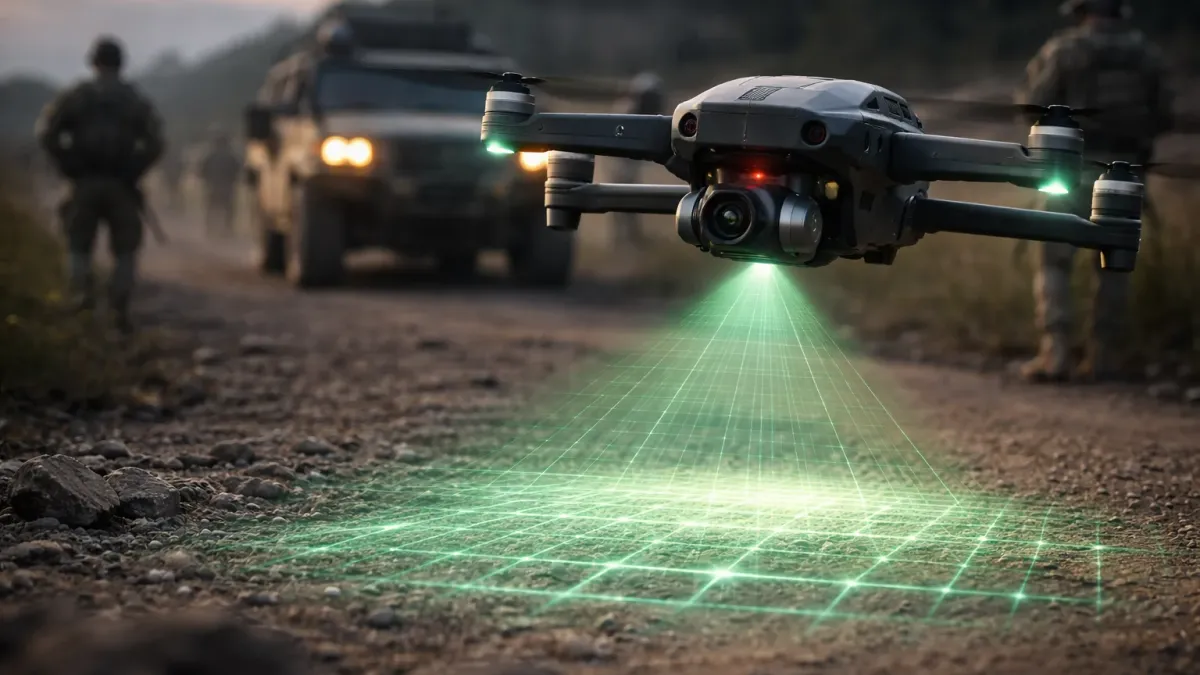

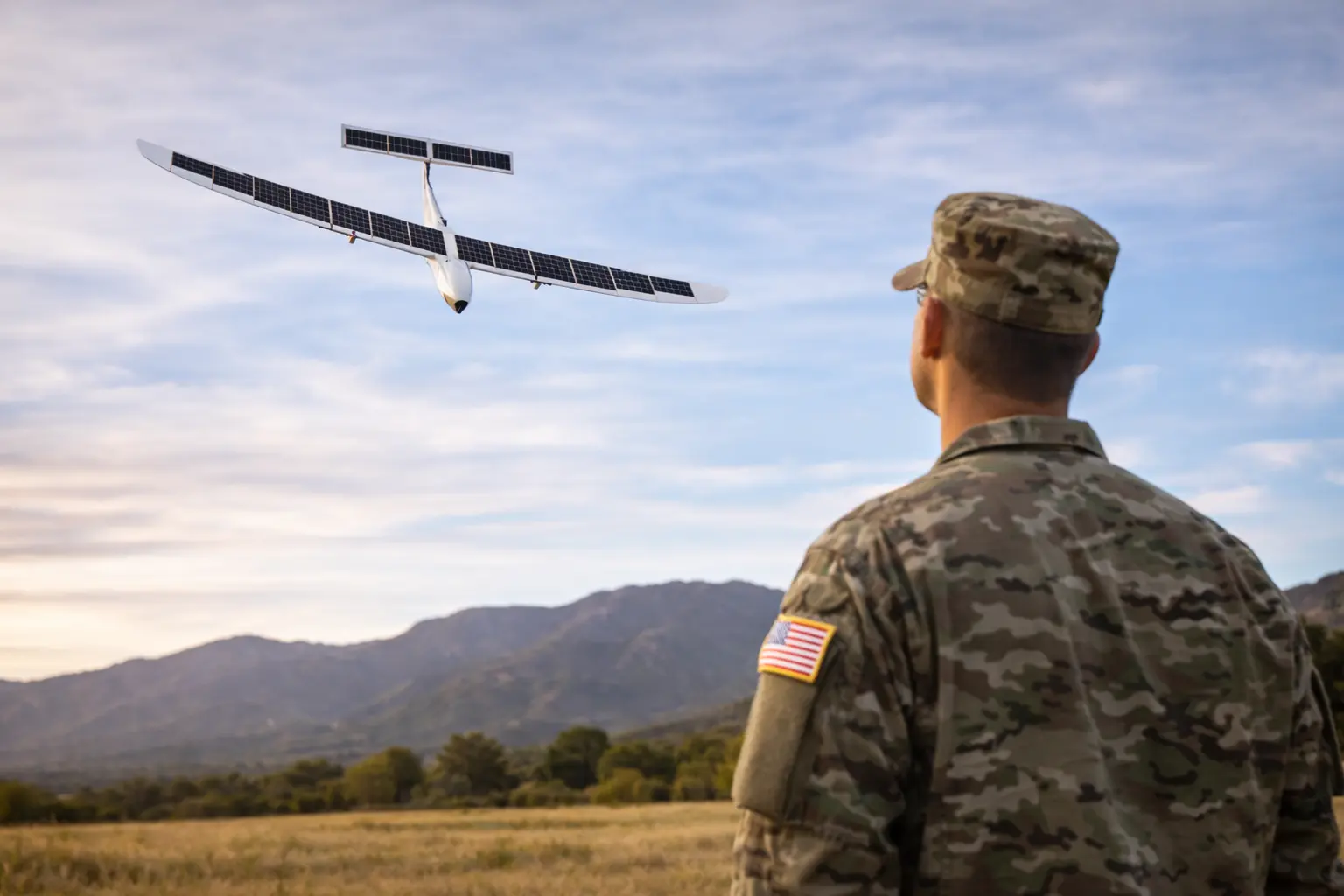
U.S. Air Forces Central has awarded Kraus Hamdani Aerospace a contract worth up to $270 million for its K1000ULE solar-powered drone, a lightweight fixed-wing aircraft designed for extended-loitering reconnaissance in contested airspace.
The deal covers AFCENT, the CENTCOM component overseeing operations across the Middle East including Operation Epic Fury, the joint U.S.-Israeli campaign against Iran. The contract had not appeared on DoD procurement databases at time of publication — KHA says SAM.gov listings can take up to 30 days from award date.
What makes the K1000ULE different from other ISR platforms
The K1000ULE is a 16-foot-wingspan, 40-pound aircraft that can be launched by a two-person crew without ground support equipment. Solar panels embedded in the wing continuously recharge the battery, and an AI flight management system that mimics bird soaring behavior cuts propulsion use by up to 80% — extending endurance significantly. The aircraft set a 75-hour unrefueled flight record in 2023. Top speed is 46 mph with a service ceiling of 20,000 feet.
That AI stack is informed by a direct feedback loop from Ukraine. KHA co-founder and CTO Stefan Kraus said the company contributes to the ArduPilot open-source autopilot platform, which is in widespread use by Ukrainian drone operators flying against Russian forces. Operational data flows back to KHA’s engineers, who update the software accordingly. It’s an unusual arrangement — a U.S. defense contractor effectively running a live battlefield learning loop through a third-party conflict.
Why CENTCOM is buying it now
The purchase reflects a shift in how U.S. forces think about ISR assets in the Middle East. High-value platforms like the MQ-9 Reaper — which costs roughly $30 million per aircraft — have proven vulnerable in contested airspace; several have been shot down over Yemen and the Red Sea region in recent years. The K1000ULE, at a fraction of the cost and with a much smaller radar and thermal signature, is positioned as a persistent, expendable-friendly alternative for environments where flying a $30 million asset is no longer acceptable risk.
The drone has already been fielded in limited numbers with U.S. Army Special Forces and the 1st Multi-Domain Task Force. It is integrated into the Army’s Next Generation Command and Control system, enabling real-time data sharing across networked battlefield assets.
The contract formalizes what has been a quiet operational relationship into a large-scale procurement — and positions KHA, a relatively small Emeryville, California-based startup, as a meaningful supplier to CENTCOM for the foreseeable future.